
Battery, Alternator, Starter: Understanding Your Car's Electrical Trio

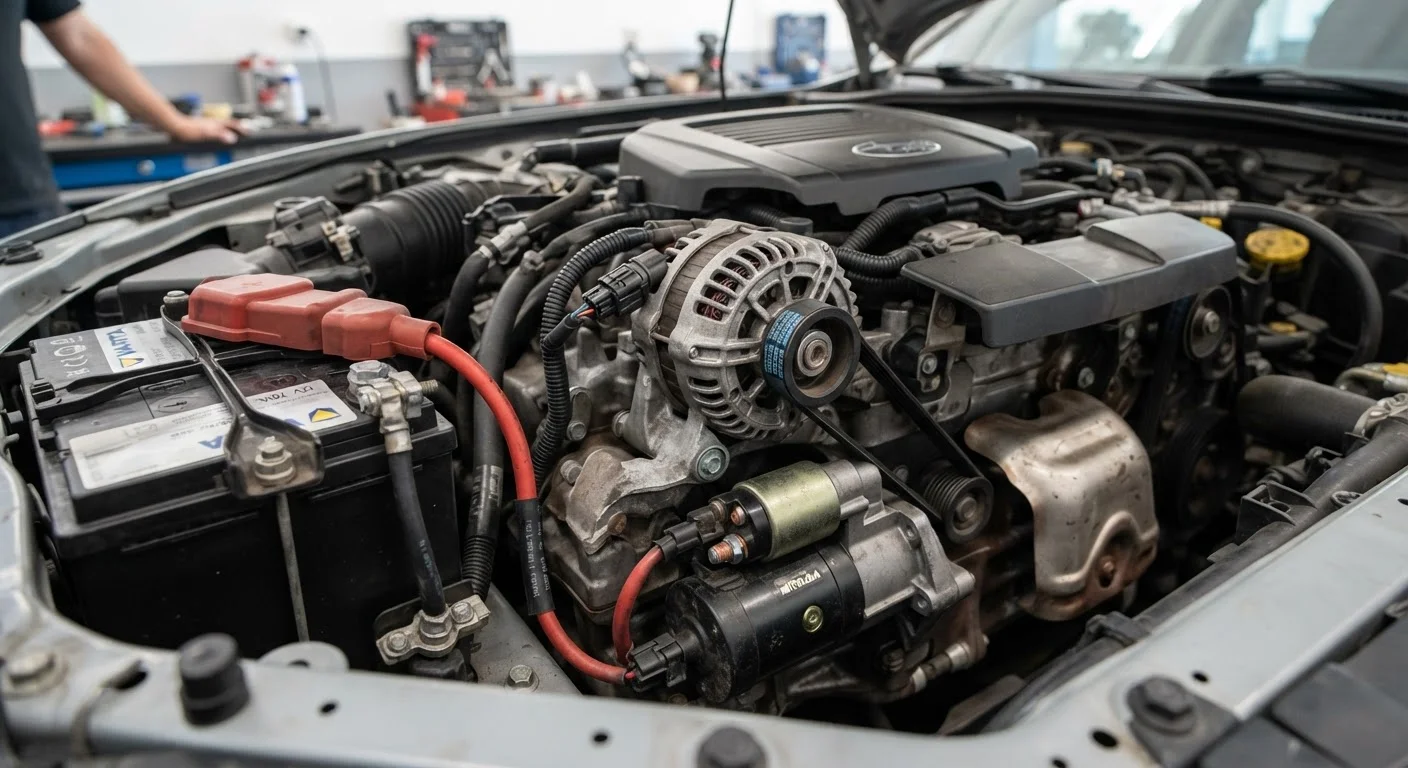
Photo: TheSearchHound.com | One Stop Answer To All Your Questions editorial
How the Three Components Work Together
Your car's electrical system relies on three core components that work in sequence - but each has a separate job. Confusing them is one of the most common mistakes drivers make when something goes wrong. Understanding what each one does makes it far easier to describe a symptom to a mechanic and avoid an unnecessary part replacement.
The battery is the system's stored energy source. It provides the burst of power needed to start the engine and supports electrical loads when the engine isn't running. The starter is an electric motor that uses that battery power to physically crank the engine - turning it over until combustion begins. The alternator takes over once the engine is running, generating electricity to power your vehicle's systems and continuously recharge the battery.
Think of it this way: the battery is the reservoir, the starter is the ignition switch, and the alternator is the generator. All three are interdependent - a weak battery strains the starter; a failing alternator drains the battery; a dead battery leaves the starter with nothing to draw from. For a broader look at how these fit into overall vehicle upkeep, see Car Maintenance from Scratch.
Recognizing Failure: Symptoms by Component
Because these three components interact closely, symptoms can overlap. Knowing which warning signs point to which part helps narrow things down quickly.
Battery
A rechargeable electrochemical cell that stores electrical energy. In vehicles, it powers the starter motor and supports electrical systems when the engine is off.
Alternator
A generator driven by the engine's serpentine belt that converts mechanical energy into electrical energy, powering the vehicle's systems and recharging the battery while the engine runs.
Starter Motor
A compact DC electric motor that receives power from the battery and turns the engine's crankshaft to initiate combustion.
Serpentine Belt
A single, continuous belt that drives multiple engine accessories including the alternator, power steering pump, and air conditioning compressor.
Cold Cranking Amps (CCA)
A battery rating measuring the current it can deliver at 0°F for 30 seconds. Higher CCA values indicate better cold-weather starting performance.
Battery
A failing battery often shows up as slow engine cranking, dim headlights when idling, or a dashboard warning light. If the car starts fine when jump-started but dies again within a short time, the battery is likely the culprit - especially if it's more than three to five years old.
Alternator
When the alternator weakens, the battery light may illuminate even though the battery itself is healthy. Other signals include flickering interior lights, accessories behaving erratically, or a burning rubber smell from a slipping belt. A car that starts fine but dies while driving often points to an alternator that can no longer sustain the electrical load.
Starter
Starter problems typically produce a distinct clicking sound when you turn the key - either a rapid series of clicks (suggesting low battery voltage reaching the starter) or a single loud click with no crank. If the battery tests healthy but the engine still won't turn over, the starter is the likely suspect.
Many auto parts retailers and repair shops offer free electrical testing for all three components - a useful first step before authorizing any repair. This also connects to other overlooked maintenance items covered in vehicle maintenance tasks drivers frequently overlook.
Don't Skip Free Electrical Testing
The content on this site is provided for informational purposes only and should not be considered a substitute for professional advice. While we strive to provide accurate and up-to-date information, we make no guarantees regarding its completeness or accuracy. Always consult a qualified professional for advice specific to your circumstances before making any decisions.