
Car Maintenance Myths That Cost Drivers Unnecessary Time and Money

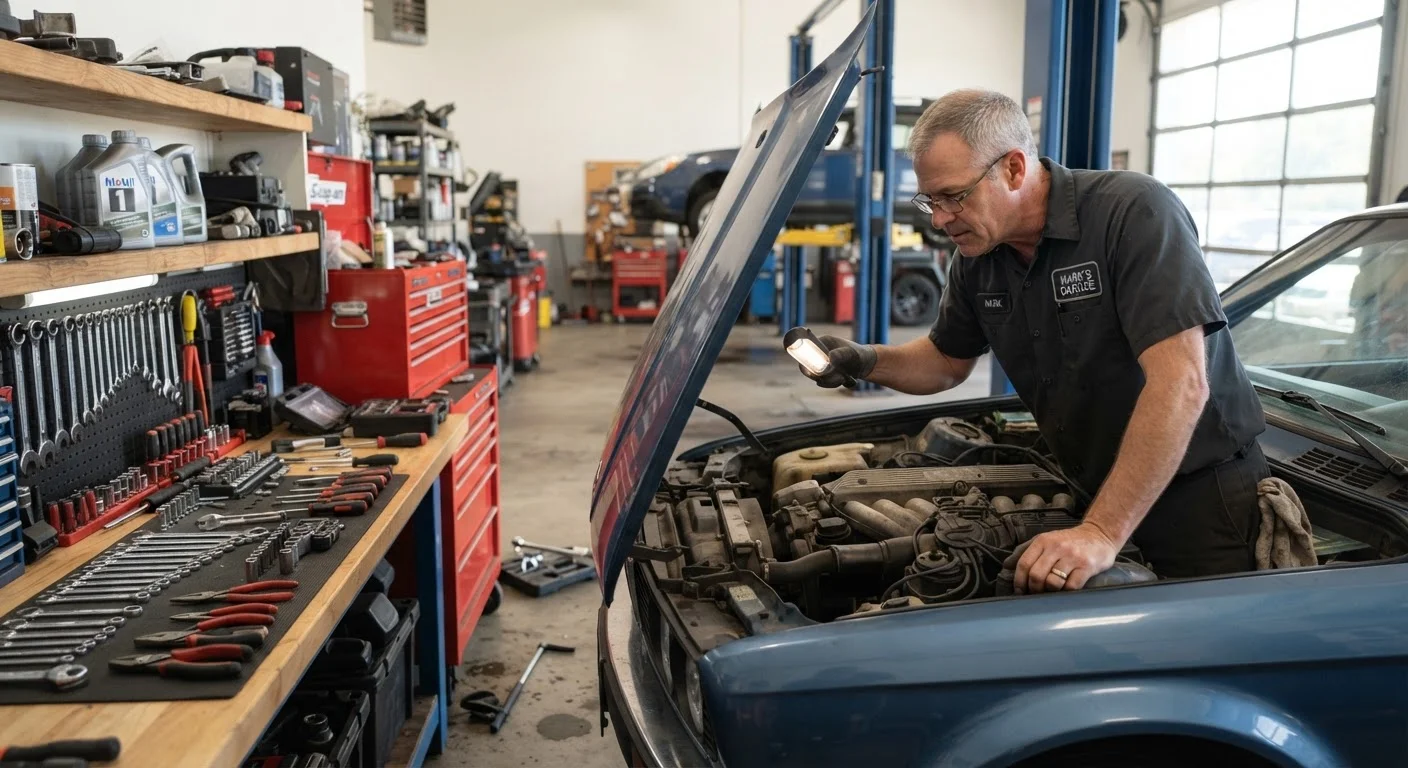
Photo: TheSearchHound.com | One Stop Answer To All Your Questions editorial
Key Takeaways
- Modern engines and synthetic oils often allow oil changes every 7,500-10,000 miles or more, not every 3,000.
- Idling your engine in winter for several minutes is unnecessary with most vehicles made after the mid-1990s.
- Tire pressure should match your door jamb sticker, not the number molded into the tire's sidewall.
- Premium fuel only benefits engines specifically engineered to require it - using it otherwise wastes money.
- A battery jump-start does not fully recharge a depleted battery; a proper charger is needed.
- Following your owner's manual is more reliable than popular maintenance folklore.
Why Automotive Myths Persist - and What They Cost You
Car maintenance advice gets passed down like family recipes - well-intentioned but sometimes outdated. Some of these rules made sense decades ago when engine tolerances were looser and motor oil formulations were cruder. Others were always more convenient shorthand than precise guidance. Either way, acting on bad information adds up: unnecessary service appointments, wasted fuel, and premature part replacements all cost real money.
Understanding what's actually happening inside your vehicle - rather than following inherited rules - puts you in a better position to make smart decisions. The myth-and-fact pairs below cover the most common and costly misconceptions circulating among everyday drivers. For a broader look at how vehicle systems work together, explore the Understanding Your Car hub.
Myth
You need to change your oil every 3,000 miles, no matter what.
Fact
Most modern vehicles - especially those using full synthetic oil - can go 7,500 to 10,000 miles or more between oil changes, per manufacturer specifications.
The 3,000-mile rule was a reasonable guideline for older engines running conventional oil, but it hasn't reflected mainstream engineering for decades. Today's engine tolerances are tighter, and synthetic oil formulations are significantly more stable under heat and pressure. The right interval for your vehicle is printed in your owner's manual - and following that number instead of a generic rule typically means fewer unnecessary oil changes per year without any added engine wear. For a detailed breakdown of oil types and what they mean for your engine, see synthetic vs. conventional motor oil explained.
Myth
You should let your car idle for several minutes to warm up the engine in cold weather.
Fact
Fuel-injected engines - standard on virtually all vehicles built since the mid-1990s - warm up faster under light load than sitting at idle.
Extended idling made sense for older carbureted engines that needed time to stabilize fuel delivery in cold air. Modern fuel-injection systems adjust automatically. Idling for more than about 30 seconds in most conditions wastes fuel, increases engine wear from incomplete combustion, and adds unnecessary emissions. Driving gently for the first few minutes accomplishes the same warm-up goal more efficiently. In extreme cold (well below 0°F), a brief idle of around 60 seconds is reasonable - but five or ten minutes is excessive for nearly any passenger vehicle.
Myth
The number on the tire sidewall is the correct inflation pressure for your tires.
Fact
The number molded into the sidewall is the maximum pressure the tire can safely hold - not the recommended operating pressure for your specific vehicle.
Your vehicle's recommended tire pressure is printed on a sticker inside the driver's door jamb (and often in the owner's manual). That figure accounts for your car's weight distribution, suspension geometry, and intended ride quality. Running tires at the sidewall maximum - which can be significantly higher - causes uneven wear, a harsher ride, and reduced traction. Running them below the door-jamb spec creates heat buildup and handling instability. Check pressure when the tires are cold, and use the door-jamb number as your target. Learn more about how tire pressure affects safety and fuel economy.
Myth
Premium gasoline makes any car run better and last longer.
Fact
Premium fuel only benefits engines engineered to require it; using it in a standard engine produces no measurable performance or longevity advantage.
Premium fuel has a higher octane rating, which resists pre-ignition (knocking) under high compression. Engines designed to run on regular gasoline have compression ratios and timing systems calibrated for 87 octane. Filling those vehicles with 91 or 93 octane does not improve horsepower, fuel economy, or engine life - it simply costs more per gallon. If your owner's manual says "premium recommended" rather than "premium required," standard fuel is acceptable in most driving conditions. Reserve premium fuel for engines that specifically require it.
Myth
Jump-starting a dead battery recharges it enough to be fine going forward.
Fact
A jump-start provides enough charge to start the engine, but a deeply discharged battery needs a dedicated charger - or professional evaluation - to restore proper capacity.
Your alternator is designed to maintain a battery that's already near full charge, not to recover a deeply depleted one. Relying on driving to recharge a battery that died completely often results in repeated failures. If a battery has discharged fully - especially more than once - it may have sustained internal damage that reduces its total capacity regardless of how much time it spends connected to the alternator. A battery charger designed for slow, controlled charging is the appropriate tool for recovery. For a clearer picture of how batteries and alternators divide the work, see the real job of your car's alternator and battery.
Myth
If a car seems to be running fine, it doesn't need scheduled maintenance.
Fact
Many maintenance items address wear and fluid degradation that produce no noticeable symptoms until failure - by which point repair costs are typically much higher.
Transmission fluid, brake fluid, coolant, and timing belts don't announce their deterioration with obvious warning signs. Filters - air, cabin, fuel, and oil - clog gradually. A vehicle that "seems fine" may be operating with compromised systems that are months away from a costly failure. Scheduled maintenance intervals exist because engineers know how long components reliably last under normal use, not because something already feels wrong. Understanding your car's filters is one practical place to start if you're not sure what gets checked and when.
What These Facts Mean for Your Maintenance Routine
Correcting these myths doesn't mean abandoning routine care - it means making that care smarter. Your owner's manual is the single most reliable source for service intervals, fluid specifications, and component replacement timelines. Manufacturers engineer those recommendations around your specific engine, climate range, and driving conditions. Generic rules drawn from an earlier era of automotive design rarely apply cleanly to modern vehicles.
That said, skipping maintenance entirely carries its own risks, which is worth understanding alongside these corrections. See why sticking to your car's maintenance schedule matters for context on what happens when upkeep is genuinely deferred too long. Similarly, some maintenance items drivers frequently overlook deserve more attention than the myths above ever receive.
7,500-10,000+
Miles between oil changes for many modern vehicles
Many automakers specify intervals well beyond 3,000 miles for vehicles using full synthetic oil - check your owner's manual for the figure specific to your engine.
~30 seconds
Recommended idle warm-up time in most conditions
Automotive engineers generally agree that modern fuel-injected engines need minimal idle time before driving gently, even in cold weather.
If you want to go deeper on specific systems, understanding the difference between synthetic and conventional oil is a natural next step - particularly if your vehicle's manual specifies full synthetic. And if tire inflation has been on your mind, why tire pressure matters more than most drivers realize explains how that single number affects safety, fuel efficiency, and tire lifespan in ways many drivers underestimate.
Your Owner's Manual Overrides Popular Rules
The content on this site is provided for informational purposes only and should not be considered a substitute for professional advice. While we strive to provide accurate and up-to-date information, we make no guarantees regarding its completeness or accuracy. Always consult a qualified professional for advice specific to your circumstances before making any decisions.