
Engine Oil Grades: Why 5W-30 and 10W-40 Are Not Interchangeable

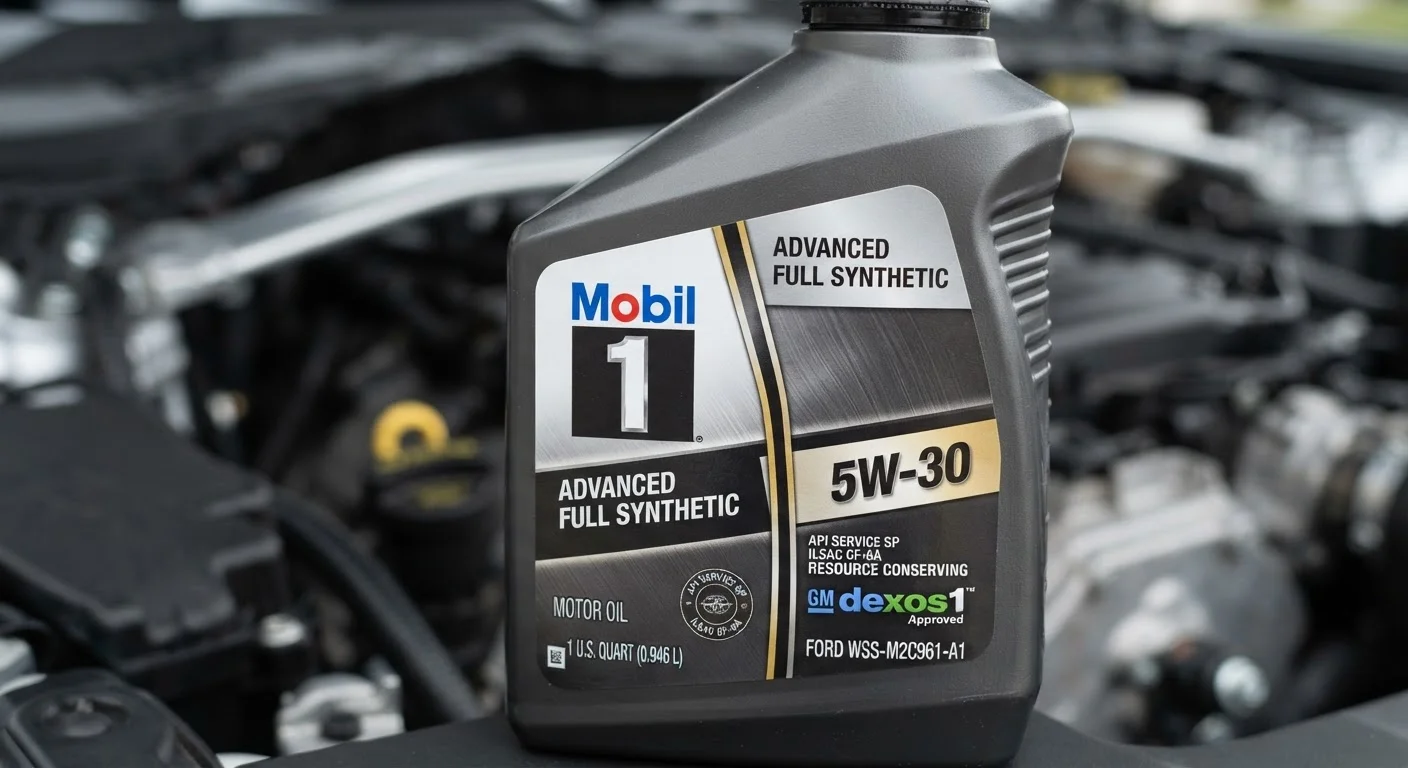
Photo: TheSearchHound.com | One Stop Answer To All Your Questions editorial
Key Takeaways
- The two numbers in an oil grade describe cold-start flow and high-temperature thickness separately.
- Your owner's manual specifies the correct grade for your engine - that spec comes from the manufacturer's engineering.
- Using the wrong grade can affect oil pressure, fuel economy, and long-term engine wear.
- Modern multi-grade oils replaced single-grade oils because engines need different viscosity characteristics at startup versus operating temperature.
- Climate and driving conditions can influence which grade is appropriate within the range your manufacturer allows.
Breaking Down the Numbers
The grade printed on an oil bottle - say, 5W-30 - is a two-part code. Each part measures viscosity at a different point in the engine's life cycle, and both matter.
The number before the W describes cold-temperature performance. In a 5W-30, the '5W' tells you how readily the oil flows when your engine is cold - before it has reached operating temperature. A lower number means faster flow in the cold. A 0W oil flows more freely in freezing conditions than a 10W oil does. This matters most in the critical seconds after a cold start, when engine parts need lubrication quickly.
The number after the W describes viscosity at normal operating temperature (approximately 212°F or 100°C). A '30' means the oil maintains a certain resistance to flow once the engine is fully warm - thick enough to cushion metal surfaces, thin enough not to create drag. A '40' is moderately thicker at that same temperature.
So 5W-30 and 10W-40 are not simply different "weights" of the same thing. They behave differently at both ends of the temperature spectrum, and those differences were factored into your engine's design.
~75%
Engine wear that occurs at cold start
Industry engineering estimates suggest the majority of engine wear happens during the first moments after startup, before oil fully circulates - making cold-flow viscosity ratings critically important.
212°F
Temperature at which high-viscosity rating is measured
The SAE standard measures the second viscosity number (e.g., the '30' in 5W-30) at 100°C (212°F), reflecting real-world operating temperature performance.
Why Your Owner's Manual Grade Is Not a Suggestion
Engine manufacturers specify an oil grade after extensive testing of oil pressure requirements, bearing clearances, fuel injector tolerances, and thermal behavior. When an automaker lists 5W-30 as the required grade, that specification reflects the actual physical gaps between moving engine parts and the pressure needed to keep them lubricated.
Using an oil that is too thick can restrict flow through narrow passages and oil galleries, starving components like camshaft bearings of adequate lubrication - particularly during cold starts. Using an oil that is too thin may not maintain a sufficient film between metal surfaces at operating temperature, accelerating wear.
The consequences aren't always immediate. Incorrect viscosity often shows up gradually: slightly elevated engine wear on oil analysis, marginally reduced fuel economy, or in severe cases, oil pressure warning lights. For a deeper look at how common fluid assumptions lead to unnecessary service, see fluid maintenance myths that cost drivers.
Check the Oil Cap, Then the Manual
When Grade Flexibility Is Legitimate
Manufacturer specs aren't always a single grade. Many owner's manuals list a primary grade plus alternatives approved for specific temperature ranges. For example, a manual might recommend 5W-30 for most conditions but permit 0W-30 in extremely cold climates or 5W-20 for improved fuel economy in mild climates. These alternatives are vetted by the manufacturer - they are not guesswork.
High-mileage engines - typically those with more than 75,000 miles - sometimes benefit from a slightly higher-viscosity oil within the approved range, as increased internal clearances from wear can reduce oil pressure with thinner grades. This is a decision worth discussing with a qualified mechanic based on an actual assessment of your engine's condition, not a general rule to apply universally.
For a fuller picture of how synthetic and conventional oil types interact with viscosity grades, the guide to synthetic vs. conventional motor oil covers how formulation differences complement the grade system. You might also find it useful to review how to check your engine oil at home if you're new to hands-on fluid monitoring.
The bottom line: the viscosity grade on your oil container is a precisely engineered specification, not a marketing label. Matching it to your owner's manual is one of the most straightforward things you can do for your engine's long-term health. For more on separating automotive fact from fiction, see common car maintenance myths that still trip up many drivers.
Frequently Asked Questions
The content on this site is provided for informational purposes only and should not be considered a substitute for professional advice. While we strive to provide accurate and up-to-date information, we make no guarantees regarding its completeness or accuracy. Always consult a qualified professional for advice specific to your circumstances before making any decisions.