
How a Car's Cooling System Prevents Your Engine from Overheating

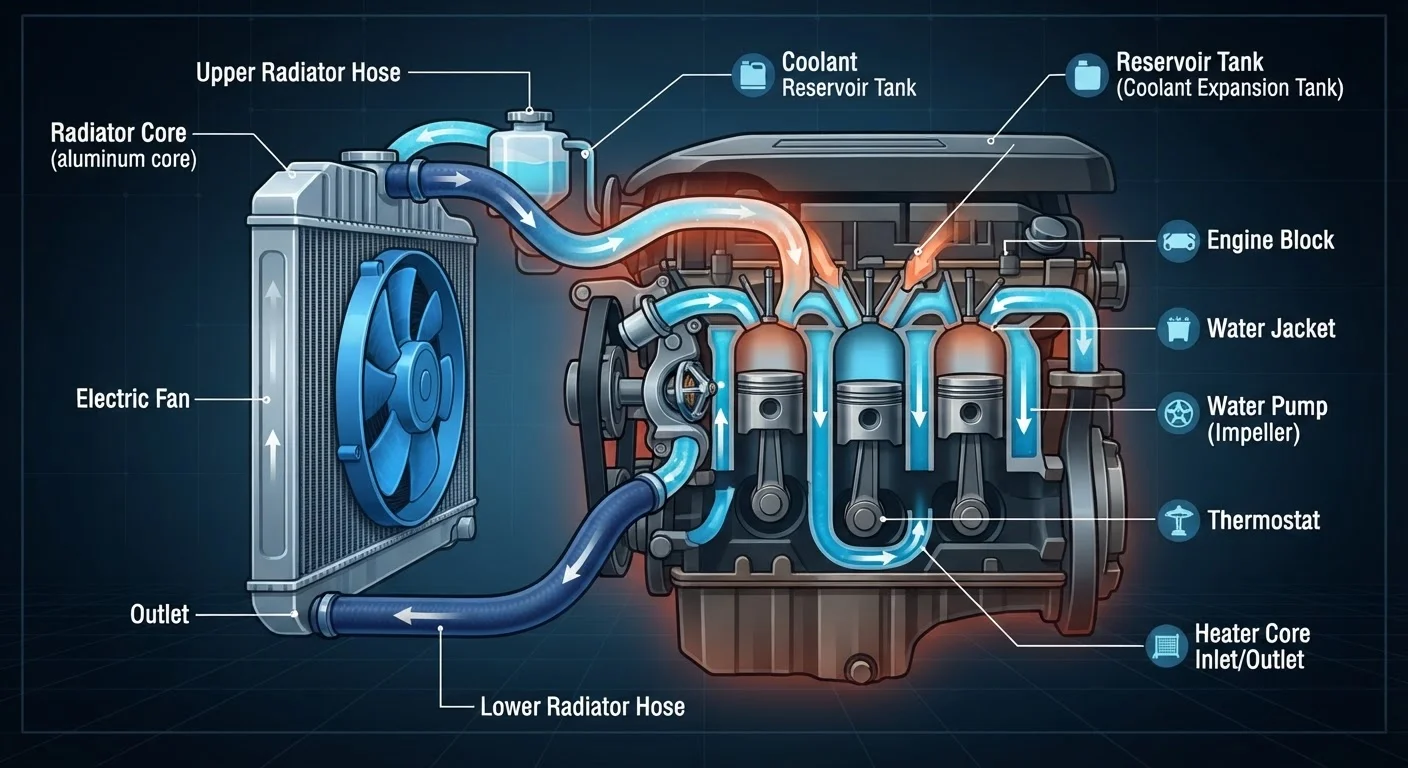
Photo: TheSearchHound.com | One Stop Answer To All Your Questions editorial
Key Takeaways
- Coolant absorbs engine heat and transfers it to the radiator to be dispersed into the air.
- The thermostat acts as a gatekeeper, regulating when coolant flows into the radiator.
- A failing water pump or low coolant level are common triggers for engine overheating.
- Overheating can cause severe, expensive engine damage if ignored even briefly.
- Routine cooling system maintenance is one of the most important ways to extend engine life.
Why Engines Generate So Much Heat
Internal combustion engines produce power by igniting a mixture of fuel and air inside the cylinders. That process generates enormous amounts of heat - temperatures inside a running combustion chamber can exceed 4,500°F. The engine's metal components can only safely withstand a fraction of that temperature, so the excess heat has to go somewhere.
Left unmanaged, that heat would warp metal, break down lubricating oil, and ultimately seize the engine entirely. The cooling system exists to continuously pull heat away from critical engine components and release it safely before any damage occurs.
195-220°F
Normal engine operating temperature range
Most passenger vehicle engines are designed to run safely within this window, according to general automotive engineering guidelines.
~50%
Proportion of engine energy lost as heat
Engineering references consistently note that roughly half of the energy released by combustion becomes waste heat that must be managed by the cooling system.
30,000-50,000 mi
Typical coolant flush interval
This is a commonly cited maintenance range; always verify the interval in your vehicle's owner's manual as it varies by coolant type and manufacturer.
The Key Components and What They Do
Understanding the cooling system means knowing how its core parts work together as a loop:
- Coolant (antifreeze): The working fluid of the system. It flows through channels cast into the engine block and cylinder head, absorbing heat directly from the metal surfaces. A proper coolant mixture - typically a 50/50 blend of ethylene glycol and distilled water - handles both summer heat and winter freezing.
- Water pump: A mechanically or electrically driven pump that keeps coolant moving continuously through the system. If the water pump fails, coolant stops circulating and the engine overheats rapidly.
- Thermostat: A temperature-sensitive valve that stays closed when the engine is cold, allowing it to warm up quickly to its ideal operating temperature. Once that threshold is reached, the thermostat opens and allows hot coolant to flow toward the radiator.
- Radiator: A large heat exchanger mounted at the front of the vehicle. Hot coolant passes through a network of thin tubes surrounded by fins; airflow - from driving or from the radiator fan - carries the heat away, and the cooled fluid returns to the engine.
- Radiator fan: Ensures airflow across the radiator even when the car is moving slowly or idling, when natural airflow alone isn't sufficient.
- Overflow/expansion tank: As coolant heats up it expands; this reservoir captures the overflow and returns it to the system once temperatures drop.
How the System Works as a Loop
The cooling system operates as a pressurized, closed circuit. From a cold start, the thermostat stays shut, letting the engine reach its optimal operating temperature - typically between 195°F and 220°F - as quickly as possible. Running too cold is actually harmful for efficiency and emissions, not just too hot.
Once the thermostat opens, the water pump pushes coolant through the engine, where it absorbs heat, then out through the upper radiator hose to the radiator. Air passing through the radiator fins cools the fluid before it returns through the lower hose to repeat the cycle. The system's pressurization raises the coolant's boiling point, giving it extra headroom to operate safely even on the hottest days.
Never Open a Hot Radiator Cap
Common Cooling System Problems to Know
Several failure points can break this loop. Low coolant due to a slow leak is one of the most common causes of overheating. A stuck-closed thermostat prevents coolant from reaching the radiator; a stuck-open thermostat keeps the engine running too cold. A worn or broken water pump stops circulation entirely. Clogged radiator passages, a broken fan, or degraded hoses that collapse under pressure can all disrupt heat transfer.
Staying ahead of these problems doesn't require advanced mechanical skills. Regularly checking your coolant level and condition is something most drivers can do themselves - see our guide to checking your vehicle's fluids for step-by-step instructions. However, any repairs beyond fluid top-offs - including hose replacement, thermostat replacement, or a coolant flush - should be performed by a qualified mechanic to avoid injury from pressurized hot fluid or improper system reassembly.
Frequently Asked Questions
The content on this site is provided for informational purposes only and should not be considered a substitute for professional advice. While we strive to provide accurate and up-to-date information, we make no guarantees regarding its completeness or accuracy. Always consult a qualified professional for advice specific to your circumstances before making any decisions.