
The Real Job of Your Car's Alternator and Battery

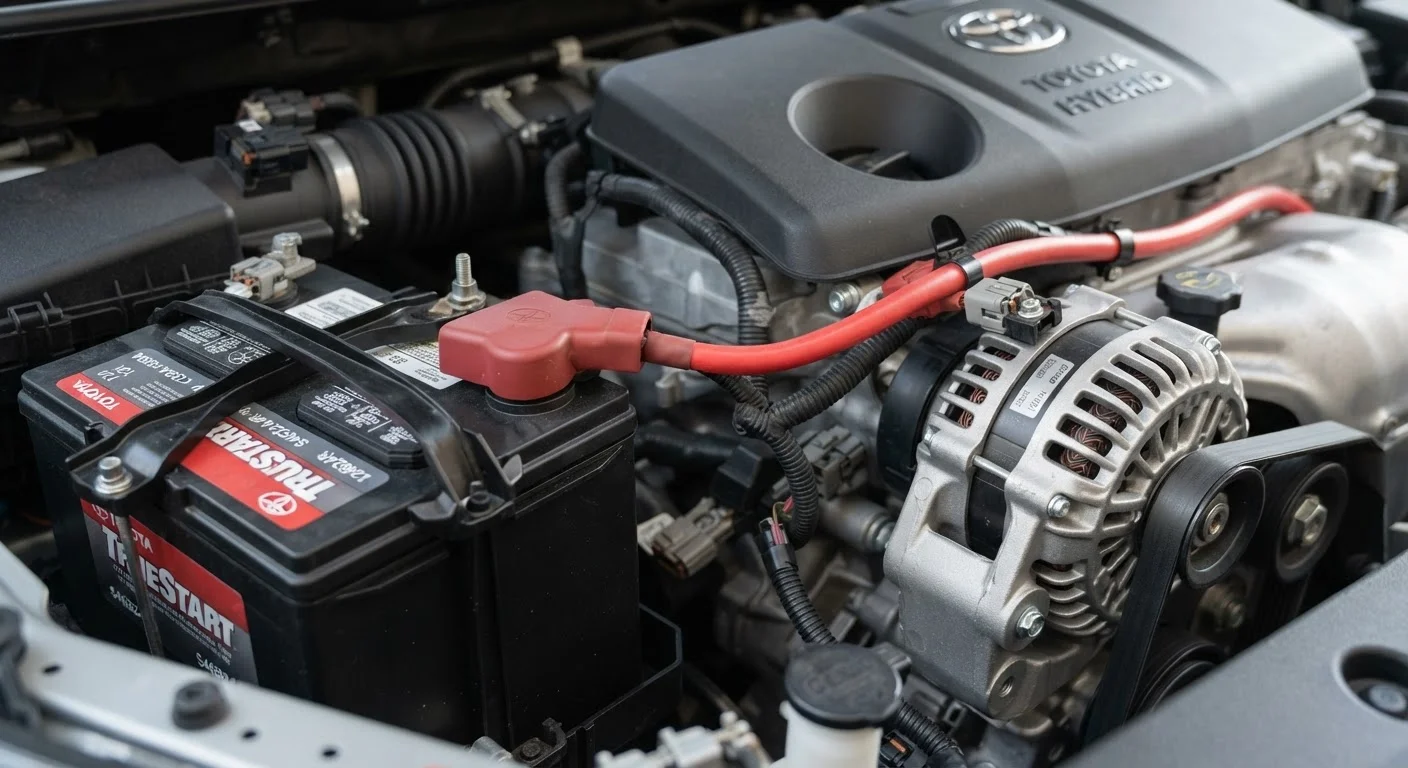
Photo: TheSearchHound.com | One Stop Answer To All Your Questions editorial
Key Takeaways
- The battery starts your car; the alternator keeps it running and recharges the battery.
- A dead battery usually means your car won't start; a failing alternator means it may die while driving.
- Most car batteries last 3-5 years; alternators typically last longer but can fail earlier.
- Warning lights, dimming headlights, and electrical glitches are common signs of alternator trouble.
- Jump-starting a car addresses a dead battery but won't fix an underlying alternator problem.
Two Components, Two Distinct Roles
Many drivers use the words "battery" and "alternator" interchangeably, assuming one backs up the other in some vague way. In reality, these two components operate in sequence and serve completely different purposes - understanding the difference can save you from being stranded or misdiagnosing a problem.
The battery is a storage device. It holds a reserve of electrical energy and delivers it in one powerful burst to the starter motor, which cranks the engine to life. Think of it like a match - it provides the initial spark, but it isn't designed to sustain a flame indefinitely.
The alternator is a generator. Once the engine is running, the alternator converts mechanical energy from the spinning engine into electrical energy. That electricity powers everything from your headlights and air conditioning to your infotainment system - and it simultaneously recharges the battery so it's ready for the next start.
The Battery Does More Than Just Start the Car
What Happens When Each One Fails
Because the battery and alternator each own a distinct part of the electrical process, their failure symptoms tend to look different.
A failing battery most often shows up at startup. You turn the key and hear a slow crank, a series of rapid clicks, or nothing at all. Cold weather accelerates battery failure because low temperatures reduce the battery's ability to deliver current. Most car batteries last 3 to 5 years, though climate and driving habits affect that window.
A failing alternator typically reveals itself while the car is already running. Warning signs include:
- The battery warning light appearing on your dashboard
- Headlights that dim at idle or flicker unexpectedly
- Electrical accessories behaving erratically
- A car that starts fine but stalls shortly after
Because a failing alternator stops recharging the battery, the battery quickly drains trying to compensate. This is why a car with a bad alternator may start once but fail to restart - and why jump-starting the vehicle only masks the real problem. For a broader look at the third component in this system, see how the starter fits into the picture.
Test Both Components Before Replacing Either
Common Misconceptions Worth Clearing Up
One of the most persistent myths is that jump-starting a car with a bad alternator will get you where you need to go. In practice, driving with a failing alternator puts the entire load on the battery, which wasn't designed to run a car solo. The vehicle may stall in traffic as the battery depletes - a safety risk, not just an inconvenience.
Another misconception: that a new battery will fix charging problems. If the alternator isn't working correctly, a brand-new battery will drain just as quickly as the old one. The charging system needs to be diagnosed as a whole. This is one of the automotive maintenance myths that cost drivers unnecessary money - treating the symptom rather than the cause.
Finally, some drivers assume that if the battery light isn't on, the charging system is fine. Battery warning lights are tied to voltage thresholds; an alternator can underperform without triggering the light right away. Periodic charging-system checks - something often overlooked, as noted in our guide to vehicle maintenance items drivers frequently overlook - catch these issues before they become roadside emergencies.
3-5 years
Typical car battery lifespan
Most automotive industry guidance places average battery life in the 3-to-5-year range, with climate and usage affecting longevity.
80,000-150,000 mi
Common alternator lifespan range
Alternators generally outlast batteries but vary widely based on vehicle type, electrical load, and maintenance history.
~13.5-14.5V
Normal alternator output voltage
A properly functioning alternator keeps the charging system voltage within this range while the engine is running at normal operating speed.
Frequently Asked Questions
The content on this site is provided for informational purposes only and should not be considered a substitute for professional advice. While we strive to provide accurate and up-to-date information, we make no guarantees regarding its completeness or accuracy. Always consult a qualified professional for advice specific to your circumstances before making any decisions.