
Tile vs. Luxury Vinyl Plank: Choosing the Right Floor for Wet Areas

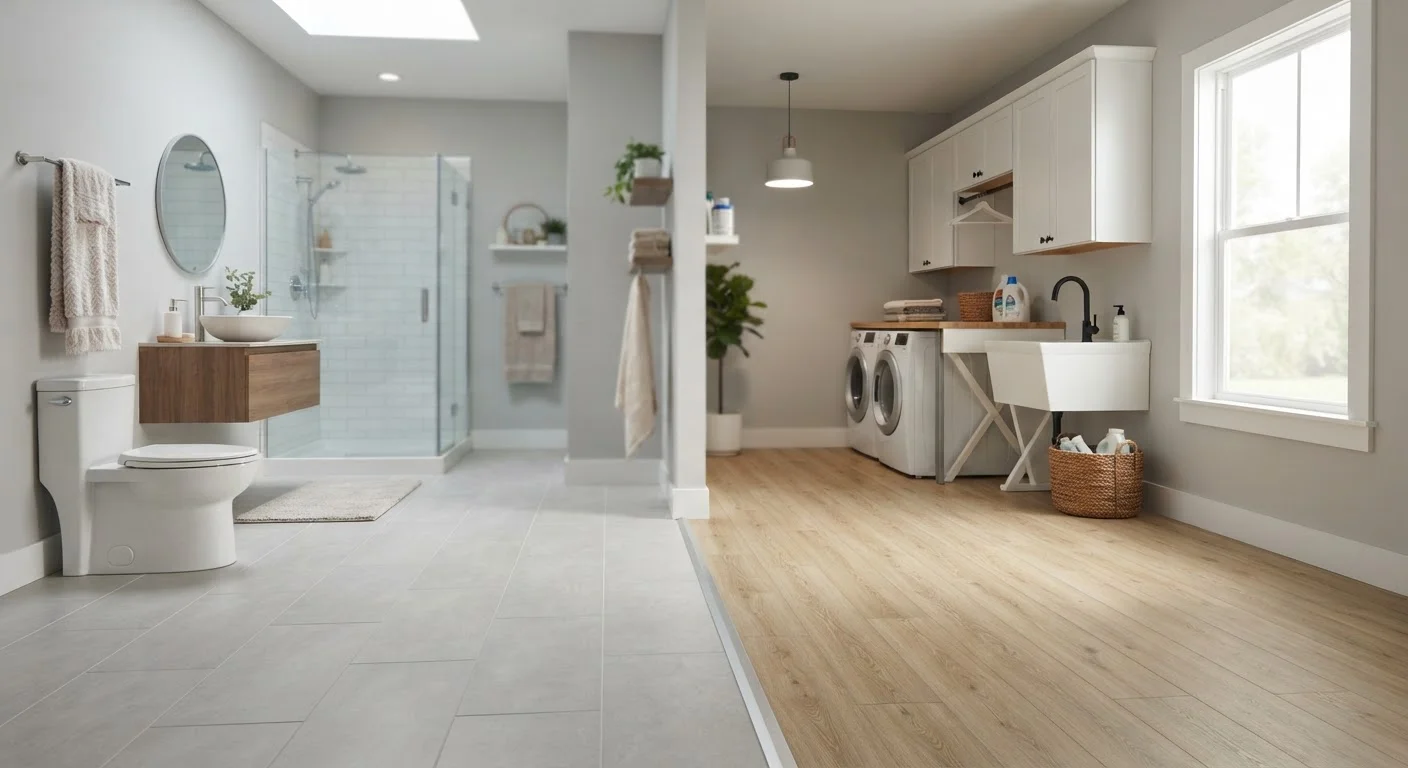
Photo: TheSearchHound.com | One Stop Answer To All Your Questions editorial
Key Takeaways
- Porcelain tile is 100% waterproof; LVP is highly water-resistant but not impervious to prolonged flooding.
- LVP is generally less expensive to purchase and install than tile, especially when DIYing.
- Tile requires more labor-intensive installation but typically lasts decades with minimal replacement.
- LVP is warmer and softer underfoot, making it more comfortable in laundry rooms and half-baths.
- Grout joints in tile require regular sealing and cleaning to prevent mold in high-humidity areas.
- Both materials work well in kitchens and bathrooms, but tile remains the preferred choice for shower floors and surrounds.
Understanding What Each Material Actually Is
Before comparing the two head-to-head, it helps to understand what you are actually buying. Ceramic and porcelain tile are fired clay products. Porcelain is denser and less porous than standard ceramic, making it the preferred choice for floors that see real water. Both types require a mortar bed, grout joints, and typically a cement backer board substrate - work that demands patience and some skill.
Luxury Vinyl Plank is a multi-layer synthetic flooring product. A rigid or semi-rigid core sits between a photographic design layer and a clear protective wear layer. Most LVP sold today is described as waterproof core flooring, meaning the plank itself will not swell or warp when wet - a significant upgrade over older laminate products. Installation usually relies on a floating click-lock system that requires no glue.
| Criterion | Ceramic / Porcelain Tile | Luxury Vinyl Plank (LVP) |
|---|---|---|
| Waterproofing | 100% waterproof (tile body) | Waterproof planks; seams not fully sealed |
| Typical lifespan | 20-50+ years | 10-25 years (warranty-based) |
| DIY difficulty | Moderate to high | Low to moderate |
| Comfort underfoot | Hard, cold | Slightly cushioned, warmer |
| Grout maintenance | Required; periodic sealing | None |
| Suitable for shower floors | Yes | No |
| Repair ease | Individual tiles replaceable | Planks replaceable if stock matches |
| Subfloor prep required | Cement backer board typically needed | Flat, clean subfloor; no backer board |
Waterproofing: Where the Real Difference Lies
This is the most important distinction for wet-area use. Glazed porcelain tile has a water absorption rate of less than 0.5%, which means it is effectively impervious to moisture. The tile body itself will not degrade. However, grout is porous and can absorb water and harbor mold if not properly sealed and maintained. Epoxy grout reduces this risk considerably.
LVP planks are waterproof as individual units, but water can still migrate through seams if the floor is regularly flooded or if the installation is imperfect. This makes LVP a strong choice for bathrooms, kitchens, and laundry rooms - but it should not be used as a shower floor or in areas where standing water is routine.
A Note on Shower Floors Specifically
Installation: What to Expect From Each
Tile installation is labor-intensive. A proper substrate - usually cement board over the subfloor - must be flat and sound. Tiles are set in thin-set mortar, spaced with plastic tile spacers, then grouted after curing. Mistakes made during layout or leveling are difficult and expensive to reverse. Most homeowners hire a professional tile setter for bathrooms, particularly shower areas. Expect to account for permits or inspections if the work involves any plumbing changes.
LVP is significantly more forgiving. Most products float over the existing subfloor without adhesive. The subfloor must still be clean, flat, and dry - any high spots or dips greater than about 3/16 inch over 10 feet should be corrected first. A careful DIYer with basic tools can typically complete a laundry room or small bathroom in a day. No drying time is needed, meaning the room is usable immediately.
Less than 0.5%
Water absorption rate for porcelain tile
The ANSI A137.1 standard classifies porcelain tile as impervious when its water absorption rate falls below 0.5%.
12 mil+
Wear layer thickness for high-traffic LVP
Flooring industry guidance generally recommends a minimum 12-mil wear layer for residential kitchens and bathrooms subject to regular foot traffic.
Cost, Longevity, and Maintenance
Material and installation costs vary by region and product quality, but tile generally costs more to install professionally due to the labor involved in mortar work and grouting. LVP materials sit in a broad price range, and because self-installation is genuinely achievable, the overall project cost can be meaningfully lower.
On longevity, tile has a clear edge. A well-installed tile floor can outlast the home. LVP, depending on wear-layer thickness - measured in mils - typically carries warranties ranging from 10 to 25 years for residential use. Thicker wear layers (12 mil and above) are worth seeking out for kitchens and bathrooms.
Maintenance is straightforward for both. Tile requires periodic grout sealing - generally every one to three years depending on traffic - and benefits from pH-neutral cleaners that won't degrade grout over time. LVP requires no sealing and is cleaned with a damp mop and a vinyl-safe cleaner; avoid steam mops, which can damage the wear layer and void warranties.
The content on this site is provided for informational purposes only and should not be considered a substitute for professional advice. While we strive to provide accurate and up-to-date information, we make no guarantees regarding its completeness or accuracy. Always consult a qualified professional for advice specific to your circumstances before making any decisions.