
Why Your Tomatoes Keep Cracking Before They Ripen

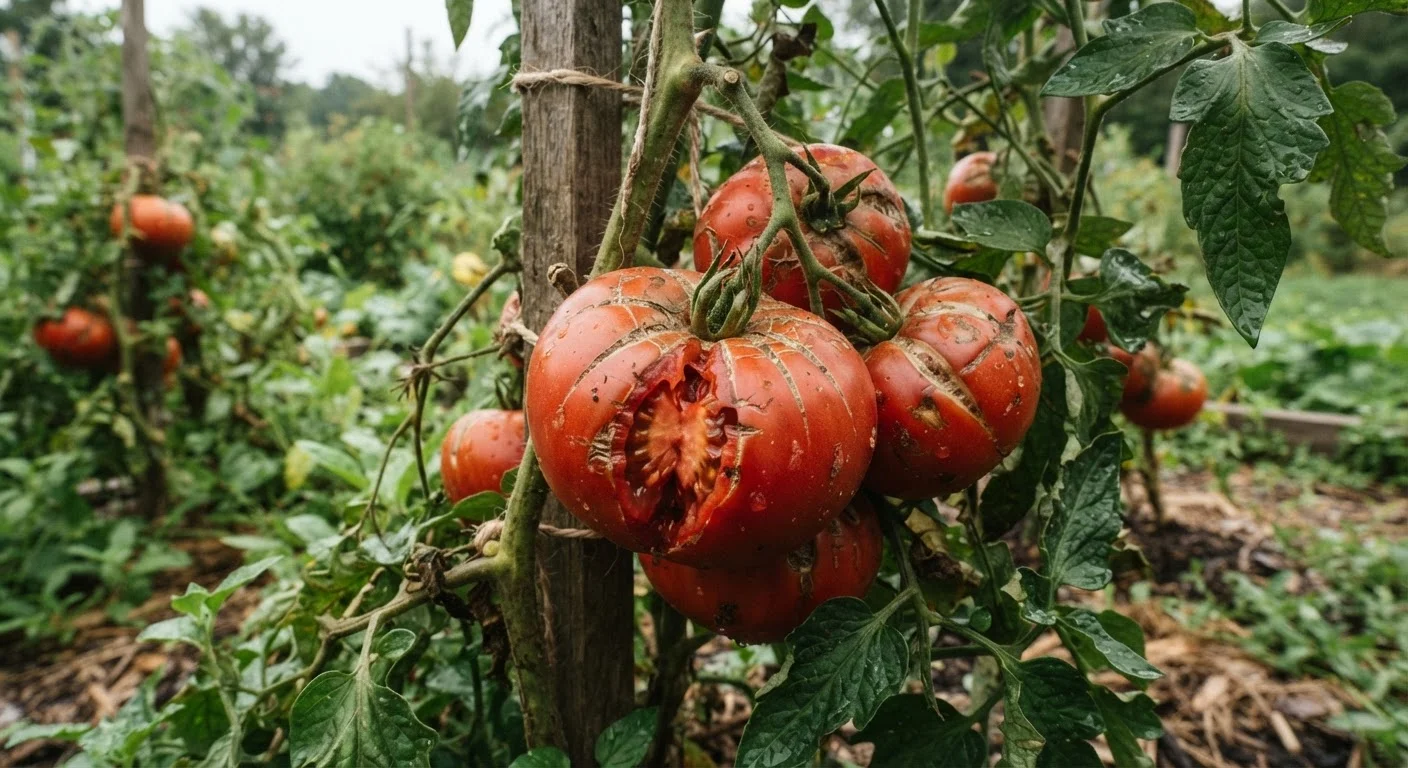
Photo: TheSearchHound.com | One Stop Answer To All Your Questions editorial
Key Takeaways
- Inconsistent watering is the leading cause of tomato fruit cracking before harvest.
- Rapid skin expansion from sudden moisture surges causes the fruit to split open.
- Mulching and drip irrigation help maintain the steady soil moisture tomatoes need.
- Some tomato varieties are naturally more crack-resistant than others.
- Soil calcium levels influence skin strength and can reduce cracking risk.
What Actually Causes Tomatoes to Crack
Cracking occurs when a tomato's interior grows faster than its outer skin can stretch. The fruit absorbs water rapidly - often after a dry spell followed by heavy rain or a surge of irrigation - and the pressure builds until the skin gives way. There are two main crack patterns: radial cracks that run from the stem down, and concentric cracks that form rings around the shoulder. Both signal the same underlying problem: uneven water uptake.
Understanding this mechanism is the first step toward prevention. The skin of a tomato is largely set by the time the fruit starts coloring, so large swings in soil moisture during the final ripening stages are especially damaging. Hot weather accelerates water uptake and makes the situation worse.
~2-3 inches
Weekly water tomatoes need
University extension guidelines commonly recommend tomatoes receive roughly 1 to 2 inches of water per week, with higher needs during hot, dry periods.
3-4 inches
Ideal mulch depth around plants
Applying 3 to 4 inches of organic mulch around tomato plants is widely cited by horticultural experts as an effective way to buffer soil moisture fluctuations.
Common Mistakes That Lead to Splitting
Most cracking problems in home gardens trace back to a handful of avoidable errors. Recognizing them early can save an entire harvest.
Watering inconsistently - alternating between dry soil and heavy soaks throughout the growing season.
Skipping mulch entirely, leaving bare soil around the base of tomato plants.
Leaving fruit on the vine too long trying to achieve perfect red color before picking.
Planting crack-prone varieties in climates with unpredictable summer rainfall patterns.
Avoid Overwatering After a Dry Period
Soil Health and Variety Selection Also Matter
Beyond watering habits, two often-overlooked factors play a meaningful role in cracking: soil nutrition and plant selection.
Calcium deficiency weakens cell walls in the fruit, making skin more susceptible to splitting. This isn't always a shortage of calcium in the soil - it can result from inconsistent watering that prevents the plant from taking up available calcium efficiently. Steady moisture levels help the plant transport calcium where it's needed. A soil test can confirm whether an amendment is warranted; consult your local cooperative extension office for guidance on interpreting results and choosing appropriate amendments.
Variety matters significantly. Some tomato varieties are bred for thicker, more flexible skins that resist cracking. If you consistently lose fruit to splitting regardless of your watering practices, consider selecting varieties described by seed suppliers as crack-resistant for your next growing season. Heirloom varieties, while beloved for flavor, tend to have thinner skins and are more vulnerable.
The content on this site is provided for informational purposes only and should not be considered a substitute for professional advice. While we strive to provide accurate and up-to-date information, we make no guarantees regarding its completeness or accuracy. Always consult a qualified professional for advice specific to your circumstances before making any decisions.