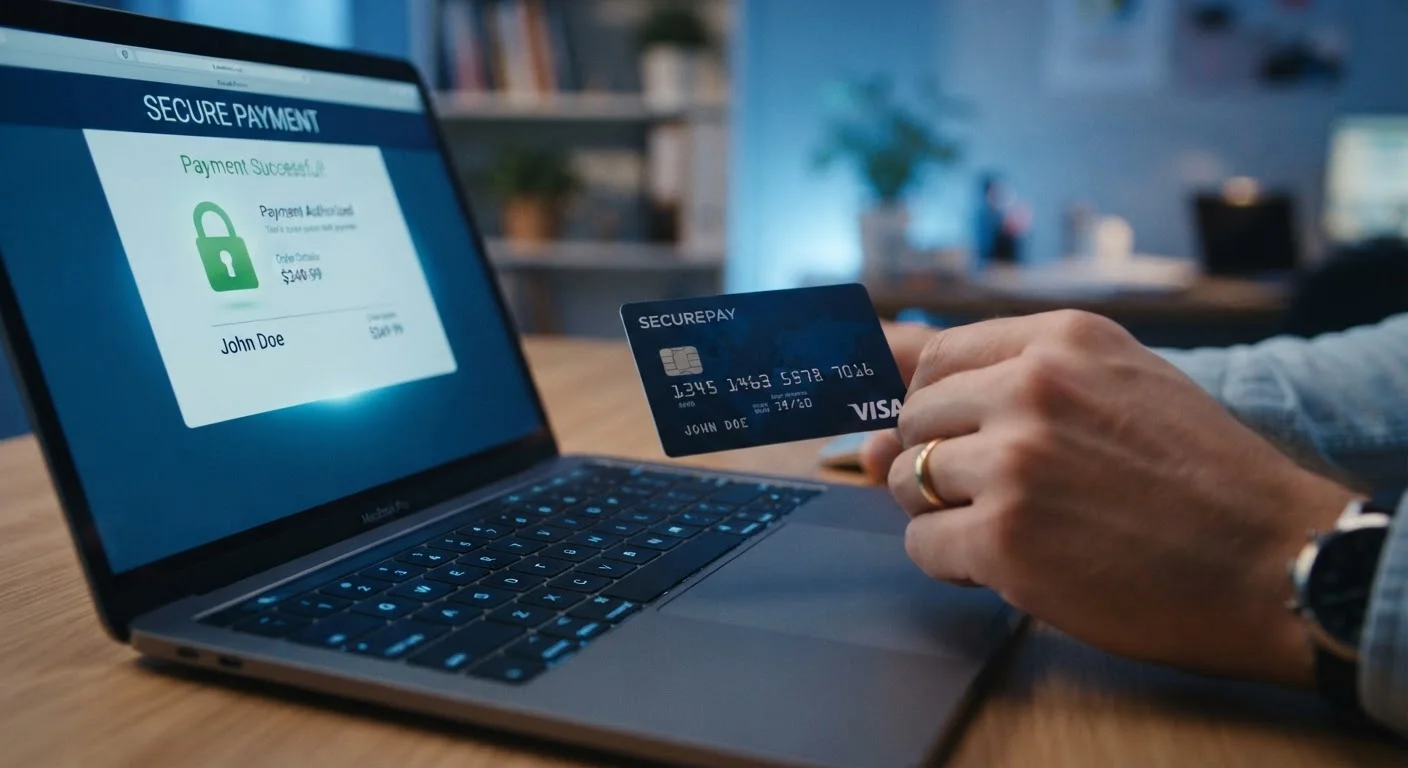
Virtual card numbers, two-factor authentication, and secure connections explained for everyday shoppers who want to reduce financial risk.
Why Payment Security Deserves Attention
Online shopping has become a routine part of daily life, but the convenience comes with real financial risks. Payment card fraud, phishing, and retailer data breaches affect millions of Americans each year. The good news: most fraud succeeds because of gaps in basic habits, not because attackers have sophisticated tools beyond any consumer's ability to understand.
This guide focuses on concrete, proven practices - not technical jargon - that any shopper can apply immediately. Before worrying about your payment details, it's also worth knowing how to evaluate the site itself. Our article on signals that a website is legitimate walks through the markers that distinguish trustworthy stores from risky ones.
Core Practices for Safer Payments
The following practices address the most common ways payment information is compromised during online shopping. Adopting even a few of them meaningfully reduces your exposure.
1
Verify HTTPS encryption before entering any payment information
HTTPS (HyperText Transfer Protocol Secure) encrypts data transmitted between your browser and the website, making it much harder for third parties to intercept your card number or billing details. A site without HTTPS exposes your information in plaintext during transmission. Look for a padlock icon in the browser address bar and confirm the URL begins with 'https://'.
Example: Before typing in your card number at checkout, glance at the address bar - if it reads 'http://' rather than 'https://', close the page and do not proceed.
2
Use a virtual card number for online purchases whenever possible
Many banks and credit card issuers offer virtual card numbers - temporary, randomly generated numbers linked to your real account. Even if a retailer experiences a data breach, the virtual number can be immediately cancelled without affecting your actual card. This is especially valuable for one-time purchases from unfamiliar stores.
Example: A shopper uses their bank's virtual card feature to generate a single-use number for an unfamiliar online retailer; when that retailer later reports a data breach, the shopper's actual card number is never at risk.
3
Enable two-factor authentication on your financial accounts and email
Two-factor authentication (2FA) requires a second form of verification - typically a code sent to your phone - in addition to your password. If a fraudster obtains your login credentials through a phishing attack or data leak, 2FA prevents them from accessing your accounts without also having your physical device. Enabling it on your email is equally important, since email access can unlock password resets for linked accounts.
Example: After enabling 2FA on their bank account, a consumer receives a login alert from an unrecognized device - the attempted breach fails because the attacker lacks the verification code.
4
Prefer credit cards over debit cards for online transactions
Credit cards are generally backed by stronger consumer protections under federal law, including the Fair Credit Billing Act, which limits your liability for unauthorized charges. Debit cards draw directly from your bank balance, meaning fraudulent charges affect your available funds immediately and the dispute process can take longer to resolve.
Example: A shopper who uses a credit card for an online purchase and later finds an unrecognized charge can dispute it without the funds leaving their bank account while the investigation proceeds.
5
Avoid storing payment details on sites you visit infrequently
Retailers that store your card data create an additional point of vulnerability. If their systems are compromised, your saved information is at risk. The convenience of one-click checkout rarely outweighs this exposure for sites you use only occasionally. Reserve stored cards for a small number of trusted, frequently used platforms.
Example: Rather than saving card details on a specialty site used once a year, a shopper opts to re-enter payment information each visit - an extra minute that eliminates that retailer as a potential breach vector.
6
Review your account statements at least weekly for unauthorized activity
Early detection limits the financial and administrative damage of fraud. Most card issuers have time limits within which disputes must be filed, so prompt review keeps your options open. Many banks also offer transaction alert notifications by text or email, which can flag unfamiliar charges the moment they post.
Example: A cardholder who reviews their statement every few days spots a small, unfamiliar test charge - a common tactic fraudsters use before making larger purchases - and reports it before further damage occurs.
Quick Actions You Can Take Right Now
You don't need to overhaul your habits overnight. Start with a handful of changes that take only a few minutes and deliver immediate protection.
high
Check whether your bank or credit card issuer offers virtual card numbers and activate the feature today if available.
high
Turn on transaction alerts in your bank's mobile app so you're notified of every charge in real time.
high
Log into any financial accounts and enable two-factor authentication under security settings.
medium
Remove saved payment methods from any retailer account you haven't used in the past six months.
What Is a Chargeback?
A chargeback is a dispute process that allows cardholders to reverse a transaction through their card issuer when goods aren't delivered, are misrepresented, or a charge is unauthorized. Credit cards generally offer stronger chargeback protections than debit cards. For a plain-language breakdown of related terms, see
our consumer terms reference.
What to Do If Something Goes Wrong
Even careful shoppers sometimes encounter fraud or billing disputes. Acting quickly matters: contact your card issuer as soon as you identify an unauthorized charge, ask for the card to be frozen or replaced if the number was compromised, and document every step of your dispute with dates and reference numbers.
If a purchase simply didn't arrive or arrived damaged, the path is slightly different. Our guide to handling missing and damaged orders explains who is responsible and when to escalate to your card issuer. For further research before your next purchase, sizing up a seller before you buy covers the due diligence steps worth taking with any unfamiliar retailer.
“Consumers should treat their payment credentials the same way they treat their physical wallet - with active awareness of where it's been and who has had access to it.”
— Consumer Financial Protection Bureau, U.S. federal consumer finance regulatory agency
The content on this site is provided for informational purposes only and should not be considered a substitute for professional advice. While we strive to provide accurate and up-to-date information, we make no guarantees regarding its completeness or accuracy. Always consult a qualified professional for advice specific to your circumstances before making any decisions.