
Night Driving: What Makes It Harder and How to Compensate

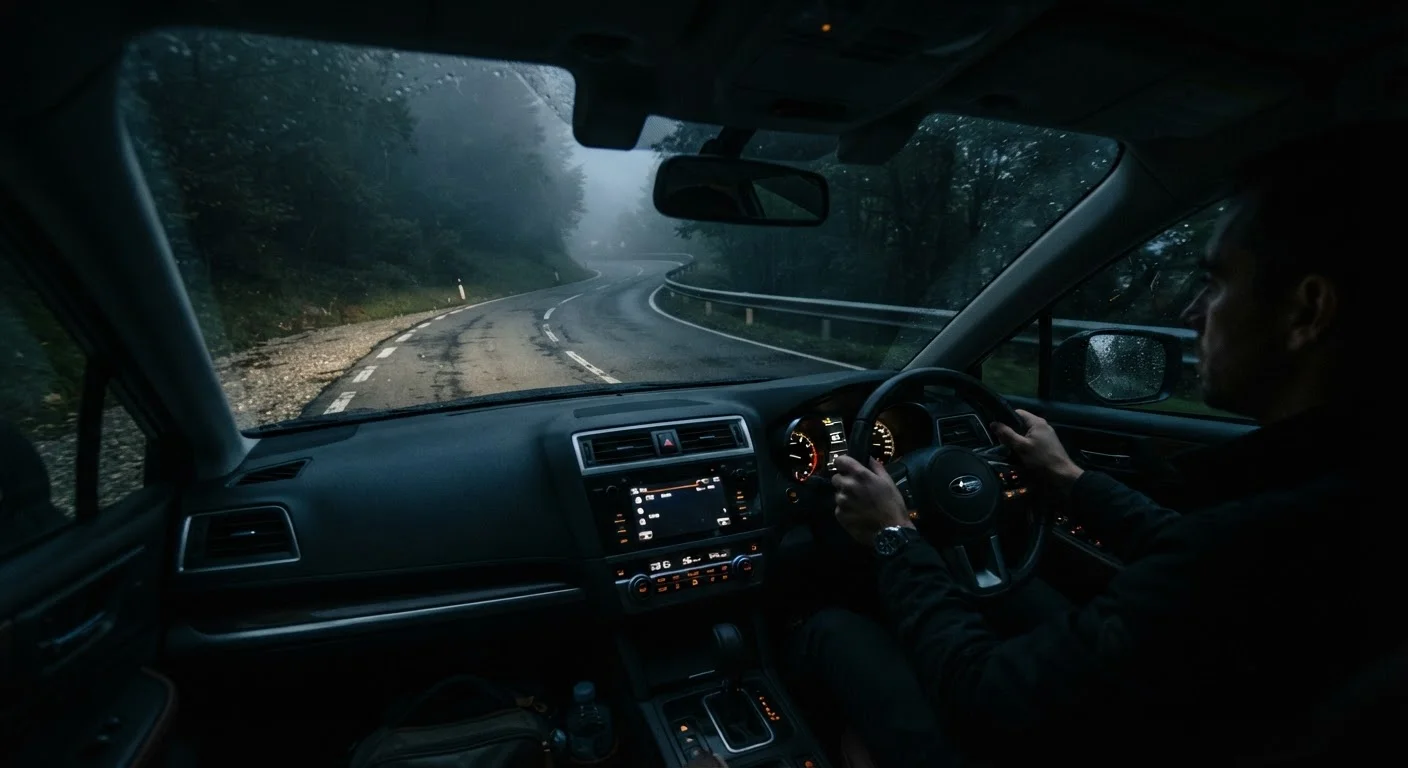
Photo: TheSearchHound.com | One Stop Answer To All Your Questions editorial
Key Takeaways
- Human eyes adapt poorly to darkness, significantly reducing peripheral vision and depth perception at night.
- Headlight glare from oncoming traffic temporarily blinds drivers and is a leading cause of night crashes.
- Fatigue is disproportionately common after dark, impairing reaction time as severely as alcohol.
- Reducing speed and increasing following distance compensates for reduced stopping-sight distance at night.
- Clean headlights, properly aimed beams, and a clear windshield meaningfully improve nighttime visibility.
- Older drivers experience more pronounced night-vision decline and may need additional compensating habits.
Why Night Driving Is Objectively More Dangerous
Driving after dark is not simply a matter of turning on your headlights. According to the National Safety Council, roughly half of all traffic fatalities occur at night despite significantly lower traffic volumes - a disproportionate risk that reflects real physiological and environmental limitations.
The human eye depends on two types of photoreceptors: cones, which function in bright light and detect color and fine detail, and rods, which handle low-light vision but provide less acuity. After sundown, you rely more heavily on rods, which causes measurable reductions in central sharpness, peripheral vision, and depth perception. Your ability to judge the speed and distance of other vehicles declines accordingly.
Glare from oncoming headlights compounds the problem. When a bright light enters a dark-adapted eye, the pupils - which have dilated to gather more light - are temporarily overwhelmed. Recovery can take several seconds, during which you are effectively driving partially blind. Drivers with certain eye conditions, including early cataracts, experience this effect more acutely.
Age matters too. The physiological changes that come with aging directly affect night vision. Pupils in older drivers dilate less, admitting less light, and the eye's lens gradually yellows and scatters light - creating more sensitivity to glare. Drivers over 50 should be especially deliberate about nighttime habits.
Schedule an Annual Eye Exam
What Changes in Your Environment After Dark
Beyond biology, the driving environment itself shifts significantly at night. Pedestrians, cyclists, and animals are far harder to detect - especially those wearing dark clothing or crossing unlit stretches of road. Road markings and signage that rely on retroreflective material can fade against poorly aimed or dirty headlights.
Your headlights on low beam typically illuminate roughly 160 feet ahead. At 60 mph, your stopping distance in ideal conditions can exceed 240 feet - meaning you may be driving faster than your headlights can protect you, a phenomenon sometimes called overdriving your headlights. High beams extend coverage to around 350-500 feet and should be used on unlit rural roads whenever no oncoming traffic is present.
Night driving also frequently coincides with fatigue, particularly late-night and early-morning hours. The body's circadian rhythm creates natural dips in alertness between midnight and 6 a.m. - a window when drowsy driving incidents peak. Our companion guide on recognizing the early signs of driver fatigue covers this in greater depth. Weather conditions like rain and fog, which further reduce visibility, are addressed in our guide to driving in poor weather.
Don't Underestimate Wildlife Hazards
How to Adjust Your Driving for Safer Nights
The steps below address the most controllable risk factors in nighttime driving - your vehicle condition, speed management, gaze habits, and pre-trip preparation. Follow these consistently and you meaningfully reduce your exposure to the elevated risks the dark creates.
What you will need
Inspect and optimize your headlights before driving
Check that all exterior lights - headlights, taillights, and turn signals - are functioning. Wipe headlight lenses clean; oxidized or dirty lenses can reduce output by a significant margin. If lenses appear yellowed or fogged, a restoration kit available at auto parts stores can help, though severe cases warrant professional attention.
Confirm that your headlights are aimed correctly. Misaligned beams either blind oncoming drivers or point too low to be useful. Most dealerships and alignment shops can adjust beam aim for a modest fee.
Clean your windshield thoroughly - inside and out
Interior windshield film - a haze that builds up from outgassing plastics and HVAC dust - causes severe glare scattering when hit by oncoming lights. Use a microfiber cloth and an ammonia-free glass cleaner to wipe the interior surface in a circular motion, then finish with a dry cloth. Clean the exterior as well, paying attention to lower wiper-blade streaks.
Reduce your speed to match your sight distance
On low beams, slow down enough so that you can stop within the distance your headlights illuminate. A practical rule: if you're on an unlit road at highway speeds on low beam, you are likely overdriving your lights. Drop your speed until your stopping distance comfortably fits within your illuminated range.
This principle is especially important on unfamiliar roads, curves, and in areas with deer or other wildlife activity.
Increase your following distance
The standard three-second following distance recommended for daytime driving should be extended to at least four seconds at night. This gives you additional time to react to hazards that emerge from darkness - a stopped vehicle, a pedestrian, or road debris - that your headlights reveal only at closer range than daylight would.
Night driving also increases the risk of lane-change errors. Our guide on blind spots and lane-change safety offers techniques that apply equally after dark.
Manage glare from oncoming headlights
When facing bright oncoming headlights, shift your gaze to the right edge of your lane - the white fog line, if present - rather than looking directly at the light source. This keeps you oriented to your lane without forcing your pupils to contract sharply. Avoid looking into your rearview mirror when a vehicle with bright headlights is directly behind you; flip the mirror to its night setting to diffuse the glare.
Monitor yourself for fatigue and act early
Drowsiness after dark can develop quickly and is often underestimated by the driver experiencing it. Watch for yawning, heavy eyelids, drifting within your lane, or missing exits. If any of these appear, pull off safely at a rest area or well-lit parking lot. A 20-minute rest can restore short-term alertness; caffeine can help briefly but is not a substitute for sleep.
Plan long nighttime routes with scheduled stops every 90 to 120 minutes. If possible, share driving duties with a passenger.
The content on this site is provided for informational purposes only and should not be considered a substitute for professional advice. While we strive to provide accurate and up-to-date information, we make no guarantees regarding its completeness or accuracy. Always consult a qualified professional for advice specific to your circumstances before making any decisions.