
Transmission Types Every Driver Should Know About

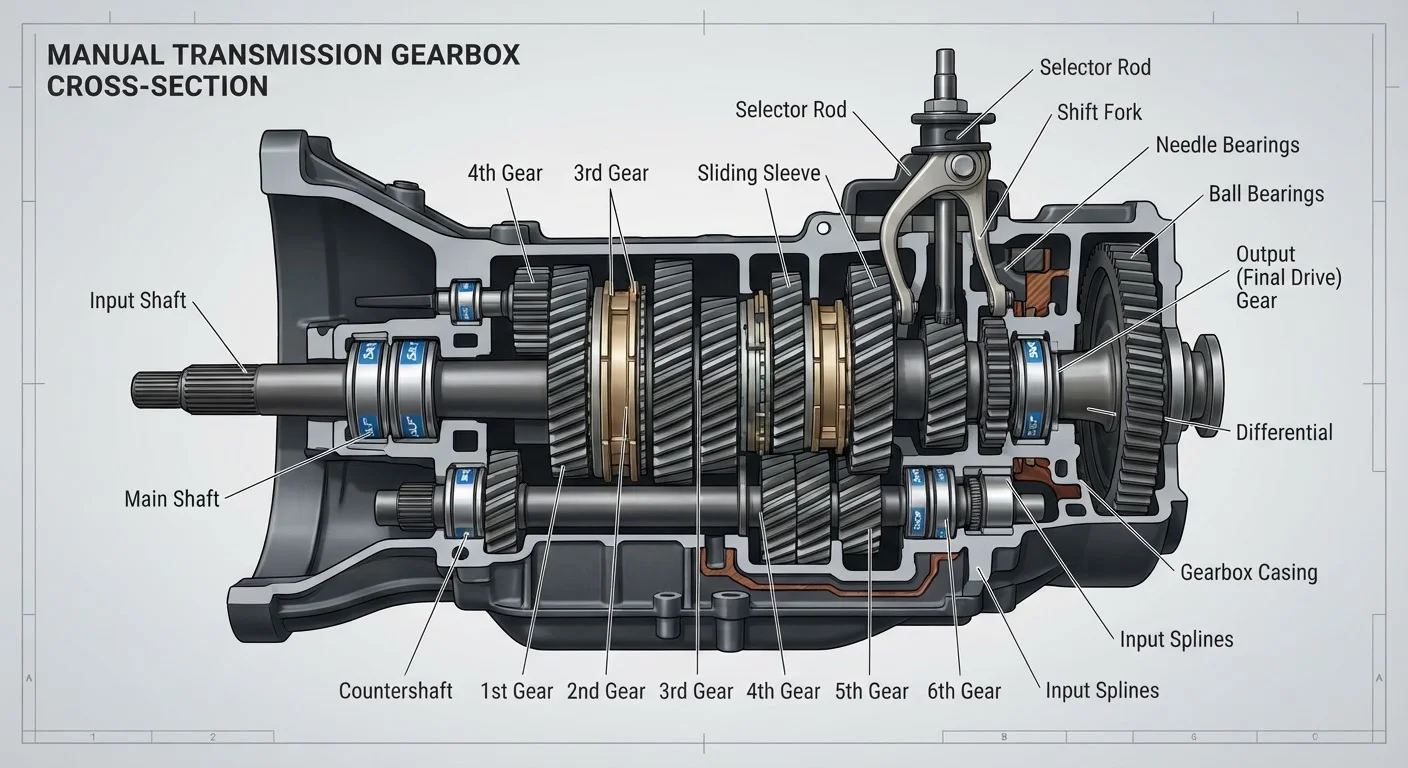
Photo: TheSearchHound.com | One Stop Answer To All Your Questions editorial
Key Takeaways
- The transmission controls how engine power is converted into wheel movement across different speeds.
- Automatic transmissions shift gears on their own; manual transmissions require the driver to operate a clutch and gear selector.
- CVTs provide seamless acceleration by using a belt-and-pulley system instead of fixed gear ratios.
- Dual-clutch transmissions combine manual efficiency with automatic-like convenience for quicker gear changes.
- Transmission fluid is essential to maintain - low or degraded fluid is a leading cause of transmission problems.
- Your driving habits and priorities - fuel economy, control, simplicity - matter most when evaluating transmission types.
What a Transmission Actually Does
Your engine produces power within a relatively narrow range of speeds, measured in RPM (revolutions per minute). But driving requires a wide range of wheel speeds - from a dead stop to highway cruising. The transmission bridges that gap by selecting the right gear ratio, which multiplies or reduces engine output to match what the wheels need at any given moment.
Think of it like the gears on a bicycle: a low gear gives you torque to climb hills; a high gear lets you cruise efficiently on flat ground. Your car's transmission does this automatically or manually, depending on its design. Understanding the basics puts you in a better position to recognize warning signs and have informed conversations with a mechanic.
Gear ratio
The relationship between the speed of the engine and the speed of the wheels. Lower ratios provide more pulling force; higher ratios allow faster speeds with less engine strain.
Torque converter
A fluid-filled coupling used in automatic transmissions that transfers engine power to the transmission without a physical clutch pedal.
Clutch
A mechanical component that temporarily disconnects the engine from the transmission so gears can be changed without grinding or damage.
RPM
Revolutions per minute - a measure of how fast the engine's crankshaft is spinning. Transmissions help keep the engine operating within an efficient RPM range.
Transmission fluid
A specialized lubricating fluid that keeps internal transmission components cool, clean, and moving smoothly. It degrades over time and must be serviced regularly.
Automatic Transmissions
The automatic transmission (AT) is the most common type on American roads today. It uses a component called a torque converter - a fluid coupling that replaces the manual clutch - to transfer engine power to the transmission. A hydraulic control system and, in modern vehicles, an onboard computer manage gear selection without driver input.
Traditional automatics come with a set number of gear ratios - commonly six, eight, or even ten speeds in newer vehicles. More speeds generally allow the engine to operate more efficiently across a wider range of driving conditions. For most everyday drivers, the automatic offers the most straightforward experience: get in, drive, and let the vehicle handle the rest.
Check Your Owner's Manual First
Manual Transmissions
A manual transmission (also called a stick shift or standard) puts gear selection in the driver's hands - literally. The driver uses a clutch pedal to temporarily disconnect the engine from the drivetrain, selects a gear with the shift lever, then releases the clutch to re-engage. This loop repeats with every gear change.
Manual transmissions tend to be mechanically simpler, which can translate to lower repair costs in some situations. Many driving enthusiasts prefer them for the sense of direct connection and control they offer. However, they require practice - particularly in hilly terrain or heavy stop-and-go traffic - and are becoming increasingly rare in the US market as automatics and newer designs have matured.
Pairing a manual transmission with the right drivetrain setup can significantly affect how a vehicle handles. For a deeper look at how power gets to the wheels, see our guide on AWD, 4WD, and FWD differences.
CVT and Dual-Clutch Transmissions
Two other designs are increasingly common and worth understanding:
Continuously Variable Transmission (CVT)
A CVT uses a belt (or chain) running between two variable-diameter pulleys rather than fixed gear steps. This lets the engine maintain an ideal RPM for efficiency or power output at virtually any speed. CVTs are popular in fuel-efficient sedans and hybrid vehicles. Some drivers notice the engine holds a steady, high-pitched tone during acceleration - a normal characteristic of the design, not a malfunction.
Dual-Clutch Transmission (DCT)
A dual-clutch transmission uses two separate clutches - one for odd-numbered gears, one for even - allowing the next gear to be pre-selected before the current shift completes. The result is extremely fast, smooth gear changes. DCTs offer efficiency closer to a manual with the ease of an automatic. Early versions could feel hesitant at low speeds, but modern iterations have largely addressed this.
CVT 'Drone' Is Normal
Choosing and Caring for Your Transmission
No single transmission type suits every driver. Consider these practical factors:
- Daily driving conditions: Heavy city traffic favors automatics or CVTs; open highway driving suits any type well.
- Driving engagement: If you want direct control and enjoy the mechanics of driving, a manual may appeal to you.
- Fuel economy priorities: CVTs and modern multi-speed automatics both compete closely here.
- Long-term costs: Research the service requirements and typical repair history for any transmission type in a vehicle you're considering.
Regardless of type, transmission fluid is critical. Degraded or low fluid is among the most common causes of transmission trouble. Our fluid-checking guide walks you through how to locate and assess your vehicle's essential fluids. For a broader foundation on keeping your car in shape, the car maintenance basics guide is a strong starting point. Always follow your owner's manual's service intervals, and consult a qualified mechanic if you notice slipping, shuddering, delayed engagement, or unusual sounds from your transmission.
Frequently Asked Questions
The content on this site is provided for informational purposes only and should not be considered a substitute for professional advice. While we strive to provide accurate and up-to-date information, we make no guarantees regarding its completeness or accuracy. Always consult a qualified professional for advice specific to your circumstances before making any decisions.