
All-Wheel Drive, Four-Wheel Drive, and Front-Wheel Drive: What Sets Them Apart

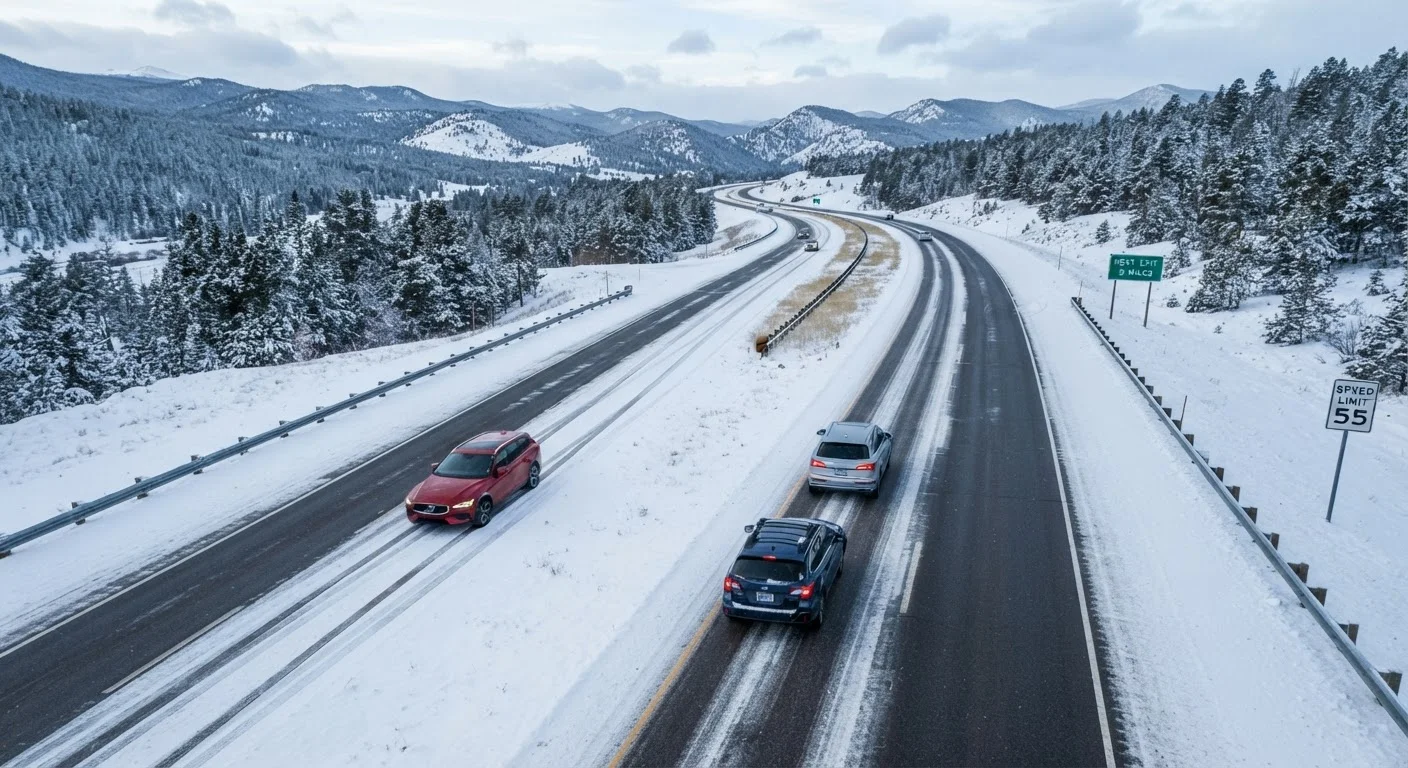
Photo: TheSearchHound.com | One Stop Answer To All Your Questions editorial
Key Takeaways
- FWD is the most fuel-efficient and affordable drivetrain, well-suited for everyday commuting.
- AWD distributes power automatically to all four wheels and requires no driver input to activate.
- 4WD is designed for serious off-road or low-traction situations and is often driver-selectable.
- No drivetrain system eliminates the need for appropriate tires and safe driving habits.
- Your driving environment - not marketing language - should guide your drivetrain choice.
How Power Gets to the Wheels
The terms AWD, 4WD, and FWD describe how an engine's power is distributed to a vehicle's wheels - a characteristic called the drivetrain or driveline. This distinction shapes how a vehicle behaves in dry, wet, slippery, and rough conditions. Understanding each system helps you interpret what a vehicle is actually capable of, rather than relying on marketing shorthand.
To frame the comparison: all drivetrain systems are managing the same fundamental challenge - converting engine torque into forward motion across varying surface conditions. They just do it in different ways, with different trade-offs. For a deeper look at how power reaches the wheels via the gearbox, see our guide to transmission types.
| Front-Wheel Drive (FWD) | All-Wheel Drive (AWD) | Four-Wheel Drive (4WD) | |
|---|---|---|---|
| Wheels powered | Front two wheels only | All four, automatically | All four, driver-selectable |
| Driver input required | None | None (fully automatic) | Yes - mode selection needed |
| Best surface | Paved roads | Paved and lightly unpaved | Off-road and severe terrain |
| Fuel economy impact | Most efficient | Slight reduction vs. FWD | Least efficient when active |
| Typical vehicle types | Sedans, compacts, crossovers | SUVs, crossovers, some sedans | Trucks, body-on-frame SUVs |
| Cost (generally) | Lowest | Moderate premium | Moderate to high premium |
Front-Wheel Drive (FWD): The Everyday Workhorse
Front-wheel drive sends engine power exclusively to the front two wheels. Because the front wheels handle both steering and propulsion, the mechanical layout is compact - reducing vehicle weight and manufacturing cost. This efficiency makes FWD the dominant configuration in sedans, compact cars, and many crossovers sold in the United States.
In everyday conditions, FWD performs reliably. The weight of the engine sitting over the drive wheels improves traction compared to older rear-wheel drive designs. However, FWD vehicles can experience torque steer - a pulling sensation through the steering wheel under hard acceleration - and they can struggle in deep snow or on steep, unpaved grades where weight shifts rearward and reduces front-wheel grip.
Winter Tires Work With Any Drivetrain
All-Wheel Drive (AWD): Automatic Traction Management
All-wheel drive powers all four wheels simultaneously, but the key distinction from 4WD is that it operates automatically. A center differential and electronic sensors monitor wheel slip in real time, redistributing torque without any driver intervention. This makes AWD especially practical for drivers who encounter unpredictable weather - rain, light snow, or mixed pavement - without needing to actively engage a system.
AWD is common in crossovers, SUVs, and many performance sedans. It improves confidence on slippery roads, but it adds mechanical complexity and weight, which modestly reduces fuel economy compared to FWD. Critically, AWD helps with acceleration traction but does not shorten braking distances. Good-quality tires still matter enormously. For a full picture of how road conditions change what your vehicle can do, our wet and winter driving guide covers the details.
Four-Wheel Drive (4WD): Off-Road Capability on Demand
Four-wheel drive - often called 4x4 - is purpose-built for demanding terrain. Unlike AWD, traditional 4WD locks the front and rear axles together so they rotate at the same speed, maximizing traction on loose or uneven surfaces. Most 4WD systems are driver-selectable, offering modes such as 2H (two-wheel high), 4H (four-wheel high), and 4L (four-wheel low, for slow, technical terrain like rock crawling or deep mud).
Because axles are locked in 4WD mode, driving on dry pavement with the system engaged can stress drivetrain components - a phenomenon called drivetrain binding. Most manufacturers specify that 4H should only be used on slippery or loose surfaces, not dry asphalt. 4WD adds weight, cost, and mechanical complexity, and it consumes more fuel than FWD or AWD. For drivers who rarely leave paved roads, the additional capability often goes unused.
Choosing the Right System for Your Driving Life
The most practical question isn't which system is technically superior - it's which one matches the conditions you actually drive in. An AWD crossover in a snowy region offers real-world benefit; the same vehicle in southern California may never use that capability. A capable 4WD truck is invaluable for a driver who regularly tows or navigates unpaved trails, but represents unnecessary complexity for a daily urban commuter.
No drivetrain system is a substitute for appropriate tires, safe following distances, or sound driving judgment. Safe driving practices remain the most reliable traction system available, regardless of what's powering your wheels. Understanding your drivetrain is one piece of the puzzle - knowing how to drive it responsibly is another.
The content on this site is provided for informational purposes only and should not be considered a substitute for professional advice. While we strive to provide accurate and up-to-date information, we make no guarantees regarding its completeness or accuracy. Always consult a qualified professional for advice specific to your circumstances before making any decisions.