
Monthly Budget Setup Checklist

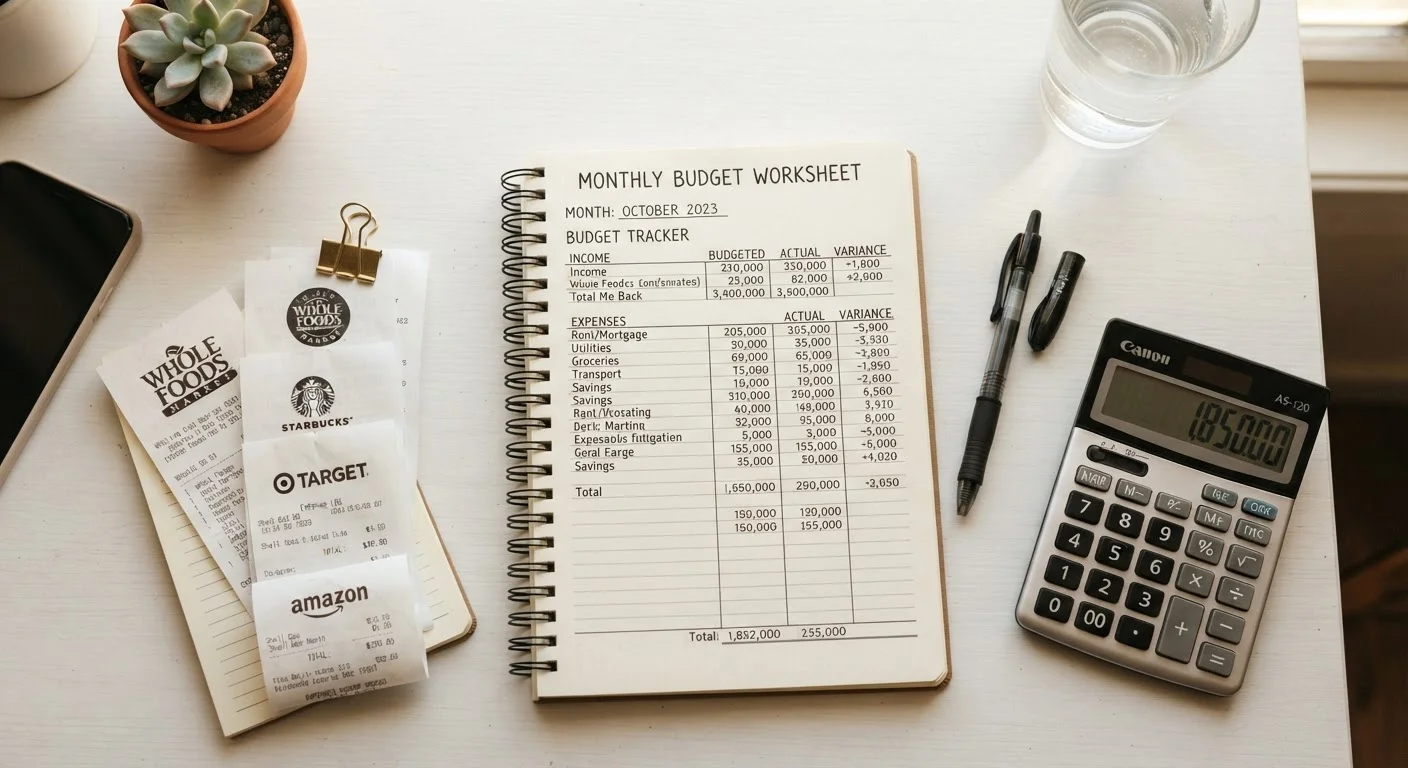
Photo: TheSearchHound.com | One Stop Answer To All Your Questions editorial
Key Takeaways
- Gathering accurate income and expense data before you start is the most critical step.
- Fixed, variable, and periodic expenses must all be accounted for to avoid budget shortfalls.
- Every effective budget should align with clearly defined financial goals, not just spending limits.
- A budget is a living document - plan to review and adjust it at least monthly.
- Even a simple spreadsheet or pen-and-paper approach can produce a functional budget.
Why a Pre-Budget Checklist Matters
Most budgets fail not because of bad math, but because of missing information. People sit down with good intentions and forget to account for quarterly insurance premiums, annual subscriptions, or the irregular income month where a paycheck lands three days late. The result is a plan that looks balanced on paper but falls apart in practice.
This checklist is designed to close those gaps before you finalize any monthly budget. Work through it in order - each step builds on the last. If you've never built a budget before, the beginner's budgeting guide is a useful companion to read alongside this checklist. And if your income varies month to month, also review budgeting on an irregular income for strategies suited to that situation.
Bank and credit card statements (last 3 months)
Used to accurately identify and average your variable and periodic expenses.
Recent pay stubs or deposit records
Confirms your actual after-tax monthly income across pay periods.
Spreadsheet software or budgeting worksheet
Organizes income and expense figures in one place for easy calculation and adjustment.
Calculator
Useful for quickly computing monthly equivalents of annual or quarterly bills.
Written list of financial goals
Anchors your spending decisions to specific targets and timelines.
Calendar or reminder app
Helps you schedule due-date alerts and monthly budget review sessions.
The Complete Monthly Budget Setup Checklist
Work through each group below before entering any figures into your budget. Check off items as you complete them - skipping sections is the most common source of budget errors.
Gather Your Income Information
Inventory Your Fixed Expenses
Inventory Your Variable and Periodic Expenses
Define Your Financial Goals
Calculate and Balance Your Budget
Final Review Before Launch
Don't Budget From Memory Alone
Once your budget is live, the next challenge is sticking to it. The spending tracking guide covers practical, low-friction methods for monitoring where your money actually goes each month. And if your budget eventually stops fitting your life, know the signs that it's time to reassess.
What Comes After the Checklist
Completing this checklist means you now have the raw material for a reliable budget: verified income figures, a complete expense inventory, a surplus-or-deficit calculation, and written goals to guide your priorities. That's more preparation than most people do - and it meaningfully improves the odds that your budget will hold up over time.
A few final reminders before you finalize your plan:
- Set a review date. Budget accuracy degrades as life changes. Schedule a 15-minute monthly review to compare your plan against actual spending.
- Goals drive decisions. When two spending categories compete for the same dollar, your written financial goals - not vague intentions - should break the tie. See why writing down goals first matters for the reasoning behind this step.
- Budgeting is not investing. Once your budget is stable and you have an emergency fund in place, consider reviewing what to check before opening an investment account as a logical next step. For broader guidance on savings and debt, the Saving & Debt hub is a helpful ongoing resource.
This article is for general informational and educational purposes only and does not constitute personalized financial, tax, or legal advice. Consult a qualified financial professional for guidance specific to your situation.
The content on this site is provided for informational purposes only and should not be considered a substitute for professional advice. While we strive to provide accurate and up-to-date information, we make no guarantees regarding its completeness or accuracy. Always consult a qualified professional for advice specific to your circumstances before making any decisions.