
Your First Budget: A Plain-English Starting Point for Complete Beginners

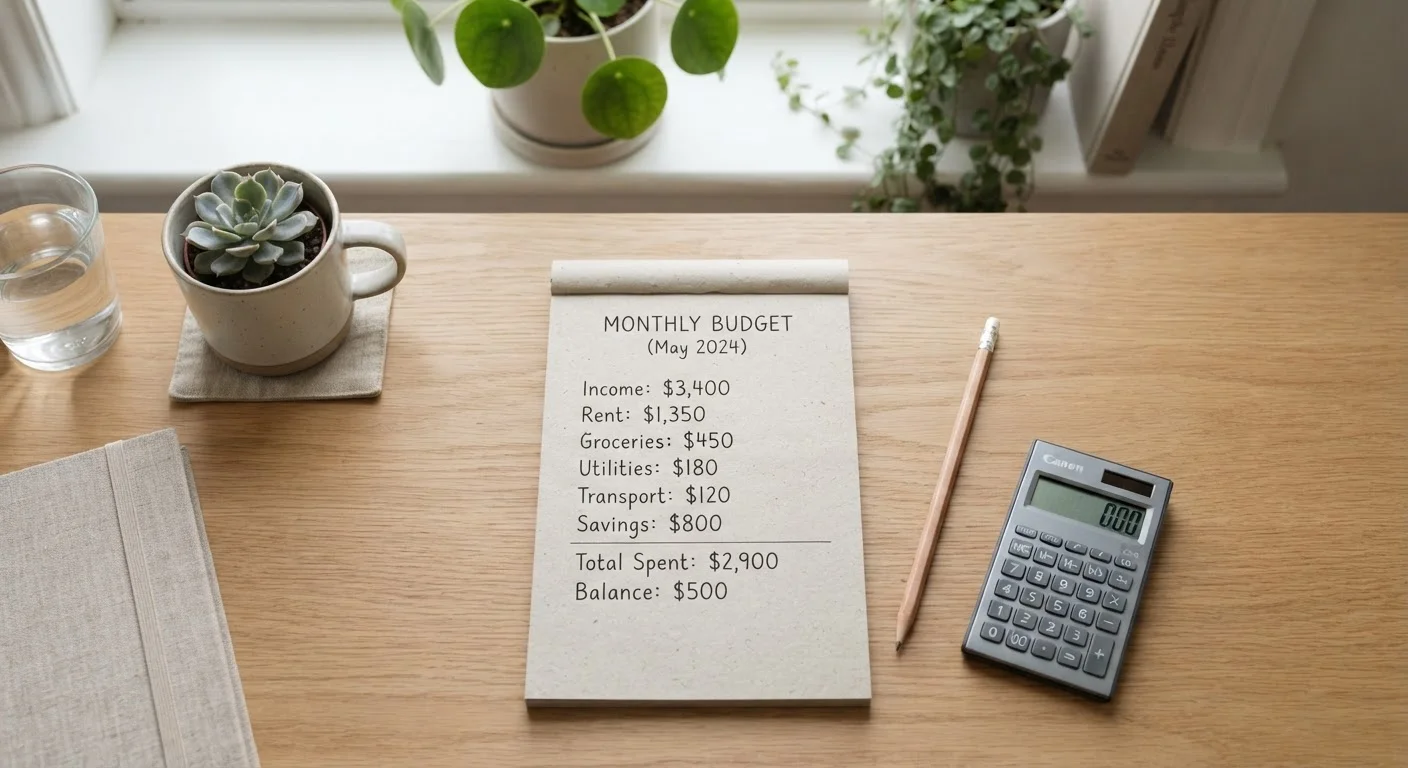
Photo: TheSearchHound.com | One Stop Answer To All Your Questions editorial
Key Takeaways
- A budget is a spending plan, not a restriction - it puts you in control of your money.
- Always start with your net (take-home) pay, not your gross salary.
- Separating expenses into fixed and variable categories reveals where flexibility exists.
- The 50/30/20 rule offers a simple starting framework most beginners can adapt.
- Consistent monthly tracking turns a budget from a one-time exercise into a lasting habit.
- Your first budget doesn't need to be perfect - it just needs to exist.
Why Budgeting Matters (Even If You're Not in Debt)
A budget is simply a plan for your money. It tells each dollar where to go before the month begins, replacing guesswork with intention. Contrary to a common misconception, budgeting isn't a punishment reserved for people who are struggling financially - it's a tool that works equally well whether you're living paycheck to paycheck or saving toward a long-term goal.
If you've been putting off budgeting because it sounds complicated or joyless, you're far from alone. Common misconceptions about budgeting - like the idea that it means giving up everything fun - stop many people before they even begin. The reality is that a well-built budget actually creates space for spending on things you value, because you know exactly where the money is going.
Net pay
The amount you actually receive in your paycheck after taxes and deductions are subtracted. This is the number to build your budget around.
Fixed expenses
Bills and payments that stay the same amount every month, such as rent, a car loan payment, or a monthly subscription.
Variable expenses
Costs that change from month to month depending on your choices or circumstances, such as groceries, dining out, or utility bills.
Discretionary spending
Money spent on non-essential items - things you want rather than need, like entertainment, hobbies, or eating at restaurants.
Emergency fund
A dedicated savings reserve set aside to cover unexpected expenses - such as a car repair or medical bill - without disrupting your regular budget.
50/30/20 rule
A simple budgeting guideline that suggests allocating 50% of take-home pay to needs, 30% to wants, and 20% to savings or debt repayment.
Step 1: Know Your Take-Home Income
Before you can allocate a single dollar, you need to know how many dollars you actually have. This means working from your net pay - the amount deposited into your account after taxes, health insurance premiums, and any retirement contributions are deducted - not your gross salary.
If your income is consistent (a salaried position with regular paychecks), this step is straightforward: check a recent pay stub or bank statement. If your income varies month to month - freelance work, hourly shifts, tips, or seasonal work - use a conservative estimate based on your lower-earning months. Overestimating available income is one of the most common first-budget mistakes.
For households with multiple income sources, add all net streams together to arrive at a single monthly figure to work from. Keep this number visible as you move to the next step.
Step 2: List Every Expense
Now write down everything you spend money on in a typical month. Group expenses into two categories:
- Fixed expenses - amounts that stay the same each month, such as rent or mortgage, car payments, insurance premiums, and subscription services.
- Variable expenses - amounts that fluctuate, such as groceries, gas, dining out, clothing, and entertainment.
Pull up two or three recent bank and credit card statements to catch expenses you might forget. Annual costs (car registration, holiday gifts, insurance renewals) are easy to miss - divide them by 12 and include that monthly portion as a line item.
Use Bank Statements, Not Memory
Once listed, add everything up. Comparing this total to your take-home income immediately tells you whether you're currently spending more than you earn, less, or about the same. That gap - positive or negative - is where your budget does its work.
Step 3: Apply a Simple Framework
With your income and expenses in hand, you need a structure for deciding how to distribute the money. One widely recognized starting point is the 50/30/20 guideline:
- 50% toward needs - housing, utilities, groceries, transportation, minimum debt payments, and basic insurance.
- 30% toward wants - dining out, streaming services, hobbies, travel, and other discretionary spending.
- 20% toward savings and debt repayment - an emergency fund, retirement contributions, or paying down balances above the minimum.
These percentages are a starting framework, not an inflexible rule. High housing costs in some cities, for example, may push your needs category above 50%. What matters is that all three priorities - living expenses, personal enjoyment, and future security - are explicitly represented in your plan.
For a detailed walkthrough of everything to finalize before locking in your first monthly budget, the monthly budget setup checklist is a practical companion resource.
Step 4: Track and Adjust
Writing a budget is step one. Following through requires tracking what you actually spend throughout the month and comparing it against your plan. This doesn't have to be time-consuming - many people find that a 10-minute weekly check-in is enough to stay on course.
If you overspend in one category, the solution isn't to abandon the budget - it's to adjust. Either find room to reduce spending in another area, or revise the category allocation to better reflect reality. Your budget should evolve as your life does.
Practical, low-friction ways to monitor your spending - from simple spreadsheets to the envelope method - can help you find a tracking approach that actually sticks. The goal is consistency, not perfection.
This article provides general financial education and is not personalized financial advice. Consider speaking with a qualified financial professional for guidance specific to your situation.
Where to Go From Here
A solid budget is the foundation for almost every other personal finance goal. Once you're comfortable with the basics, natural next steps include building an emergency fund, tackling high-interest debt, and eventually starting to invest. Explore the saving and debt guidance hub for clear strategies on both fronts.
When you're ready to think about growing wealth over the long term, the investing essentials hub offers foundational concepts for first-time investors. You might also find the first-timer's investing roadmap a useful preview of the decisions ahead.
For now, the most important move is simply to start. Your first budget doesn't need to be perfect - it needs to exist. Revisit and refine it each month, and it will become one of the most reliable financial tools you have.
Monthly Budget Setup Checklist
A structured checklist of everything to gather and confirm before finalizing your monthly budget - a practical companion once you've read this guide.
Key Budgeting Terms Every American Should Know
A plain-language glossary of essential budgeting vocabulary, from net pay to cash flow, useful for readers who want to deepen their understanding of the concepts covered here.
Tracking Your Spending Without Losing Your Mind
Explores low-effort methods for monitoring monthly spending, including simple spreadsheets and the envelope approach, to help you maintain your budget long-term.
Frequently Asked Questions
The content on this site is provided for informational purposes only and should not be considered a substitute for professional advice. While we strive to provide accurate and up-to-date information, we make no guarantees regarding its completeness or accuracy. Always consult a qualified professional for advice specific to your circumstances before making any decisions.