
The Difference Between a Savings Account and an Emergency Fund

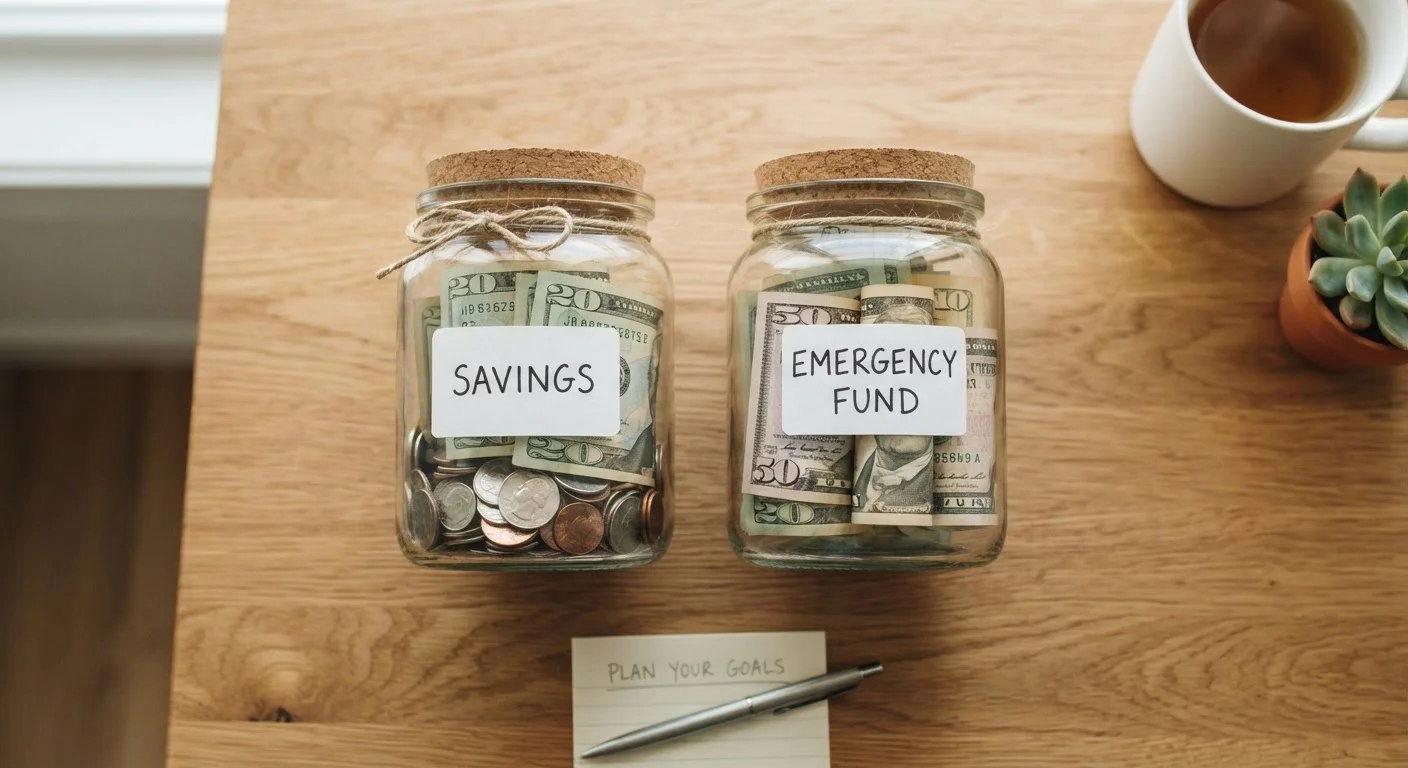
Photo: TheSearchHound.com | One Stop Answer To All Your Questions editorial
Key Takeaways
- A savings account targets planned future goals; an emergency fund covers unplanned financial shocks.
- Most financial guidance recommends an emergency fund covering three to six months of essential living expenses.
- Mixing the two in one account makes it easy to accidentally spend your safety net.
- Both tools belong in a sound personal finance strategy - they serve different, complementary roles.
- Where you keep each fund matters less than keeping them mentally and physically separate.
Why the Confusion Exists
Many Americans use the phrase "savings account" and "emergency fund" interchangeably, and it's easy to see why. Both involve setting aside money. Both typically live in a savings account at a bank or credit union. But conflating the two is one of the most common - and costly - mistakes in basic personal finance.
The difference isn't the account type. It's the purpose and rules governing the money inside it. Treating them as one pool of cash can leave you financially exposed when a real crisis hits - and it can quietly derail your other financial goals at the same time.
~57%
Americans unable to cover a $1,000 emergency from savings
According to Bankrate's Annual Emergency Savings Report, a majority of U.S. adults would need to borrow or go into debt to handle an unexpected $1,000 expense.
3-6 months
Recommended emergency fund coverage
Financial planning guidelines broadly recommend covering three to six months of essential living expenses in a dedicated emergency fund.
22%
Adults with no emergency savings at all
The Federal Reserve's Report on the Economic Well-Being of U.S. Households has found that roughly one in five adults has no savings set aside for emergencies.
What a Savings Account Is Actually For
A savings account is a vehicle for accumulating money toward known, anticipated goals. This could mean saving for a vacation, a wedding, a new car, a home down payment, or even annual expenses like holiday gifts. The defining characteristic is intentionality: you know roughly what you're saving for and when you'll need the money.
Because these are planned goals, the rules are more flexible. If you decide to upgrade the vacation or push the car purchase back by six months, no harm is done. You adjust and keep saving.
Many households benefit from maintaining multiple savings "buckets" - each labeled for a specific goal. This approach, sometimes called sinking funds, prevents any single category from cannibalizing another. Our Budgeting Basics hub explores strategies for structuring these kinds of targeted savings within a broader spending plan.
What an Emergency Fund Is Actually For
An emergency fund exists for one reason: to absorb financial shocks you did not see coming. A sudden job loss. A burst pipe. An urgent medical expense not covered by insurance. A car breakdown that must be fixed to get to work. These events share a common trait - they are unplanned, unavoidable, and time-sensitive.
Without a dedicated emergency fund, people typically respond to these shocks by reaching for a credit card or taking on new debt. That pattern is expensive over time and can set back financial progress significantly.
The widely cited benchmark - three to six months of essential living expenses - exists because it reflects roughly how long financial recovery from a major disruption can take. "Essential expenses" means the non-negotiables: housing, utilities, groceries, insurance, and minimum debt payments. It does not mean maintaining your full current lifestyle.
“An emergency fund isn't a savings account - it's insurance against the financial system's worst moments. The goal isn't to grow it; it's to have it there when everything else goes wrong.”
— Carl Richards, Certified Financial Planner and author of 'The Behavior Gap'
Once an emergency fund is established, the rules change. You don't dip into it for a sale, a spontaneous trip, or even a predictable irregular expense. If you find yourself tempted to do so, that's a sign the withdrawal is not a true emergency. For more on the habits that quietly erode these reserves, see common reasons people drain their emergency fund too quickly.
Keeping Them Separate: A Practical Approach
The most reliable way to maintain both tools effectively is to keep them in separate, clearly labeled accounts. When funds are pooled together, it becomes difficult to know how much of your balance is untouchable safety net versus available for spending. The psychological barrier created by a separate account - even if it's at the same institution - meaningfully reduces the temptation to treat emergency reserves as general savings.
Once your emergency fund hits its target, the focus shifts to your savings goals. If you're also managing debt, the sequencing can feel complicated. Our article on paying off debt while building savings lays out a practical framework for handling both at once without losing ground on either.
For those ready to take a step further and think beyond savings entirely, saving vs. investing explains when each approach fits different financial timelines and goals.
This article is for general informational and educational purposes only and does not constitute personalized financial advice. Please consult a qualified financial adviser for guidance specific to your situation.
Frequently Asked Questions
The content on this site is provided for informational purposes only and should not be considered a substitute for professional advice. While we strive to provide accurate and up-to-date information, we make no guarantees regarding its completeness or accuracy. Always consult a qualified professional for advice specific to your circumstances before making any decisions.