
Cabinet Refacing, Painting, and Full Replacement: How the Options Stack Up

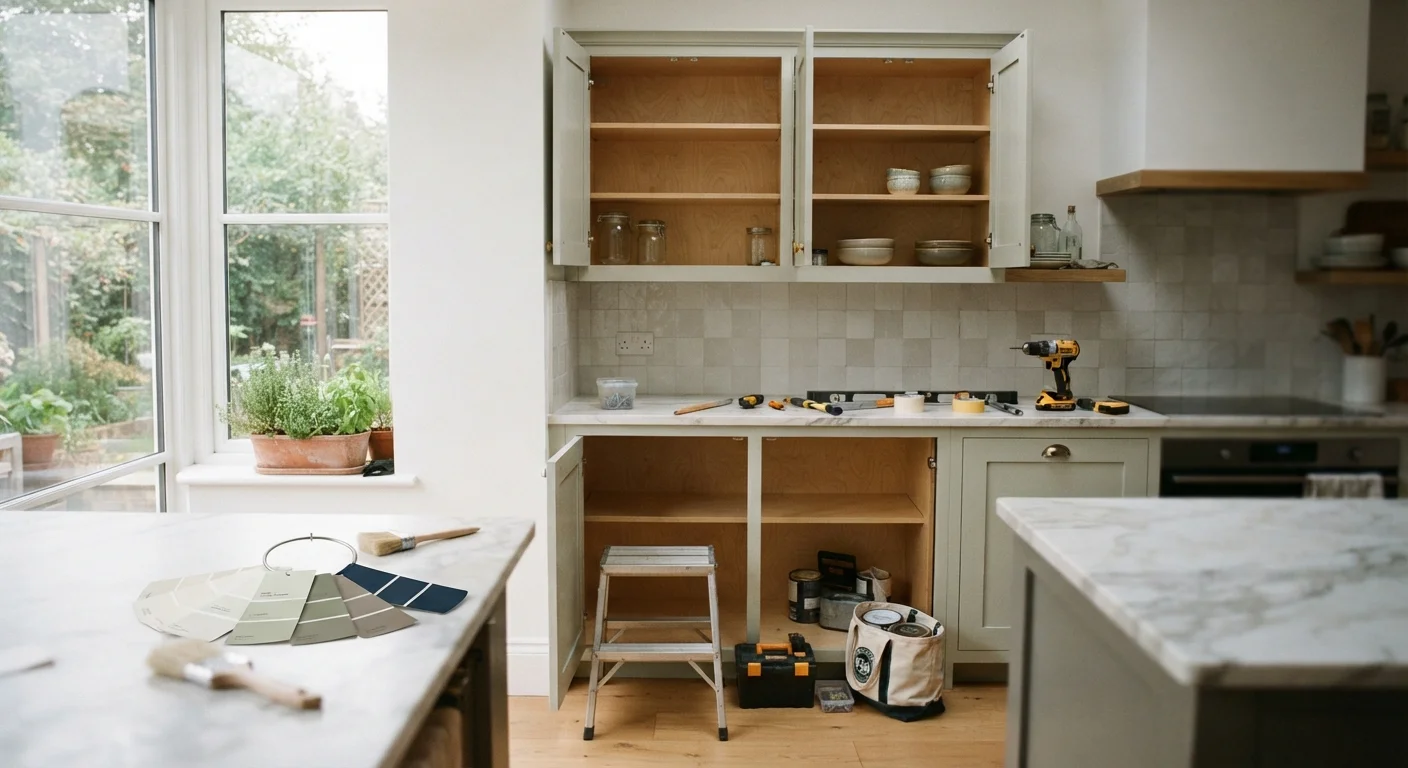
Photo: TheSearchHound.com | One Stop Answer To All Your Questions editorial
Key Takeaways
- Painting cabinets is the most affordable option but requires thorough prep work to last.
- Refacing replaces doors and veneer while keeping cabinet boxes, offering a middle-ground cost.
- Full replacement is the only option that changes cabinet layout, size, or structural configuration.
- Cabinet condition is the single most important factor when choosing which approach is right.
- Each method involves different timelines, skill demands, and disruption to daily kitchen use.
Understanding What Each Approach Actually Changes
Before choosing a path, it helps to be clear on what each method does - and doesn't - change about your cabinets.
Painting addresses only the surface. You're applying new color to the existing cabinet boxes, doors, and drawer fronts. The layout, hardware holes, and overall structure remain exactly as they are. Done well with proper prep, paint can extend the life of cabinets and dramatically change the feel of a kitchen. Done poorly, it peels within a year.
Refacing goes further. The cabinet boxes stay in place, but doors and drawer fronts are replaced entirely with new ones. Exposed box surfaces - the sides you can see - are covered with a matching veneer or laminate. New hardware is typically installed as part of the process. The result looks like new cabinetry without disturbing plumbing, electrical, or the floor beneath the cabinets.
Full replacement means removing everything and starting from scratch. This is the only option that lets you move cabinets, add storage in new locations, or correct a layout that simply doesn't work. It also requires the most disruption - think weeks without a functional kitchen - and the highest investment. If you're new to managing this kind of project, the First-Time Renovator's Orientation is a useful place to start before requesting estimates.
| Cabinet Painting | Cabinet Refacing | Full Replacement | |
|---|---|---|---|
| Changes cabinet layout | No | No | Yes |
| Replaces cabinet doors | No | Yes | Yes |
| Relative cost | Lowest | Mid-range | Highest |
| Typical timeline | 1-3 days | 2-4 days | 2-6 weeks |
| DIY feasibility | High | Moderate | Low |
| Works on damaged boxes | No | No | Yes |
| Kitchen disruption | Low to moderate | Moderate | High |
Cabinet Condition: The Deciding Factor Most Homeowners Overlook
The state of your existing cabinets should drive this decision more than anything else - including budget.
If your cabinet boxes are warped, water-damaged, or structurally soft from years of moisture, neither painting nor refacing will fix the underlying problem. You'd be applying a cosmetic solution to a structural issue, and the result will disappoint. In those cases, replacement isn't optional - it's the only responsible path.
If the boxes are solid and square but the doors are dated or dinged, refacing delivers significant visual change without the cost of replacement. And if the doors themselves are still in good shape - just the color or finish feels tired - painting is a practical, lower-cost solution.
Test Cabinet Boxes Before Deciding
Check inside and underneath cabinets for soft spots, swelling, or signs of past water intrusion before committing to any approach. A cabinet that looks fine from the front can conceal serious deterioration where it meets the wall or floor.
Realistic Costs, Timelines, and DIY Feasibility
Cost ranges vary significantly by region, kitchen size, and cabinet material, so treat these as general ballparks rather than firm quotes.
Painting is by far the most DIY-accessible. Materials - primer, paint, brushes, sandpaper, degreaser - are modest in cost. The labor is real, though: proper prep (cleaning, sanding, priming) accounts for most of the outcome quality. A typical kitchen can be painted over a long weekend, though full cure time takes longer. For paint finish guidance once you're ready, see our article on interior paint finishes.
Refacing is typically done by a professional, though experienced DIYers occasionally tackle it. The cost sits between painting and replacement. Timelines generally run two to four days for a professional crew.
Full replacement carries the highest cost and longest timeline. Depending on kitchen size and cabinet grade, this is a multi-week project. It also often triggers adjacent decisions - new countertops, tile, or appliance repositioning - which can expand scope quickly. If you're weighing whether to hire a general contractor or coordinate trades yourself, our guide on hiring a GC vs. managing subcontractors covers the tradeoffs.
~60-80%
Cost saved vs. replacement with refacing
Industry estimates generally suggest cabinet refacing costs 60-80% less than full cabinet replacement, depending on materials and kitchen size.
3-5 years
Typical lifespan of a quality paint job
With proper prep and primer application, professionally painted or carefully DIY-painted cabinets often last three to five years before needing touch-ups or recoating.
Making the Call: Questions Worth Asking Before You Commit
Run through these practical questions before settling on an approach:
- Does the layout work? If you constantly struggle with the workflow - poor storage placement, awkward corner cabinets, not enough counter space - only full replacement addresses that.
- Are the boxes structurally sound? Test for soft wood, loose joints, and water damage. Sound boxes open up the painting and refacing options; damaged ones point to replacement.
- How long do you plan to stay? Painting is often the right call if you're refreshing before a sale or buying time before a larger remodel. Replacement makes more sense for a long-term home.
- What's your tolerance for kitchen downtime? Painting can be staged room by room. Refacing requires full access. Full replacement can leave you without a functional kitchen for weeks.
- Who's doing the work? Be honest about your skill level and available time. Painting is genuinely DIY-friendly with preparation. Refacing and replacement, especially the latter, typically benefit from professional hands.
There's no universal right answer here. What matters is matching the method to your actual situation rather than choosing based on what seems most dramatic or most economical in isolation.
The content on this site is provided for informational purposes only and should not be considered a substitute for professional advice. While we strive to provide accurate and up-to-date information, we make no guarantees regarding its completeness or accuracy. Always consult a qualified professional for advice specific to your circumstances before making any decisions.