
Home Improvement

Your Renovation Is Stalling — and These Planning Oversights Are Likely Why

Your Renovation Is Stalling — and These Planning Oversights Are Likely Why
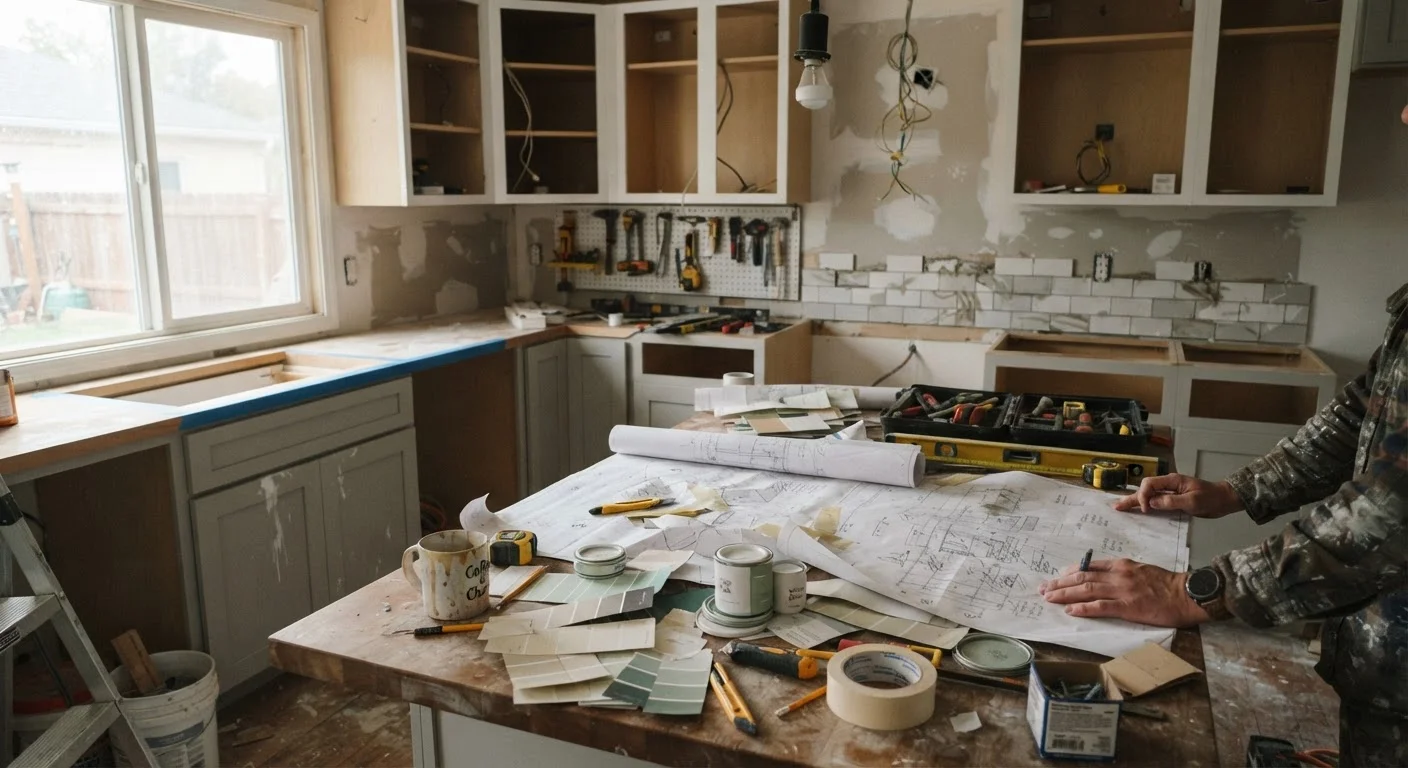
Photo: TheSearchHound.com | One Stop Answer To All Your Questions editorial

Slow timelines and blown budgets often trace back to early planning errors. Learn which missteps to catch before construction ever begins.

Key Takeaways

  • Vague scopes of work are the leading cause of mid-project delays and cost overruns.
  • Skipping permit research early can pause construction for weeks or months.
  • Underestimating lead times for materials causes avoidable scheduling gaps.
  • A missing contingency budget leaves homeowners unable to handle inevitable surprises.
  • Poor contractor vetting — especially skipping reference checks — compounds every other planning error.

Why Renovations Slow Down Before They Speed Up

A renovation that stalls halfway through rarely does so because of bad luck. More often, the delay traces back to a decision — or a missing decision — made during the planning phase, weeks or months before a single wall was opened. The frustrating part is that most of these mistakes are highly preventable.

Understanding where things typically go wrong is the first step toward running a project that stays on schedule and on budget. If you're new to managing this kind of work, how renovation projects are actually scoped and sequenced offers a useful orientation before you dive into the details below.

~35%

Renovations that exceed original budget

Industry surveys consistently find that a substantial share of home renovation projects run over budget, most commonly due to scope changes and unforeseen conditions.

6–16 weeks

Typical lead time for custom cabinetry

Custom and semi-custom cabinetry is among the most common sources of scheduling delays when ordered after construction has already begun.

The Planning Mistakes Most Likely to Derail Your Project

The mistakes below appear across renovation projects of all sizes — from a bathroom refresh to a full kitchen gut. They're not exotic or unusual; they're the ones that catch otherwise careful homeowners off guard.

1

Starting with a vague or incomplete scope of work.

Why it happens: Homeowners often have a clear vision of the finished result but haven't translated that into specific, measurable tasks. Excitement to get started can short-circuit the detail work.
How to avoid: Write out every element of the project — materials, finishes, dimensions, and who is responsible for each task — before soliciting bids. A detailed scope lets contractors price accurately and gives you a baseline for managing change orders.
2

Skipping permit research until after work has started.

Why it happens: Permits feel like bureaucratic friction, and many homeowners assume a contractor will handle it automatically. Sometimes contractors don't pull permits to save time or money, which transfers risk to the homeowner.
How to avoid: Contact your local building department during the planning phase — before signing any contract. Confirm which elements of your project require permits and factor the timeline into your overall schedule. See what commonly gets overlooked in remodeling for a sense of how often permitting catches homeowners off guard.
3

Failing to account for material lead times.

Why it happens: Homeowners often don't realize that certain fixtures, tile, windows, or cabinetry can take six to sixteen weeks to arrive. Ordering is treated as an afterthought rather than a scheduling dependency.
How to avoid: Finalize all material selections before construction begins and place orders for long-lead items immediately after permits are approved. Build confirmed delivery windows into your project schedule rather than assuming materials will be available on demand.
4

Budgeting to the penny with no contingency reserve.

Why it happens: Renovation budgets often represent maximum comfort rather than realistic cost, leaving no room for what's found behind walls — outdated wiring, water damage, or structural issues that weren't visible during planning.
How to avoid: Add a contingency of at least 10–20% to your total budget and treat it as committed, not optional. If the contingency goes untouched, that's a pleasant outcome — but counting on it staying unspent is a planning mistake.
5

Hiring a contractor based on price alone without checking references.

Why it happens: When budgets are tight, the lowest bid is tempting. Reference checks feel time-consuming, and the assumption is that licensure equals competence.
How to avoid: Request references from recent, comparable projects and actually call them. Ask about communication, whether the project came in near budget, and how the contractor handled problems. For a thorough breakdown of how to evaluate your options, see hiring a general contractor vs. managing subcontractors yourself.
6

Underestimating how project sequencing affects the timeline.

Why it happens: Homeowners new to renovation often don't know that trades must follow a specific order — rough framing before electrical, electrical before insulation, insulation before drywall. Disrupting that sequence causes compounding delays.
How to avoid: Ask your contractor or project manager to walk you through the trade sequence before work begins. Understanding dependencies helps you ask the right questions when timelines slip. For a foundational overview, how renovation projects are actually sequenced is a useful starting point.

Permits Are Not Optional

Unpermitted work can result in forced demolition, failed home inspections at resale, and liability if something goes wrong. Before any structural, electrical, plumbing, or HVAC work begins, contact your local building department to confirm what requires a permit. Verify local requirements yourself — what applies in one municipality may differ significantly in another.

If you're also evaluating a property purchase alongside a planned renovation, it's worth reading about assumptions first-time buyers commonly make — many of the same planning blind spots apply.

How Good Planning Pays Off Long After the Project Ends

Thorough upfront planning isn't just about avoiding delays — it protects the long-term value of the work itself. Permitted projects are documented, inspectable, and transferable at resale. Detailed contracts give you recourse when something isn't done to standard. Realistic budgets mean you're not forced to cut corners on materials or finishes to finish the job.

Verbal Agreements Won't Protect You

A handshake deal or text message exchange is not a contract. Without a written scope of work, payment schedule, and change-order process, disputes become nearly impossible to resolve fairly. Insist on a signed contract before any work begins or any deposit is paid.

It's also worth remembering that deferred attention to your home's condition raises renovation costs down the line. Our guide on the real cost of skipping routine home maintenance explains how small overlooked issues compound into larger — and more expensive — ones over time.

Every hour spent in solid planning before construction starts is worth multiples of that time once a crew is on-site and the clock is running.

Home & Garden Editorial Team

TheSearchHound.com | One Stop Answer To All Your Questions

Home & Garden Editorial Team is the collective byline for our editorial team and contributor network. Articles published under this byline or an editorial pen name are researched, written, and reviewed according to our editorial standards for clarity, consistency, and independence before publication.

Home ImprovementLawn & GardenHome Maintenance
View author profile

The content on this site is provided for informational purposes only and should not be considered a substitute for professional advice. While we strive to provide accurate and up-to-date information, we make no guarantees regarding its completeness or accuracy. Always consult a qualified professional for advice specific to your circumstances before making any decisions.