
How Interest Rates Shape Housing Affordability

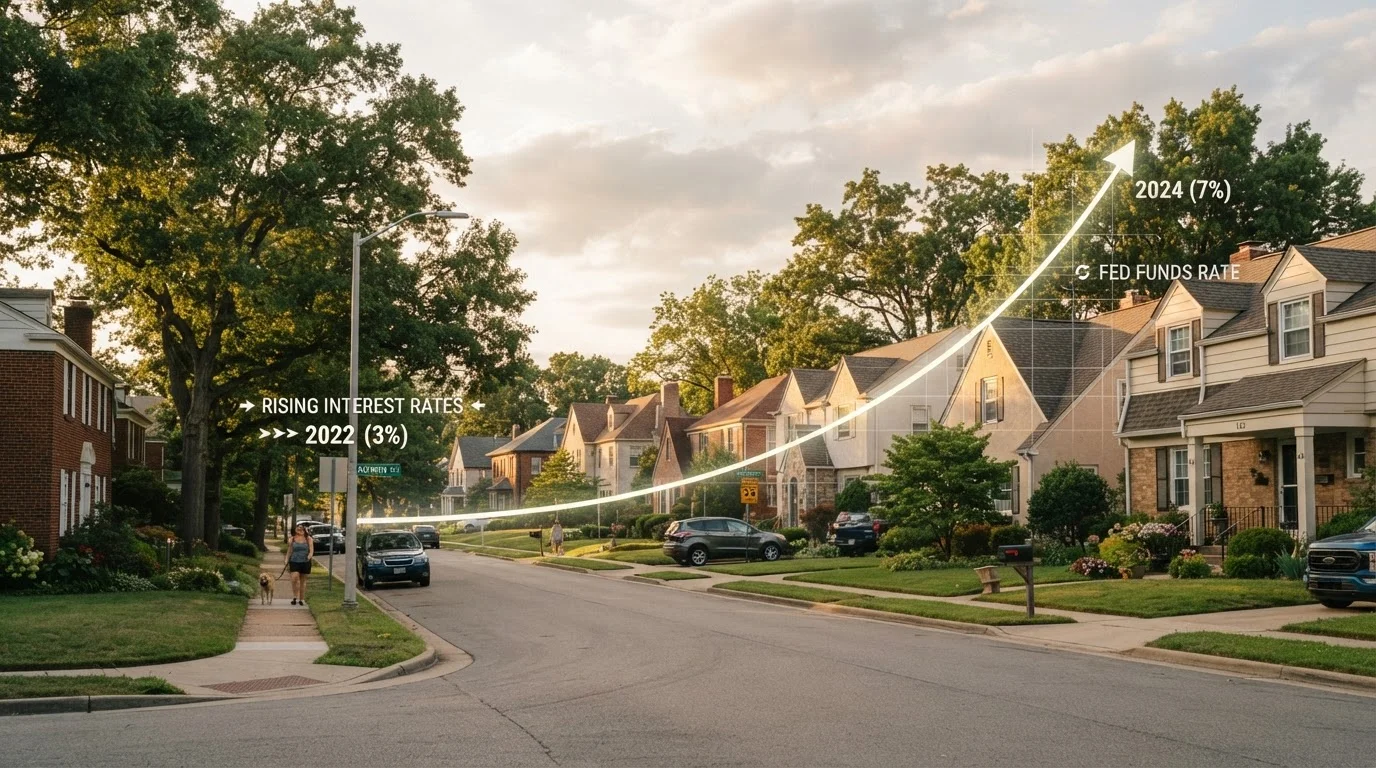
Photo: TheSearchHound.com | One Stop Answer To All Your Questions editorial
Key Takeaways
- A 1-percentage-point rise in mortgage rates can reduce a buyer's purchasing power by roughly 10%.
- Higher rates tend to cool demand and can moderate home prices, but the relationship is not automatic or immediate.
- Monthly payment differences from rate changes compound dramatically over a 30-year loan.
- Local market conditions, inventory, and employment often influence affordability as much as national rate trends.
- Buyers with stronger credit profiles typically access lower rates, making credit health a key affordability lever.
The Real Cost of Borrowing Money to Buy a Home
When most buyers think about home affordability, they focus on the listing price. But the interest rate attached to their mortgage may matter just as much - sometimes more - when measuring what a home actually costs over time.
Consider a straightforward example: on a $400,000 loan over 30 years, the difference between a 6% and a 7% interest rate is roughly $267 per month. That gap amounts to more than $96,000 in additional interest paid over the full loan term. The sticker price never changed - only the cost of financing it.
This is why housing economists and affordability researchers track mortgage rates as closely as they track home prices. The monthly payment - not the sale price - is the number most buyers must fit within their budget.
~$267/mo
Monthly payment difference per 1% rate change
Estimated difference on a $400,000 30-year fixed-rate loan between 6% and 7% interest rates, before taxes and insurance.
~10%
Purchasing power lost per 1% rate increase
A commonly cited rule of thumb among housing analysts illustrating how rate changes compress what buyers can afford.
$96,000+
Additional interest over 30 years
Estimated cumulative interest difference on a $400,000 loan when rate increases by one percentage point over the full loan term.
How Rate Changes Ripple Through the Market
Interest rates don't just affect individual buyers - they reshape the entire housing market. When rates climb, fewer households can qualify for loans at their desired price point. Demand softens, and sellers may face longer listing times or pressure to negotiate. In theory, this creates downward pressure on prices.
In practice, the relationship is messier. If housing inventory remains tight - as it has in many U.S. markets - sellers have little incentive to cut prices significantly even as buyer demand thins. The result is a market that feels frozen rather than corrected: prices don't fall sharply, but transactions slow dramatically.
Supply and demand dynamics explain much of this complexity. When few homes are available, even reduced demand may not translate into lower prices. Understanding both sides of the equation is essential for interpreting housing data accurately.
“Mortgage rates are the transmission mechanism through which monetary policy enters the housing market. When rates rise sharply and quickly, affordability can deteriorate faster than prices can adjust downward.”
— Lawrence Yun, Chief Economist, National Association of Realtors
Purchasing Power: The Hidden Metric
One of the most useful ways to understand rate impacts is through the concept of purchasing power - how much home a buyer can afford at a given income and rate level. As a general rule of thumb used by housing analysts, a 1-percentage-point increase in mortgage rates reduces purchasing power by approximately 10%. That means a buyer who could afford a $500,000 home at one rate might only qualify for roughly $450,000 when rates rise by a full point.
This erosion of purchasing power is why affordability indexes - which measure the relationship between median incomes, home prices, and prevailing mortgage rates - have drawn significant attention during periods of rapid rate movement. As the nuances of affordability indexes show, these measures capture broad trends but can obscure significant variation at the local and household level.
Buyers should also recognize that the rate they personally qualify for depends on factors they can control. Credit score has a direct impact on the loan terms a lender will offer, meaning creditworthiness is itself an affordability tool.
Why National Rate Averages Don't Tell the Full Story
Mortgage rate averages reported in national headlines reflect benchmark surveys - typically for well-qualified borrowers taking out conventional 30-year fixed loans. The rate any individual buyer receives will vary based on their credit history, down payment, loan type, and lender.
Geographic variation adds another layer. As explored in why home prices vary by location, local factors like employment growth, migration trends, and housing inventory often drive affordability conditions more than national rate headlines suggest. A rate environment that stresses buyers in one market may be manageable in another where incomes are higher or prices have remained more moderate.
Readers should treat national rate data as useful context, not as a personal forecast. Working with a licensed mortgage professional to understand the rates and loan products available in their specific situation provides a far more accurate picture of what homeownership would actually cost them.
This article is for general informational and educational purposes only. It does not constitute financial, investment, or legal advice. Readers should consult a qualified financial adviser or licensed mortgage professional regarding their individual circumstances.
Frequently Asked Questions
The content on this site is provided for informational purposes only and should not be considered a substitute for professional advice. While we strive to provide accurate and up-to-date information, we make no guarantees regarding its completeness or accuracy. Always consult a qualified professional for advice specific to your circumstances before making any decisions.