
Why Home Prices Don't Move the Same Way Everywhere

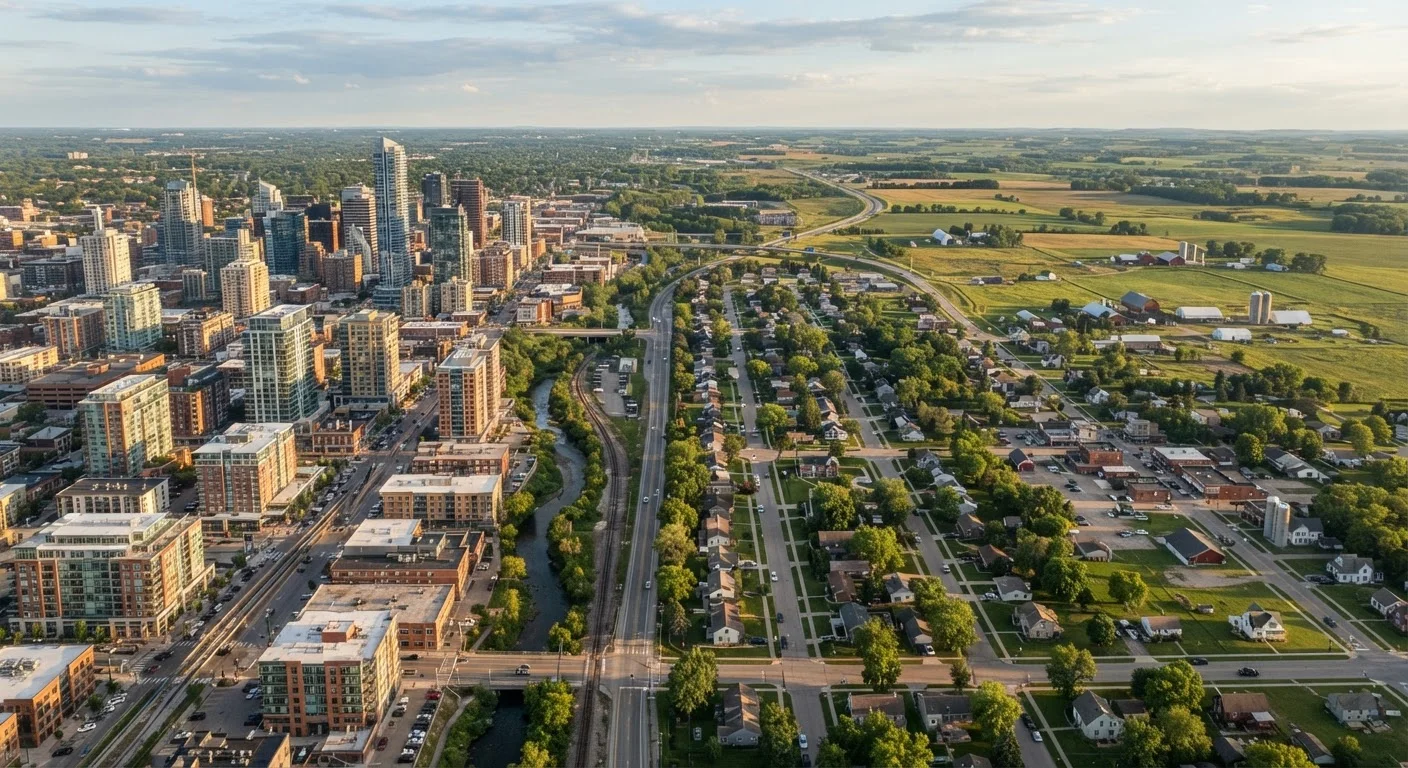
Photo: TheSearchHound.com | One Stop Answer To All Your Questions editorial
Key Takeaways
- National housing statistics are averages that can mask wide variation between cities and neighborhoods.
- Local job markets, population growth, and housing supply are the primary drivers of price movement.
- Migration patterns - where people are moving to and from - can rapidly shift local demand.
- Zoning rules and land constraints limit how quickly supply can respond to rising demand.
- Understanding local fundamentals helps buyers and sellers make more informed decisions.
Why the National Number Isn't Your Number
When a headline reports that home prices rose 4% nationally, it's tempting to apply that figure directly to your neighborhood. But a national average is assembled from thousands of local markets - some surging, some stagnant, some declining - and the result is a number that may not accurately describe any single place. Understanding why prices diverge across locations is one of the most practical skills a buyer, seller, or renter can develop.
For a deeper look at how individual housing statistics can mislead, see our guide to median vs. average home prices - a related concept that shapes how market data is reported and interpreted.
~400
Distinct metro housing markets tracked in the US
The National Association of Realtors tracks prices across hundreds of metropolitan statistical areas, each with its own supply, demand, and price trajectory.
3x+
Price gap between highest and lowest-cost US metros
Research from the Urban Institute and other housing economists has consistently documented that median home prices in the most expensive US metros can exceed those in the most affordable by a factor of three or more.
The Three Forces That Shape Local Prices
Three local conditions consistently explain most price variation across US housing markets:
- Job growth and income levels. Regions adding well-paying jobs attract workers who can bid up home prices. Areas experiencing employer departures or wage stagnation see the opposite effect. The local labor market is often the single most reliable predictor of housing demand over time.
- Housing supply and construction constraints. Even strong demand cannot push prices indefinitely if builders can add new homes quickly. But in many markets, zoning restrictions, limited developable land, and long permitting timelines prevent supply from keeping pace. This mismatch between supply and demand is the engine behind sustained price appreciation in many high-cost metros. Our explainer on how housing supply and demand shapes prices covers this dynamic in detail.
- Migration and population shifts. People moving into an area add buyers and renters; people leaving reduce demand. Remote work flexibility accelerated migration to lower-cost metros during the early 2020s, creating sharp price appreciation in cities that had previously been affordable. Some of those same markets have since cooled as in-migration slowed.
Why Some Markets Stay Expensive and Others Stay Flat
Persistent high prices in some markets aren't accidental - they reflect structural constraints. Coastal cities in California, for example, combine strong economies with strict land-use regulations that make meaningful supply increases difficult. The result is a market where demand routinely outpaces the addition of new homes, sustaining elevated prices even through national downturns.
Conversely, markets in parts of the Midwest and South with fewer geographic and regulatory barriers to construction have historically kept prices more moderate. When demand rises, builders can respond more readily, limiting how far prices can run. This also means those markets typically see less dramatic price swings in either direction.
It's also worth noting that interest rate movements interact differently with local conditions. A rate increase that sharply reduces affordability in an already-expensive market may have a more muted effect in a mid-priced market where buyers have more financial breathing room.
What This Means for Buyers and Sellers
Recognizing that housing markets are fundamentally local changes how you should approach decisions. Rather than reacting to national headlines, the most useful questions to ask are: Is local employment growing or contracting? Is inventory rising or tightening? Are more people moving into this area or leaving?
Buyers in particular benefit from understanding where a local market sits in its cycle. The housing cycle - the progression from expansion through peak, correction, and recovery - plays out at different speeds in different places. A market in early recovery may offer better value than one at peak, even if both show positive national trends.
For those weighing whether to buy at all in a high-price environment, our article on renting vs. buying in a high-price market walks through the financial and lifestyle trade-offs in a balanced way. And if you're ready to move forward, the Buying a Home hub covers the essential steps of the purchase process.
This article provides general real estate education and is not a substitute for professional financial, legal, or real estate advice. Consult a qualified professional before making housing decisions.
Frequently Asked Questions
The content on this site is provided for informational purposes only and should not be considered a substitute for professional advice. While we strive to provide accurate and up-to-date information, we make no guarantees regarding its completeness or accuracy. Always consult a qualified professional for advice specific to your circumstances before making any decisions.