
New Construction vs. Existing Homes in a Tight Market

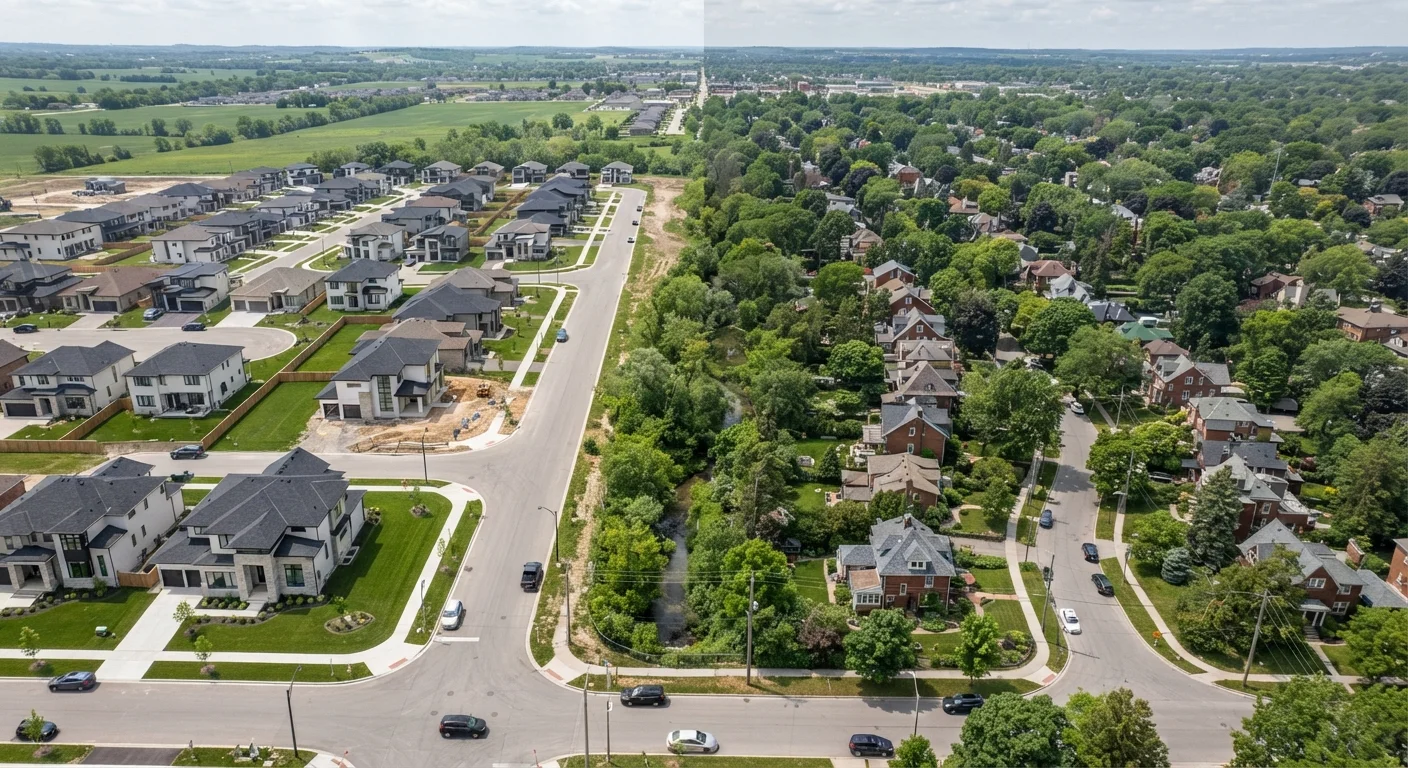
Photo: TheSearchHound.com | One Stop Answer To All Your Questions editorial
Key Takeaways
- New construction offers modern features and warranties but typically carries higher price tags and longer timelines.
- Existing homes provide established neighborhoods and faster closings, but may require costly repairs or updates.
- In low-inventory markets, new builds can reduce bidding-war stress - but builder contracts have fewer buyer protections.
- Location, budget flexibility, and timeline are the three most important factors in choosing between the two paths.
- Neither option is universally superior - the right choice depends heavily on individual circumstances and local market conditions.
Why the Tight Market Changes the Equation
When resale inventory falls to historically low levels, the dynamics of home buying shift considerably. Buyers competing for a small pool of existing homes often face multiple-offer situations, waived contingencies, and prices that push well above list. In that environment, new construction - once considered a niche path - moves into mainstream consideration for a broader range of buyers.
But the appeal of a fresh build shouldn't obscure its real limitations. Understanding both options clearly, rather than defaulting to one out of frustration, is the foundation of a sound decision. For a broader framework on reading market signals before committing, see our guide on tracking the housing market before making a major decision.
| New Construction | Existing Homes | |
|---|---|---|
| Typical price point | Generally higher per sq ft | Varies widely by age and condition |
| Move-in timeline | Months to over a year | 30-60 days after contract |
| Maintenance risk | Lower short-term risk | Higher - depends on age/condition |
| Location options | Often suburban or exurban fringe | Established neighborhoods available |
| Buyer negotiating leverage | Limited; builder-favorable contracts | More room for negotiation |
| Warranty coverage | Builder warranties typically included | No warranty; as-is or negotiated |
| Bidding competition | Usually none | Often intense in tight markets |
The Case for New Construction
New builds come with features that resale homes rarely offer: modern energy efficiency standards, builder warranties on structural components, and appliances and systems that haven't depreciated. For buyers who have been burned by inspection surprises on older properties, that predictability has real value.
In tight markets, new construction also sidesteps the bidding-war dynamic entirely. You negotiate directly with a builder - though it's important to understand that builder contracts are typically written to favor the builder, not the buyer. Having a real estate attorney review the purchase agreement before signing is strongly advisable.
Get Independent Representation with New Builds
The trade-offs are significant. New construction is generally priced at a premium over comparable existing homes in the same area. Completion timelines can shift due to supply chain issues or permitting delays, making it a poor fit for buyers with hard move-in deadlines. And new subdivisions are often built on the urban fringe, where commute distances and limited amenities may affect long-term satisfaction.
The Case for Existing Homes
Established homes sit in established places - near schools with track records, mature street trees, and communities with known character. That intangible sense of place is difficult to replicate in a newly platted subdivision, and for many buyers it's a non-negotiable priority.
Resale homes also tend to close faster. Once under contract, a typical existing-home transaction takes 30 to 60 days, compared to months or longer for new construction. For buyers relocating for work or facing lease expirations, that speed matters enormously.
The risk lies in what's behind the walls. Older homes may have deferred maintenance, outdated electrical panels, aging HVAC systems, or materials - like original galvanized plumbing - that are approaching end of life. Our editorial coverage on owning older homes: maintenance realities vs. common assumptions walks through what buyers should genuinely expect. Skipping a professional home inspection - or waiving it under competitive pressure - significantly increases the risk of post-closing surprises. See our discussion of assumptions first-time buyers make that often backfire for more on this risk.
How to Make the Decision That Fits Your Situation
The right choice isn't a universal answer - it emerges from the intersection of your timeline, budget, risk tolerance, and location priorities. Start by mapping those four factors honestly before evaluating specific properties.
- Timeline: If you need to move within 60-90 days, new construction is rarely viable unless a spec home (already built and unsold) is available.
- Budget: Factor in not just purchase price but also expected maintenance costs. A newer home may carry a higher sticker price while requiring less immediate repair spending.
- Risk tolerance: New construction carries builder-related risks (delays, contract terms); existing homes carry condition-related risks. Neither is inherently safer.
- Location: If your target neighborhood has no new construction, the decision may be made for you.
First-time buyers in particular should be cautious about letting market frustration drive the decision. Our analysis of how first-time buyers misread the housing market illustrates how reactive choices - switching to new construction purely to escape competition - can introduce a different set of problems. If you're also weighing whether to buy at all in current conditions, our piece on renting vs. buying in a high-price market offers relevant context.
Working with a licensed real estate agent who has direct experience with both new construction and resale transactions in your target area is one of the most concrete steps you can take. The knowledge gap between these two purchase processes is wider than most buyers expect.
The content on this site is provided for informational purposes only and should not be considered a substitute for professional advice. While we strive to provide accurate and up-to-date information, we make no guarantees regarding its completeness or accuracy. Always consult a qualified professional for advice specific to your circumstances before making any decisions.