
The Language of Sales: A Glossary of Discount Terms Every Shopper Should Know

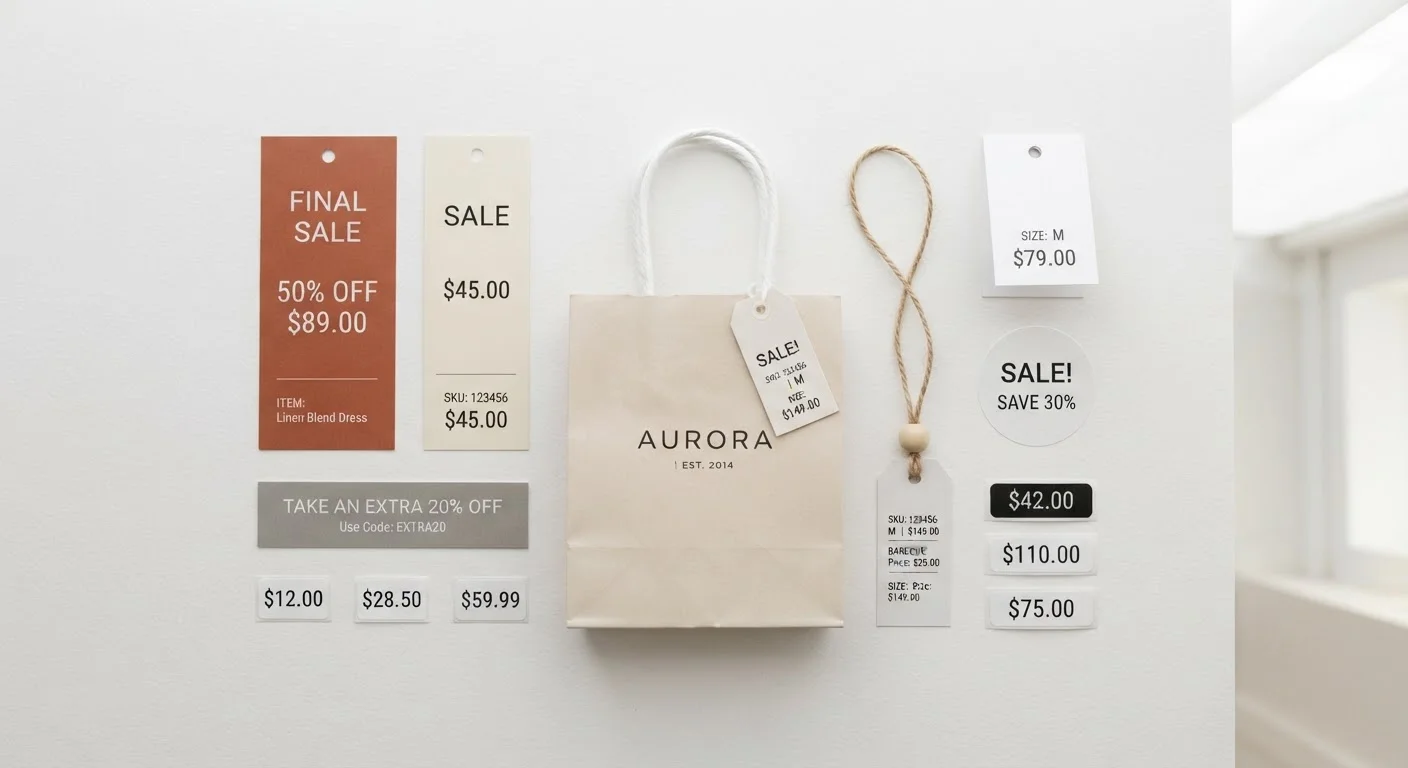
Photo: TheSearchHound.com | One Stop Answer To All Your Questions editorial
Why Retail Vocabulary Matters
Retailers use specialized terminology that can blur the line between a genuine deal and a marketing maneuver. Terms like "clearance," "rebate," and "markdown" carry specific meanings - meanings that aren't always obvious at a glance. When you know what those words actually mean, you're better positioned to evaluate whether a price is truly favorable or simply framed to look that way.
This glossary covers the discount and pricing terms you're most likely to encounter in stores and online. Each definition reflects standard retail industry usage, not advertising spin. For a complementary look at how some of these terms get deployed as psychological tactics, see our article on retail pricing psychology.
| What MSRP stands for | Manufacturer's Suggested Retail Price |
| Is a clearance price permanent? | Generally yes - clearance marks inventory the retailer is exiting |
| When is a rebate paid? | After purchase, upon submission of qualifying proof of purchase |
| Does price matching apply everywhere? | No - exclusions vary widely by retailer policy |
| Are flash sale prices always lower? | Not necessarily - compare against consistent historical prices |
Core Discount and Pricing Terms Defined
The terms below are organized by how commonly shoppers encounter them - from foundational pricing concepts to post-purchase mechanisms.
MSRP
Manufacturer's Suggested Retail Price - the price a product's maker recommends retailers charge. It is not a legally binding floor, and many items routinely sell below MSRP. Its main function is to establish a reference point, which retailers may use to frame discounts.
Markdown
A permanent reduction to an item's retail price, typically applied when a retailer wants to move slow-selling or excess inventory. Unlike a promotional sale, a markdown doesn't revert to the original price after a set period.
Clearance
Pricing applied to merchandise a retailer intends to discontinue stocking - often seasonal items, discontinued styles, or end-of-line inventory. Clearance prices are usually final-sale and may not be eligible for returns or price matching.
Rebate
A partial refund issued after purchase, typically by the manufacturer rather than the retailer. Rebates usually require the buyer to submit proof of purchase within a deadline. The savings are deferred, not immediate.
Loss Leader
An item priced at or below cost to draw shoppers into a store or onto a site, with the expectation they'll purchase additional, higher-margin products. The deal on the advertised item is real, but it serves as a traffic-generation tool.
Coupon vs. Promo Code
A coupon is a physical or digital voucher that reduces price at checkout. A promo code is an alphanumeric code entered during online checkout that applies a discount. Both function similarly but differ in format and distribution channel.
Compare At Price
A reference price shown alongside a sale price, intended to demonstrate savings. This figure may represent MSRP, a competitor's price, or a former selling price - the source varies by retailer and isn't always disclosed.
Flash Sale
A time-limited promotion offering discounts on a specific set of items, often for hours or a single day. The scarcity framing is intentional; prices typically return to standard levels when the window closes.
Price Match
A retailer policy under which the store agrees to match a verified lower price found at a competing retailer. Policies vary significantly - many carry exclusions for marketplaces, membership-only retailers, or limited-time deals.
Bundle Pricing
A strategy where multiple products are sold together at a combined price lower than buying each separately. The aggregate savings can be real, but only if you intended to purchase all items in the bundle.
Seasonal Sale
A promotion tied to a calendar event, holiday, or change in season. Retailers often use these periods to clear inventory ahead of new merchandise. Timing your purchase around seasonal cycles can reflect genuine pricing shifts.
Anchor Price
A higher reference price - real or perceived - displayed near a sale price to make the discount appear larger by contrast. Anchor prices are a well-documented element of retail pricing strategy and don't always reflect what buyers actually paid.
Understanding how these terms interact matters. For example, a "sale" price measured against an inflated "original price" may produce a large percentage discount on paper while the actual dollar savings are modest. Similarly, a rebate sounds like instant savings but requires action after purchase - and sometimes comes with eligibility conditions that not every buyer will meet.
For additional financial vocabulary that overlaps with shopping decisions, the plain-language glossary of saving and debt terms covers concepts like APR and credit terms that often appear in retail financing offers.
How to Apply These Definitions While You Shop
Knowing the terms is one layer of consumer literacy; applying them in context is another. A few practical principles follow from the definitions above.
- Check the reference price. When a tag shows a "was" or "original" price, ask how long the item actually sold at that price. MSRP and "compare at" prices are not always the price the item commanded in the real market.
- Evaluate clearance carefully. Clearance pricing can represent genuine value, but it also means the retailer is exiting the item - returns, exchanges, or manufacturer support may be limited.
- Read rebate terms before purchase, not after. Rebates often have submission deadlines, proof-of-purchase requirements, and exclusions. Confirm you qualify before factoring the rebate into your budget decision.
- Distinguish markdowns from promotions. A permanent markdown changes the shelf price; a promotional sale is temporary. Waiting out a promotion could mean paying full price again - or it could mean the markdown is coming regardless.
For a broader framework on evaluating purchases before committing, the Smart Buying Decisions hub offers practical guidance across product categories. If you spend time shopping online, online shopping terms every consumer should recognize covers the checkout and listing vocabulary that complements what's here.
The content on this site is provided for informational purposes only and should not be considered a substitute for professional advice. While we strive to provide accurate and up-to-date information, we make no guarantees regarding its completeness or accuracy. Always consult a qualified professional for advice specific to your circumstances before making any decisions.