
Retail Pricing Psychology: Why That 'Sale' Price May Not Be What It Seems

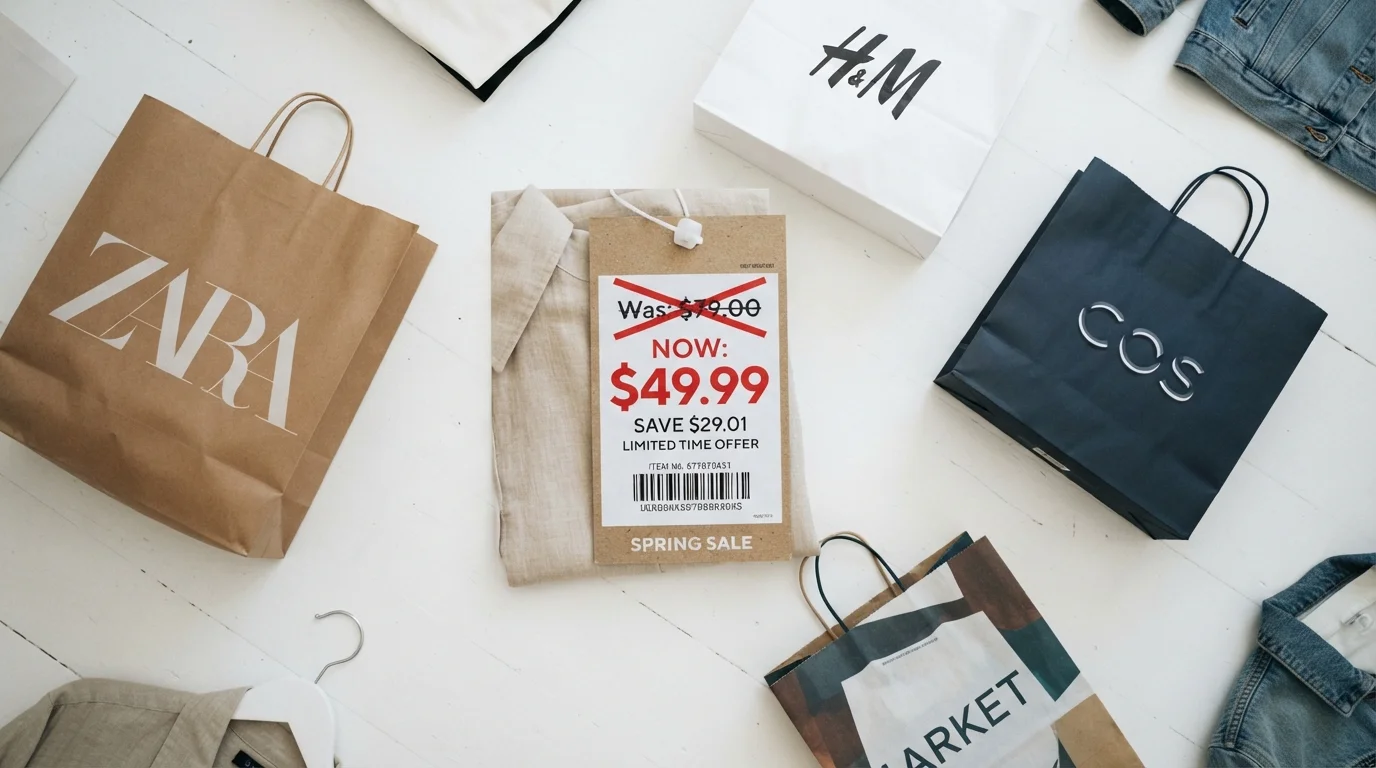
Photo: TheSearchHound.com | One Stop Answer To All Your Questions editorial
Key Takeaways
- Reference prices shown as 'original' or 'compare at' are not always verified market prices.
- Charm pricing (e.g., $19.99 vs. $20) exploits how people process numbers from left to right.
- Artificial urgency cues like 'limited time' may not reflect actual stock or deadline constraints.
- Price tracking tools and historical data can help verify whether a markdown is genuine.
- A lower price tag does not automatically mean higher value for your specific needs.
The Reference Price Problem
Walk through any retail environment and you'll see it constantly: a product tagged at $79.99 with a line through a previous price of $140. That crossed-out number is doing significant psychological work. It's called an anchor price or reference price, and its primary function is to make the current price feel like a bargain by comparison - regardless of whether $140 was ever a real, sustained selling price.
Retailers in the US are subject to FTC guidelines that require advertised reference prices to reflect genuine prior selling prices. In practice, however, the definition of 'genuine' has considerable flexibility, and the guidelines are unevenly enforced. Some reference prices reflect a brief promotional window, an MSRP that few retailers ever charged, or a 'compare at' figure from a competitor's price point. None of those are the same as a sustained market price.
Understanding what retail pricing terms actually mean is a useful first step. When you see 'compare at,' that phrase alone signals that the reference is external - and potentially not reflective of what this retailer ever charged.
~60%
Shoppers influenced by reference prices
Research published in the Journal of Consumer Research found that displayed reference prices significantly shift consumers' willingness to pay, even when shoppers are skeptical of the original figure.
$0.01
Cent difference that alters price perception
Studies in behavioral economics show that a one-cent reduction from a round number (e.g., $20 to $19.99) can shift how consumers categorize a price tier, with measurable effects on purchase likelihood.
~30%
Of online 'limited stock' claims verified as accurate
Consumer advocacy testing has found that a significant share of low-stock warnings on major retail sites do not correspond to genuine inventory constraints at time of display.
Charm Pricing and Left-Digit Bias
Prices ending in .99, .95, or .97 are called charm prices. They're ubiquitous because they work. Consumer behavior research consistently shows that people encode $49.99 closer to $49 than $50, even though the arithmetic difference is a single cent. This is driven by left-digit bias - the tendency to weight the leftmost digit of a number most heavily when forming a quick judgment.
The effect is amplified when charm pricing appears alongside a rounded original price. A markdown from $50.00 to $49.99 looks trivial when written out, but the same markdown from $50 to $49.99 displayed on a tag registers psychologically as a move from the $50 range to the $40 range. The visual formatting, not just the number, carries meaning.
This isn't about manipulation being unique to any one retailer - it's a standard industry-wide convention. Knowing it exists means you can pause before a price ending in .99 feels like automatic confirmation of a deal.
“Consumers believe they are searching for the best price, but in reality they are often searching for confirmation that the price they see is acceptable. Reference prices provide that confirmation, regardless of their accuracy.”
— Richard Thaler, Nobel laureate in Economics and pioneer of behavioral economics research
Artificial Urgency and Scarcity Cues
Countdown timers, 'Only 3 left in stock,' and 'Sale ends tonight' are among the most recognizable urgency triggers in retail. They exploit a well-documented behavioral tendency: people assign higher value to things they believe are scarce or time-limited. The psychological pressure is real even when the underlying constraint is not.
Online retailers can display inventory counts dynamically - sometimes showing low stock figures for items that are continuously restocked. 'Limited time' sale windows may roll over automatically. The urgency is real as a feeling; it may not be real as a fact.
Major sales events amplify these cues significantly, compressing decision timelines and raising the emotional stakes. Recognizing that urgency is being manufactured doesn't eliminate its pull - but it does give you a moment to ask whether the timeline is genuinely external or retailer-controlled.
A practical counter: if a product has been in your cart for two weeks and it's still 'on sale' with a timer, that's informative. Use historical pricing cycles to understand when categories actually see verified price drops rather than relying on a retailer's urgency framing.
How to Evaluate a Price More Objectively
None of these tactics require cynicism to counter - they require a small shift in what you look at. A few practical approaches:
- Check price history. Browser extensions and dedicated price-tracking sites maintain records of how a product's price has moved over time. A 'sale' price that has been the standard price for months tells a different story than a genuine, time-limited markdown. See our guide on verifying whether a discount is genuine for specifics.
- Compare across channels. In-store and online prices for the same item can diverge significantly, and neither is automatically the reference point.
- Separate price from value. A low sale price on an item that doesn't meet your needs isn't savings - it's a different kind of spending. Price and value are not interchangeable concepts, and the confusion between them is itself a marketing advantage retailers benefit from.
- Use unit pricing. Especially in grocery and household goods, the unit price on the shelf label is often more informative than any sale sign above the product.
Retail pricing psychology is not about individual bad actors - it's a systemic feature of how prices are displayed and framed. Knowing the mechanisms doesn't make you immune, but it does mean you're working with more of the available information.
Frequently Asked Questions
The content on this site is provided for informational purposes only and should not be considered a substitute for professional advice. While we strive to provide accurate and up-to-date information, we make no guarantees regarding its completeness or accuracy. Always consult a qualified professional for advice specific to your circumstances before making any decisions.