
Carrier Coverage Maps: Why They Look Better Than Real Life

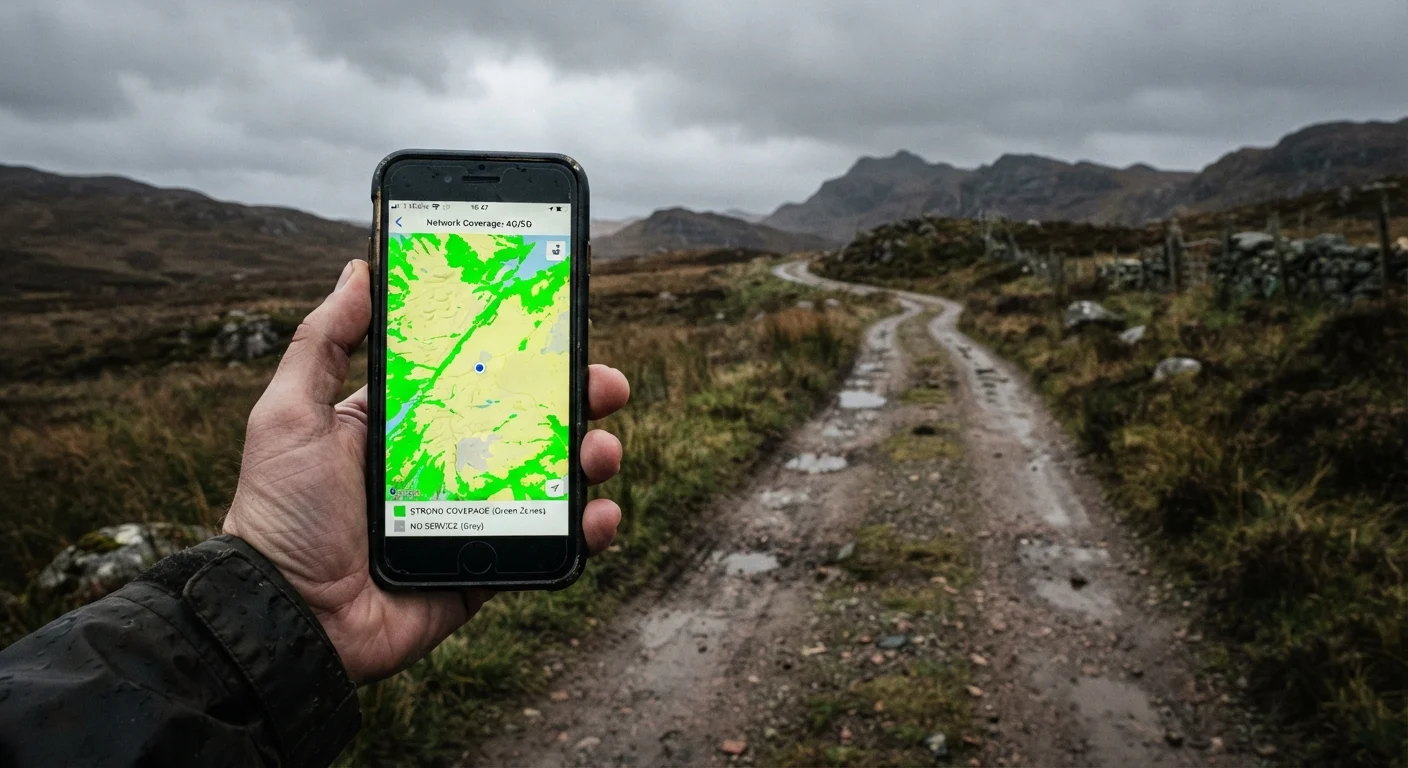
Photo: TheSearchHound.com | One Stop Answer To All Your Questions editorial
Key Takeaways
- Coverage maps are produced by carriers and reflect best-case modeling, not guaranteed real-world signal.
- Building materials, terrain, and network congestion can all degrade service even in "covered" areas.
- Third-party coverage checkers and personal field tests are more reliable than carrier maps alone.
- Trial periods and return windows let you validate real coverage before you're fully committed to a plan.
Why Coverage Maps Don't Tell the Whole Story
When you're shopping for a wireless plan, the first thing most carriers point you toward is their coverage map - a color-coded display showing which areas receive their signal. These maps are useful starting points, but treating them as ground truth is one of the most common mistakes consumers make.
Carrier coverage maps are generated using predictive radio frequency (RF) modeling. Engineers calculate where a signal should reach based on tower locations, transmission power, and terrain data. The result is an optimistic estimate, not a measurement of real-world performance. The map assumes you're standing outdoors with a clear line of sight to a tower - conditions that rarely describe daily life.
Understanding what maps can and can't tell you is the first step toward making a smarter carrier decision. To understand the underlying technology behind the signal bars you're evaluating, see our plain-English guide to 5G, LTE, and 4G.
Taking the colored coverage zones at face value without understanding what they represent.
Ignoring how buildings and geography affect indoor signal strength.
Assuming coverage quality equals network speed and reliability.
Relying solely on the carrier's own map rather than cross-referencing independent data.
Switching carriers based on map comparisons alone without using an available trial period.
How to Actually Test Coverage Before You Commit
The most reliable way to evaluate a carrier's real-world performance is to test it in the specific places that matter most to you - your home, your commute, your workplace, and any frequent travel routes.
~30%
Signal loss from common building materials
RF engineering research consistently shows that indoor environments - particularly those with concrete, brick, or low-emissivity glass - can reduce usable signal strength by roughly 20-30% or more compared to outdoor readings.
3-4x
Speed variation during peak vs. off-peak hours
Network congestion during evening peak hours can reduce average data speeds by a factor of three to four on heavily loaded towers, even in areas shown as fully covered on carrier maps.
Many carriers offer short-term trial periods or allow you to return a SIM within a defined window. These policies exist precisely to give you a chance to validate coverage in practice. Use that window deliberately: test calls, data speeds, and indoor signal in buildings with thick walls or multiple floors.
Beyond carrier trials, third-party tools such as crowdsourced coverage databases aggregate real signal reports from actual users - giving you a data set that reflects lived experience rather than RF modeling. These aren't perfect either, since they depend on who has reported data in your area, but they add meaningful context that carrier maps omit.
If you live or work in a rural or semi-rural area with limited terrestrial coverage, it's worth reading our overview of how satellite internet works and where it fits - it covers an alternative that some users in underserved zones find useful for data connectivity.
Finally, if you're evaluating coverage for multiple lines on a shared plan, be aware that coverage-related trade-offs compound. Our article on how family plans are structured explains other factors worth examining before you sign everyone onto a single carrier.
Never Port Your Number Before Testing
The content on this site is provided for informational purposes only and should not be considered a substitute for professional advice. While we strive to provide accurate and up-to-date information, we make no guarantees regarding its completeness or accuracy. Always consult a qualified professional for advice specific to your circumstances before making any decisions.