
What 'Unlimited' Data Actually Means - and When It Isn't

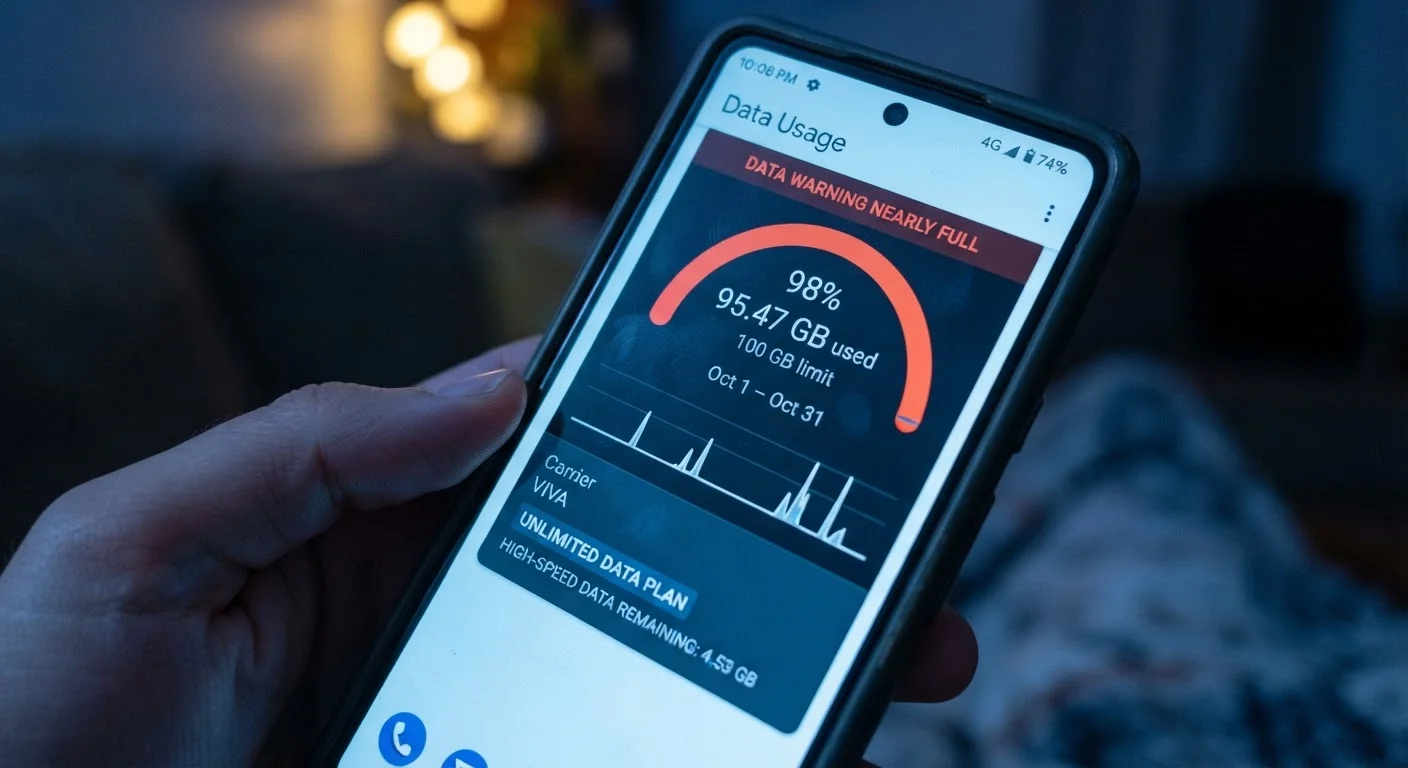
Photo: TheSearchHound.com | One Stop Answer To All Your Questions editorial
Key Takeaways
- Most 'unlimited' plans include speed caps, data thresholds, or deprioritization clauses buried in fine print.
- Throttling and deprioritization are different restrictions - understanding both helps you choose the right plan.
- Video streaming quality is commonly capped on unlimited plans, often without prominent disclosure.
- Comparing plans requires reading the footnotes, not just the headline price and 'unlimited' label.
The Word 'Unlimited' Is a Marketing Term, Not a Technical Guarantee
When a wireless carrier advertises an unlimited data plan, most people picture a pipeline with no shutoff valve - data flowing freely no matter how much you use. The reality is considerably more complicated. Carriers use the word 'unlimited' in a legal and technical sense that permits them to restrict your speeds, reduce your priority on the network, and cap specific types of traffic, all while keeping the 'unlimited' label on the box.
This isn't necessarily deceptive in a legal sense - the restrictions are disclosed - but they're typically disclosed in footnotes, terms-of-service documents, or plan comparison tables that require patience to find and decode. Understanding what's actually being sold is the first step toward comparing plans honestly.
Myth
An unlimited data plan means I can use as much data as I want at full speed, all the time.
Fact
Most unlimited plans reduce your speeds - either permanently or temporarily - once you exceed a stated high-speed data threshold.
Carriers are legally required to disclose speed restrictions, but those disclosures are often buried. The threshold at which full speeds are guaranteed varies widely by plan tier. Once you cross it, speeds can drop to a fraction of what you experienced at the start of the billing cycle. Always check the specific GB allotment at which throttling or deprioritization begins.
Myth
Throttling and deprioritization are the same thing - both just slow you down.
Fact
Throttling is a permanent speed reduction for the billing cycle; deprioritization is a conditional slowdown that only occurs when a cell tower is congested.
Deprioritization means your data is placed lower in the queue when network demand is high. At an uncrowded tower, you may experience no slowdown at all. Throttling, by contrast, applies regardless of how busy the network is. Plans that only deprioritize can be quite usable for people in less densely populated areas; throttling is more impactful across all environments.
Myth
If a plan says unlimited video streaming, I can stream in the highest quality available.
Fact
Unlimited video streaming commonly means unlimited access at a capped resolution - often 480p or 720p - not unrestricted quality.
Resolution caps are a standard feature of entry- and mid-tier unlimited plans. A plan advertising 'unlimited video' may still limit streams to standard definition, which appears noticeably degraded on larger phone screens or when casting to a TV. Carriers typically offer resolution unlocks as part of premium plan tiers or add-ons, which come at an additional monthly cost.
Myth
Mobile hotspot data is included the same as phone data on unlimited plans.
Fact
Hotspot data is almost always governed by separate, stricter limits than on-device data, even on the same unlimited plan.
A plan might include 50 GB of high-speed on-device data but only 15 GB of high-speed hotspot data before hotspot speeds are drastically reduced - sometimes to 600 Kbps. This distinction is critical for anyone who uses their phone to connect a laptop or tablet. Review the hotspot terms as a separate line item, not as part of the general data total.
Myth
All unlimited plans on the same network are essentially equal in performance.
Fact
Carriers offer multiple unlimited tiers on the same network; premium tiers receive network priority over entry-level unlimited customers.
Many carriers structure their unlimited lineup so that customers on higher-priced plans are deprioritized later - or not at all - compared to customers on base unlimited plans. This means two people on the same carrier, standing at the same congested tower, can experience noticeably different speeds depending on which plan tier they subscribe to. Network access and plan tier are distinct considerations.
Throttling, Deprioritization, and Video Caps: The Three Hidden Levers
Throttling means your speeds are permanently reduced after you consume a set amount of high-speed data in a billing cycle. For example, a plan might offer full speeds for the first 30 GB, then drop your connection to 1 Mbps - enough for text messages and basic browsing, but not video calls or streaming - for the rest of the month.
Deprioritization is different and often misunderstood. Under deprioritization, your speeds are only reduced when you're on a congested cell tower and you've exceeded a stated threshold of high-speed data. During low-traffic hours at the same tower, your speeds may be entirely normal. The practical impact depends heavily on where and when you use your phone.
Video streaming caps are a third lever that appears on many plans regardless of how much data you've used. Carriers may limit video resolution to 480p (standard definition) or 720p (high definition) at all times, citing network efficiency. Some plans require you to pay more to unlock higher-resolution streaming.
1 Mbps
Typical throttled speed after data cap
Many carrier plans reduce speeds to approximately 1 Mbps after the high-speed data threshold is reached, per publicly disclosed plan terms.
480p
Video cap on entry-level unlimited plans
Standard definition (480p) video streaming is a commonly disclosed cap on base unlimited tiers across major U.S. carriers.
600 Kbps
Minimum hotspot speed after cap on some plans
Some carriers reduce mobile hotspot speeds to as low as 600 Kbps once the high-speed hotspot allotment is exhausted, per their published terms.
Just as carriers use fine print to define the boundaries of 'unlimited,' retailers use similar language in other consumer agreements. Reading the fine print on online return policies follows the same discipline - knowing exactly what you agreed to before it matters.
How to Actually Compare Unlimited Plans
Evaluating unlimited plans requires moving past the headline and into the specifics. Four questions cut through most of the marketing language:
- What is the high-speed data allotment before throttling? This is sometimes called the 'premium data' threshold. Know the number and compare it across plans.
- At what usage level does deprioritization apply, and on which network tiers? Some carriers deprioritize unlimited customers behind postpaid or premium subscribers, regardless of how much data you've used.
- What is the maximum video streaming resolution included? If you regularly watch video on your phone or use it as a hotspot for a TV, this matters significantly.
- What are the mobile hotspot terms? Many unlimited plans include hotspot data at full speed only up to a cap, then reduce hotspot speeds drastically - sometimes to 600 Kbps, which is too slow for most video calls.
The assumption that a higher-priced unlimited plan is automatically superior is worth questioning. The myths around 'you get what you pay for' examines exactly this kind of marketing logic across consumer categories.
Don't Rely on Plan Names Alone
The content on this site is provided for informational purposes only and should not be considered a substitute for professional advice. While we strive to provide accurate and up-to-date information, we make no guarantees regarding its completeness or accuracy. Always consult a qualified professional for advice specific to your circumstances before making any decisions.