
Why Tire Pressure Matters More Than Most Drivers Realize

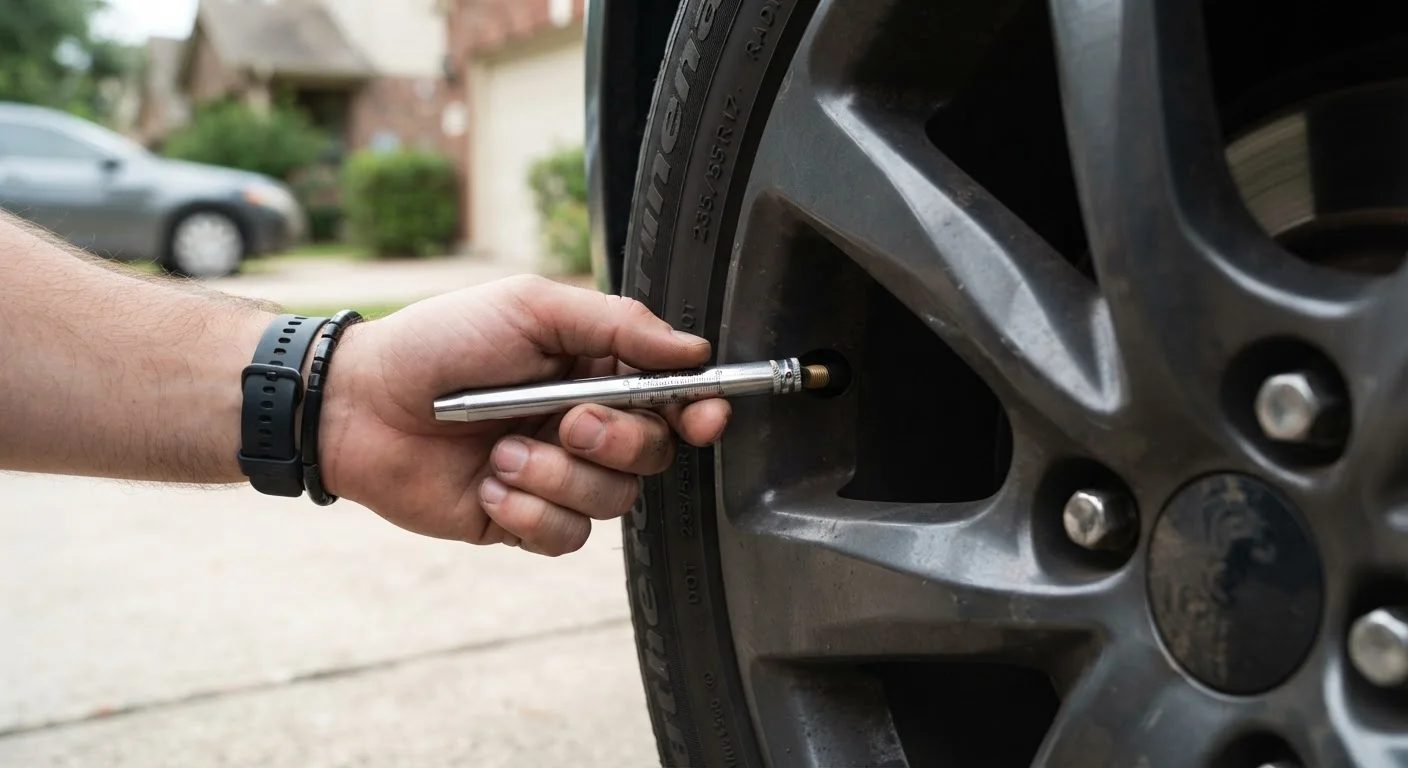
Photo: TheSearchHound.com | One Stop Answer To All Your Questions editorial
Key Takeaways
- Tire pressure directly affects braking distance, handling, and fuel efficiency - not just tire wear.
- The correct PSI for your vehicle is found on a sticker inside the driver's door jamb, not on the tire sidewall.
- Both underinflation and overinflation create distinct and serious safety risks.
- Tire pressure drops roughly 1 PSI for every 10°F decrease in ambient temperature.
- Check pressure monthly and before long road trips for consistent vehicle performance.
What Tire Pressure Actually Does
Tire pressure is the foundation of how your tires interact with the road. The air inside each tire supports the entire weight of the vehicle, cushions road impacts, and maintains the contact patch - the small footprint of rubber that actually touches the pavement. When pressure is off in either direction, that contact patch changes shape, and so does your car's behavior.
Underinflated tires flex excessively with each rotation, generating heat that accelerates internal breakdown and increases the risk of a blowout. They also cause the tire's edges to bear more load than the center, producing uneven wear patterns that shorten tire life. Fuel economy suffers too - the U.S. Department of Energy notes that underinflated tires increase rolling resistance, meaning your engine works harder to maintain speed.
Overinflated tires create the opposite problem. The center of the tread bulges downward and carries a disproportionate share of the load, wearing that center strip faster than the edges. A hard, overfilled tire also has a smaller effective contact patch, which can reduce traction - especially on wet or uneven road surfaces. The ride becomes harsher, and the tire is more susceptible to damage from road debris and potholes.
Tire pressure also has a direct but underappreciated effect on steering response and braking. Properly inflated tires allow the vehicle's suspension geometry to work as designed. When pressure is consistently low, drivers may notice sluggish steering feel or slightly longer stopping distances - factors that matter most in emergency situations. For more on how everyday habits affect your vehicle's components, see this overview of common vehicle wear patterns.
Make It a Monthly Habit
How to Check and Adjust Tire Pressure Correctly
Before you begin, locate the recommended PSI (pounds per square inch) for your specific vehicle. This information is printed on a sticker inside the driver's door jamb or in your owner's manual. Do not use the maximum PSI printed on the tire sidewall - that figure is the tire's structural limit, not the automaker's recommended operating pressure.
What you will need
Check pressure when tires are cold
Remove the valve cap from the tire stem and set it aside somewhere you won't lose it. Press your tire gauge firmly and squarely onto the valve stem. You should get a single, steady reading - bouncing numbers or a hissing sound usually means the gauge isn't seated flush. Record the PSI for each tire, then compare to the recommended figure on your door jamb sticker.
Add air if pressure is low
Attach the air hose from a compressor or gas station pump to the valve stem. Add air in short bursts - about 3-5 seconds at a time - and recheck with your gauge after each burst. Tires can reach the target pressure quickly, and it's easier to add more than to release excess. Front and rear tires sometimes have different recommended PSI values; check both the front and rear specifications on your door sticker.
Release air if pressure is too high
Use the small pin or nipple on the back of most tire gauges - or a dedicated valve core tool - to briefly depress the center pin of the valve stem. Release air in small increments and check with your gauge frequently. Overinflated tires are a common result of automated air stations that dispense a fixed volume without reading current pressure. Once at the correct PSI, reinstall all valve caps firmly.
Adjust for seasonal temperature changes
Tire pressure changes with ambient temperature at a rate of roughly 1 PSI per 10°F of temperature shift. As fall transitions to winter, pressure drops noticeably - a tire properly inflated at 35 PSI during a 70°F day can read closer to 30 PSI on a 20°F morning. Check pressure at the start of each new season and any time there's a significant temperature swing of 20°F or more.
Tire pressure is one of several maintenance items that gets overlooked far too often. For a broader look at what else tends to slip through the cracks, see vehicle maintenance items drivers frequently overlook. And if you're sorting out which tire services your car actually needs, this explanation of rotation, balancing, and alignment clarifies the differences.
Don't Rely Solely on Visual Inspection
The content on this site is provided for informational purposes only and should not be considered a substitute for professional advice. While we strive to provide accurate and up-to-date information, we make no guarantees regarding its completeness or accuracy. Always consult a qualified professional for advice specific to your circumstances before making any decisions.