
Everything You Need to Know About Car Filters - Air, Cabin, Oil, and Fuel

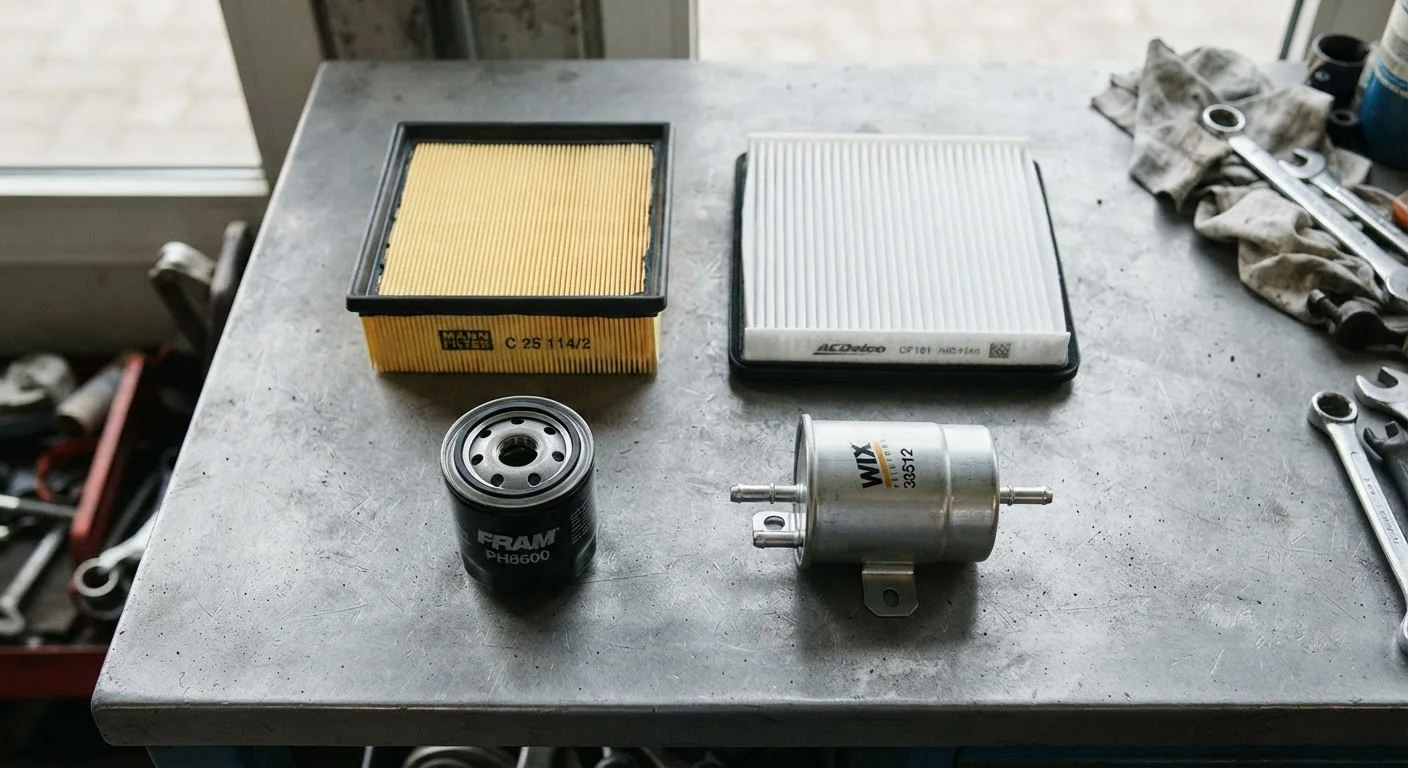
Photo: TheSearchHound.com | One Stop Answer To All Your Questions editorial
Key Takeaways
- Each of the four main filters protects a different vehicle system from contamination and wear.
- Engine air and cabin air filters are among the easiest maintenance items drivers can inspect themselves.
- Oil filters should be replaced every time you change the engine oil - they are not optional.
- Neglecting any filter long enough can lead to reduced performance, higher fuel costs, or costly repairs.
- Replacement intervals vary by vehicle and driving conditions - always check your owner's manual first.
Why Filters Matter in Your Vehicle
Modern vehicles rely on a continuous flow of clean air, oil, and fuel to run efficiently. Filters are the unsung guardians of that flow - each one designed to trap contaminants before they reach critical engine and cabin components. When a filter becomes clogged or degraded, the system it protects is forced to work harder, often with consequences that compound over time.
Understanding what each filter does - and what happens when it fails - puts you in a stronger position to maintain your vehicle with confidence. For a broader look at overlooked service items, see maintenance items drivers frequently overlook.
15,000-30,000 mi
Typical engine air filter service interval
Most vehicle manufacturers specify this range, though dusty driving conditions can shorten it significantly.
~25%
Potential fuel economy reduction from a clogged air filter
The U.S. Department of Energy has noted that a severely restricted air filter can noticeably reduce fuel efficiency in older carbureted engines; the effect is smaller but still present in modern fuel-injected vehicles.
1-4 Years
Useful life of a typical cabin air filter
Interval depends heavily on local air quality, annual mileage, and whether the vehicle is used in high-pollen or urban environments.
Engine Air Filter: Protecting the Combustion Process
The engine air filter sits between the outside air intake and your engine's intake manifold. Its job is straightforward: prevent dust, pollen, insects, and road debris from entering the combustion chamber, where even small particles can damage cylinder walls and pistons over time.
A clean engine air filter allows the correct air-to-fuel ratio to be maintained, which is essential for efficient combustion. As the filter clogs, airflow is restricted. Symptoms can include sluggish acceleration, reduced fuel economy, and in severe cases, a rough idle or check-engine light.
Typical replacement interval: Most manufacturers recommend every 15,000 to 30,000 miles, though dusty or rural driving environments may require more frequent changes. Inspect yours visually at every oil change - a heavily discolored or visibly clogged filter is ready for replacement.
Hold the engine air filter up to a light source when inspecting it - if you can't see light passing through the media, it's time to replace it regardless of mileage.
When replacing the cabin air filter, note the airflow direction arrow on the new filter and install it accordingly - reversed installation significantly reduces filtration effectiveness.
Cabin Air Filter: Cleaner Air for You and Your Passengers
Introduced widely in vehicles from the late 1990s onward, the cabin air filter cleans the air that flows through your heating, ventilation, and air conditioning (HVAC) system before it reaches the passenger compartment. It captures pollen, dust, mold spores, exhaust particles, and other airborne debris.
A neglected cabin air filter reduces HVAC airflow, forces the blower motor to work harder, and can allow musty odors to circulate through the cabin. People with allergies or respiratory sensitivities may notice symptoms sooner than others when this filter is overdue.
Typical replacement interval: Every 15,000 to 25,000 miles, or once a year if you drive in high-pollen or urban environments. The filter is usually accessible behind the glove box or under the dashboard - your owner's manual will show its exact location. This is one of the simplest filter swaps a driver can perform at home.
For context on how vehicle air filtration compares to home HVAC systems, HVAC filter ratings explained offers a useful parallel.
Oil Filter: Keeping Your Engine's Lifeblood Clean
Engine oil lubricates moving metal components, carries heat away from critical areas, and suspends tiny metal shavings and combustion byproducts that would otherwise accumulate inside the engine. The oil filter continuously removes these contaminants as oil circulates - it's not a one-time trap but an active, ongoing process.
As an oil filter reaches the end of its service life, its filtration media becomes saturated. Most modern filters include a bypass valve that opens when pressure builds up, allowing oil to continue flowing rather than starving the engine - but at that point, unfiltered oil is circulating freely, accelerating wear on bearings, camshafts, and other components.
Replacement practice: Replace the oil filter every time you change the engine oil. Treating them as a paired service is the simplest rule to follow, regardless of whether you use conventional or synthetic oil. For more on separating oil-change fact from fiction, see common car maintenance myths.
Fuel Filter: Guarding the Fuel Delivery System
The fuel filter screens out rust particles, sediment, and other impurities from the fuel before it reaches the fuel injectors or carburetor. Clean fuel delivery is critical for consistent engine performance and for protecting injectors - precision components that can be damaged by debris far smaller than what's visible to the naked eye.
On many older vehicles, the fuel filter is an external, inline component that's relatively accessible. On a large number of vehicles built in recent decades, it's integrated into the fuel pump assembly inside the fuel tank, making replacement a job for a qualified mechanic rather than a straightforward DIY task.
Typical replacement interval: Intervals vary widely - from 20,000 miles on some older designs to 60,000 miles or more on others, with some manufacturers listing no scheduled replacement at all for lifetime in-tank designs. Consult your owner's manual and mention it during regular service visits so a technician can assess condition as part of a broader fuel system inspection.
How to Know When Each Filter Needs Attention
Mileage intervals are a useful guide, but driving conditions matter just as much. Frequent short trips, unpaved roads, heavy stop-and-go traffic, and extreme climates can accelerate how quickly each filter loads up with contaminants.
- Engine air filter: Visually inspect at every oil change. Look for heavy gray or brown discoloration across the entire media surface.
- Cabin air filter: Check annually or if HVAC airflow feels noticeably weaker. Leaves, debris, or strong odors are clear signs.
- Oil filter: Replace with every oil change - no inspection needed, treat it as automatic.
- Fuel filter: Follow manufacturer intervals or flag for professional inspection if you notice hesitation, hard starting, or power loss under load.
Staying on schedule with these four filters is one of the most cost-effective ways to protect a vehicle's long-term reliability. Pair filter checks with seasonal inspections - a habit explored in detail in seasonal car care guidance. And for a complete picture of your vehicle's fluid health alongside filter maintenance, checking your vehicle's fluids is a natural next read.
Keep Your Owner's Manual as Your First Reference
The content on this site is provided for informational purposes only and should not be considered a substitute for professional advice. While we strive to provide accurate and up-to-date information, we make no guarantees regarding its completeness or accuracy. Always consult a qualified professional for advice specific to your circumstances before making any decisions.