
HVAC Filter Maintenance: What the Ratings Actually Mean

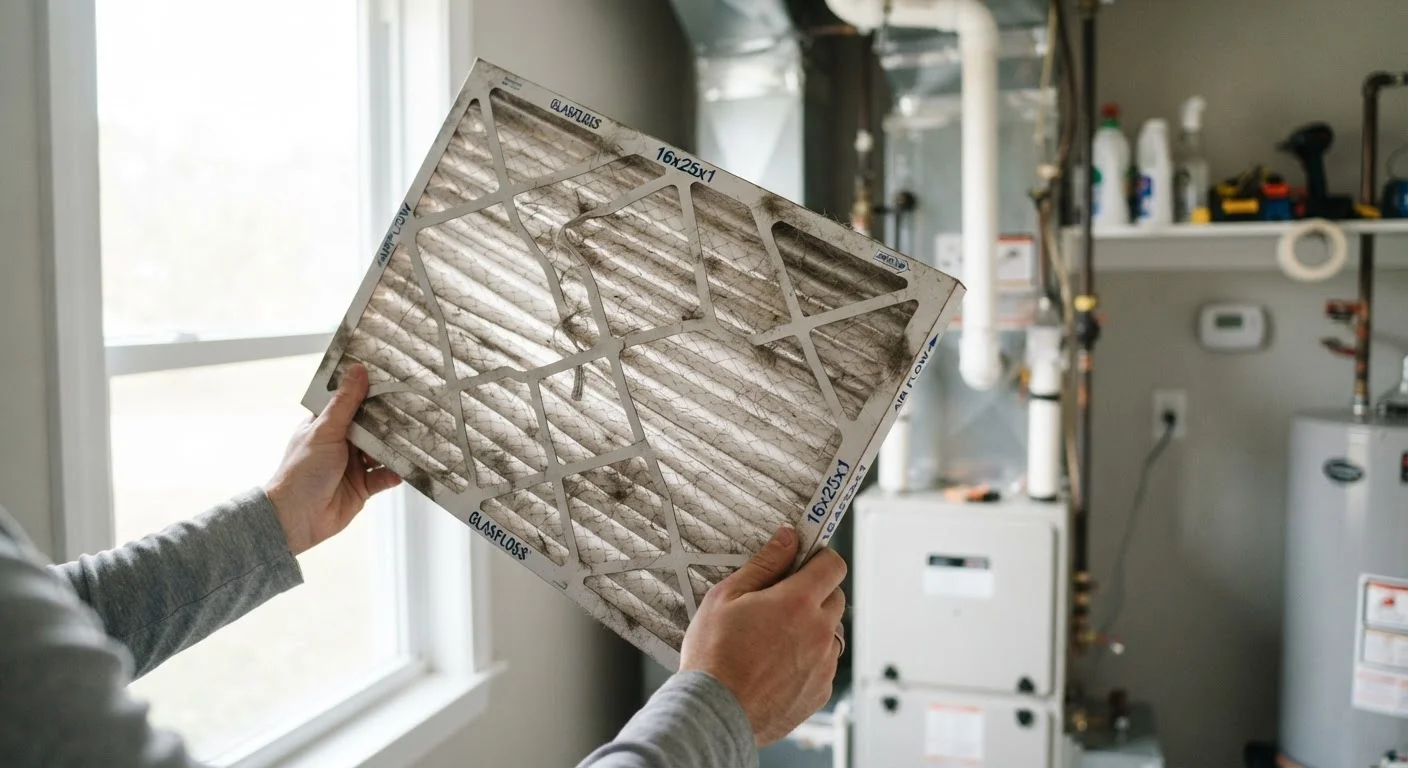
Photo: TheSearchHound.com | One Stop Answer To All Your Questions editorial
Why Filter Ratings Matter More Than You Think
Walk down the filter aisle at any home improvement store and you'll see numbers, acronyms, and color-coded scales that rarely match up across brands. That confusion isn't accidental - three separate rating systems exist, each developed by different organizations for different purposes. Knowing what each one actually measures helps you avoid two common and costly mistakes: buying a filter that's too weak to clean your air, or one so dense it strains your HVAC system into early failure.
Filters serve two jobs simultaneously: capturing airborne particles to improve indoor air quality, and allowing enough airflow to keep your system running efficiently. These goals are in tension. A filter that catches more also restricts more. Choosing wisely means matching the right balance to your home's needs and your system's design. See our complementary guide on how furnaces and heat pumps differ in maintenance needs, since each system interacts with filters differently.
| MERV rating range (residential) | 1-16 (ASHRAE Standard 52.2) |
| Recommended MERV for most homes | 8-11 (U.S. Department of Energy guidance) |
| Standard 1-inch filter replacement interval | Every 1-3 months (General HVAC industry guidance) |
| Particle size targeted by MERV 11+ | 0.3-1 micron (ASHRAE Standard 52.2) |
| MPR scale range (Filtrete) | 300-2800 (3M product documentation) |
| FPR scale range (Home Depot) | 4-10 (The Home Depot product labeling system) |
The Three Rating Systems Explained
MERV (Minimum Efficiency Reporting Value) is the most widely used and independently standardized rating. Developed by ASHRAE (the American Society of Heating, Refrigerating and Air-Conditioning Engineers), MERV scores run from 1 to 16 for residential use, with higher numbers indicating finer filtration. A MERV 1-4 filter catches large debris like dust bunnies and lint. MERV 8 captures mold spores and pet dander. MERV 11-13 traps fine particles including some bacteria and smoke. MERV 14-16 approaches hospital-grade filtration and is rarely appropriate for standard home systems.
MERV
Minimum Efficiency Reporting Value. An ASHRAE-standardized scale from 1-20 rating a filter's ability to capture particles of specific sizes. Higher MERV numbers indicate finer filtration.
MPR
Microparticle Performance Rating. A proprietary scale developed by 3M measuring a filter's capture of particles between 0.3 and 1 micron. Used exclusively on 3M Filtrete products.
FPR
Filter Performance Rating. A color-coded, 4-10 scale used by The Home Depot for its store-brand filters, roughly aligned with MERV but not directly interchangeable.
Micron
A unit of measurement equal to one millionth of a meter. Most airborne allergens and fine particles range from 0.3 to 10 microns in size.
Static Pressure
The resistance to airflow inside your HVAC system's ductwork. Higher-rated filters increase static pressure; too much can damage your blower motor or heat exchanger.
Media Filter
A thicker (typically 4-5 inch) pleated filter that offers higher particle capture with less frequent replacement than standard 1-inch filters, while maintaining better airflow.
MPR (Microparticle Performance Rating) was developed by 3M specifically for its Filtrete product line. MPR measures a filter's ability to capture particles between 0.3 and 1 micron - the range that includes many allergens and fine smoke particles. Scores typically range from 300 to 2800. While MPR correlates roughly with MERV, it is not directly interchangeable; an MPR 1500 does not equal any specific MERV number without a conversion reference.
FPR (Filter Performance Rating) is a proprietary scale used by The Home Depot for filters sold under its store brands. It runs from 4 to 10, using a color-coded system, and is roughly analogous to MERV but again not a direct conversion. Think of FPR as a simplified consumer guide rather than a technical specification.
Choosing the Right Filter for Your Home
Most residential HVAC systems are designed around filters in the MERV 8-11 range. Going higher than your system was engineered for can reduce airflow to the point where your blower motor overworks, heat exchangers overheat, or coils freeze - all expensive problems. Check your system's manual or the manufacturer's specifications before upgrading to a higher-rated filter.
Consider these household factors when selecting a rating level:
- Standard household: MERV 8 handles typical dust, pollen, and lint without stressing most systems.
- Pets or mild allergies: MERV 10-11 adds meaningful capture of dander and finer particles.
- Asthma or respiratory conditions: MERV 11-13 may help, but confirm your system supports the added restriction. Consult an HVAC technician if unsure.
- Older or lower-efficiency systems: Stick to MERV 8 or below to avoid airflow problems.
Note that unlike vehicle filters - which each protect a distinct engine component - your HVAC filter affects both air quality and system mechanics simultaneously, making the rating choice more consequential.
Replacement Schedules and Common Mistakes
A filter rating only delivers its intended benefit when the filter is replaced on schedule. A clogged MERV 13 filter is worse than a clean MERV 8 - it restricts airflow severely while becoming a reservoir for trapped debris. General replacement guidelines:
- 1-inch filters (most common): Every 1-3 months, depending on household conditions
- 4-inch media filters: Every 6-12 months
- Homes with pets or high dust: Closer to the shorter end of any range
Check your filter monthly during peak heating and cooling seasons. Hold it up to light - if you can't see light through it, replace it regardless of how long it's been installed.
This article is for general informational purposes only. Always consult your HVAC system's documentation or a licensed HVAC technician before changing filter types, especially if your system shows signs of restricted airflow, unusual sounds, or reduced performance.
The content on this site is provided for informational purposes only and should not be considered a substitute for professional advice. While we strive to provide accurate and up-to-date information, we make no guarantees regarding its completeness or accuracy. Always consult a qualified professional for advice specific to your circumstances before making any decisions.