
Keeping Records: Why a Maintenance Log Makes You a More Informed Car Owner

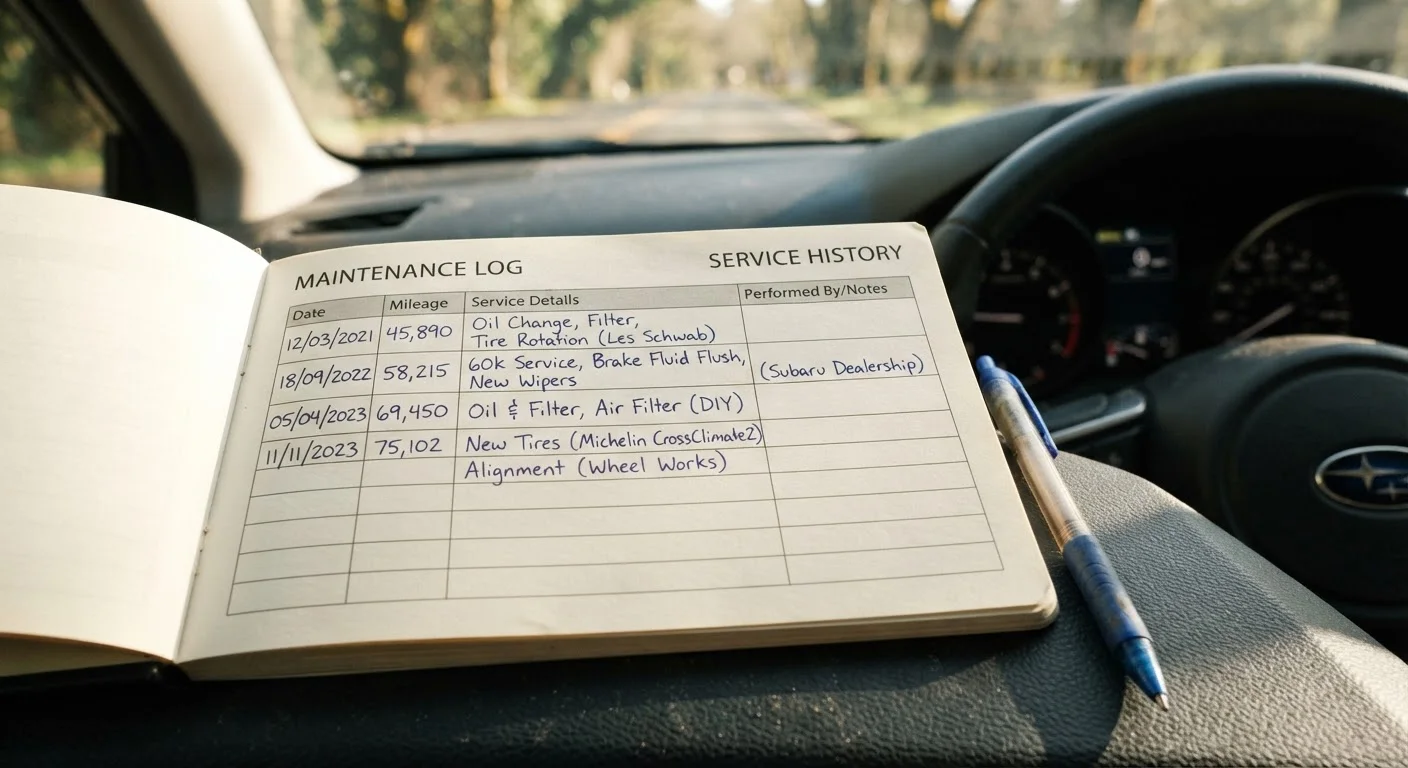
Photo: TheSearchHound.com | One Stop Answer To All Your Questions editorial
Key Takeaways
- A maintenance log helps you track service intervals and catch recurring issues before they become costly repairs.
- Documented service history can meaningfully support a vehicle's resale value and buyer confidence.
- Logs can be kept digitally or on paper - consistency matters more than the format you choose.
- Even starting mid-ownership provides real value; you don't need a complete history to benefit.
- A good record includes dates, mileage, work performed, and who completed the service.
What a Maintenance Log Actually Is
A vehicle maintenance log is a running record of every service, repair, and inspection performed on your car. It captures the date, the current mileage, what was done, and - ideally - who did it and roughly what it cost. That's it. There's no required format, and it doesn't need to be elaborate to be useful.
Think of it as a medical chart for your vehicle. Without one, you're relying on memory or scattered receipts stuffed in a glove box. With one, you have a clear picture of your car's history at a glance. If you're new to vehicle ownership and want a broader foundation, our introduction to car maintenance is a solid starting point.
The Real Benefits of Keeping Records
The most immediate benefit is staying on schedule. Oil changes, tire rotations, air filter replacements, brake inspections - these all have recommended intervals based on time or mileage. Without a log, it's surprisingly easy to lose track, especially if you use different shops or handle some tasks yourself.
~$1,200
Average annual vehicle maintenance cost per U.S. driver
According to AAA's annual Your Driving Costs study, vehicle maintenance and repair costs represent a significant share of overall ownership expenses.
77%
Used-car buyers who say service history affects purchase decisions
Consumer research consistently shows that documented maintenance history is among the top factors buyers weigh when evaluating a used vehicle.
Beyond scheduling, a log lets you spot patterns. If a particular component keeps needing attention, that's information worth having before it escalates. Drivers who track their records are also better positioned to evaluate whether a repair recommendation from a shop is premature - or genuinely overdue. For a closer look at tasks that tend to slip through the cracks, see our piece on frequently overlooked maintenance items.
There's also a financial argument. Well-maintained vehicles tend to hold their value better, and a documented service history gives prospective buyers confidence. That's harder to demonstrate without paper - or digital - evidence.
Best Practices for Building and Maintaining Your Log
Record every service event at the time it happens, not weeks later from memory.
Include mileage alongside every date entry.
Keep copies of shop invoices paired with your log entries.
Note who performed the work, including yourself for DIY tasks.
Review your log before any scheduled service appointment.
Consistency is the key variable. A log that's updated sporadically has limited value. The goal is to record an entry every time something is done to the vehicle - whether that's a full brake job at a shop or a wiper blade swap in your driveway.
If you're committed to following your vehicle's manufacturer schedule, our article on sticking to your car's maintenance schedule explains why those intervals exist and what deferred maintenance costs over time.
Starting Mid-Ownership and High-Mileage Considerations
Many drivers assume a log is only useful if started from day one. That's not accurate. Starting now - even with a vehicle you've owned for years - captures everything going forward and still delivers the scheduling and pattern-recognition benefits that matter most.
If your car already has significant miles on it, a log becomes even more valuable. Higher-mileage vehicles require closer attention to certain systems and more frequent inspection of wear items. Our guide to high-mileage vehicle maintenance covers what shifts as a car ages and how to adjust your expectations accordingly.
You can begin today with a simple notebook, a spreadsheet, or one of several free apps designed for this purpose. Whatever format you choose, recording the date, mileage, and a brief description of the work done is enough to get started. The habit itself is more important than the tool.
The content on this site is provided for informational purposes only and should not be considered a substitute for professional advice. While we strive to provide accurate and up-to-date information, we make no guarantees regarding its completeness or accuracy. Always consult a qualified professional for advice specific to your circumstances before making any decisions.