
When Your Brakes Are Trying to Get Your Attention

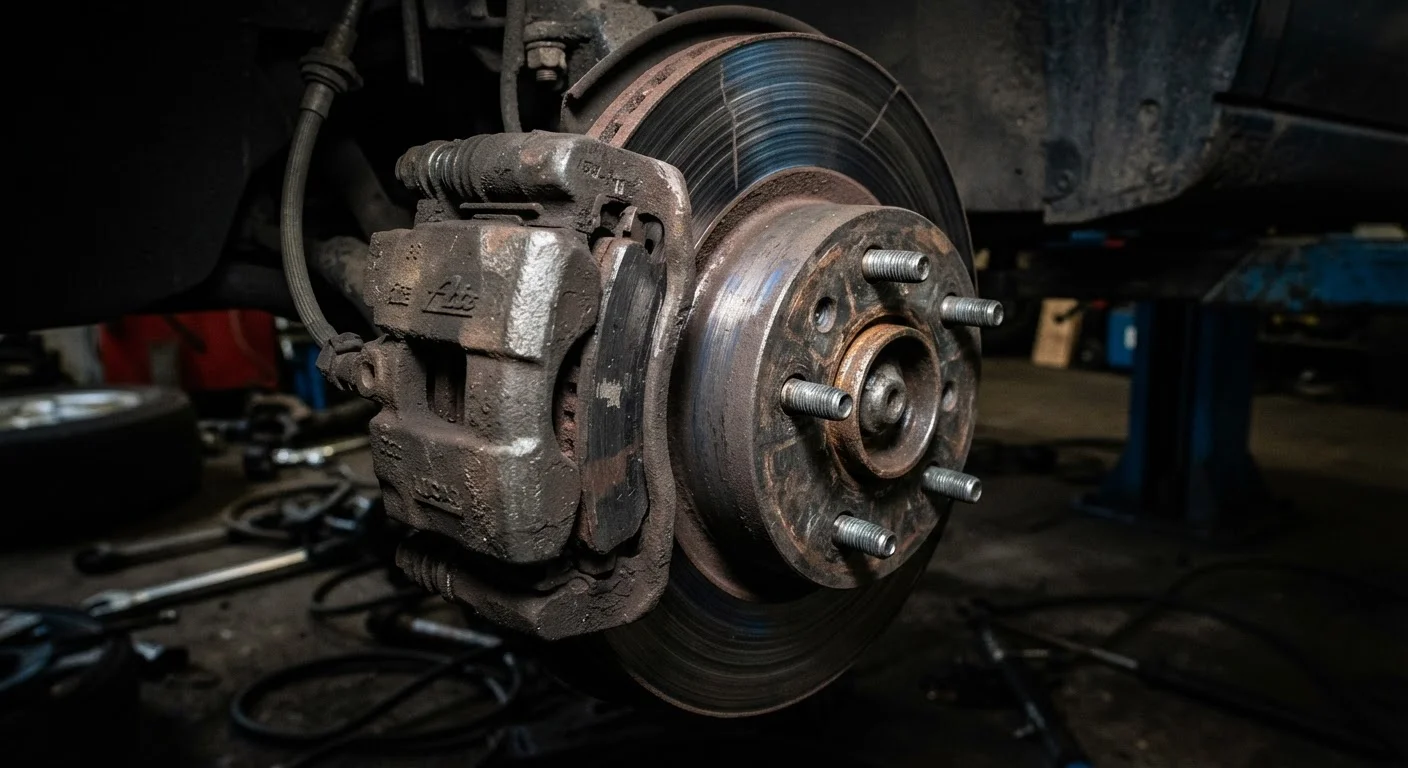
Photo: TheSearchHound.com | One Stop Answer To All Your Questions editorial
Key Takeaways
- Squealing is often a built-in wear indicator; grinding usually signals more serious damage.
- A brake pedal that sinks to the floor or feels spongy can indicate a hydraulic system problem.
- Pulling to one side while braking often points to uneven pad wear or a stuck caliper.
- Vibration through the pedal or steering wheel frequently indicates warped rotors.
- Never delay a professional inspection when brakes feel unusual - stopping distance is a safety matter.
The Language of Brake Sounds
Your brakes communicate through sound, and each type of noise carries a different message. Understanding that language is one of the most practical things a driver can do.
Squealing or squeaking is the most common complaint. Many brake pads include a small metal wear indicator - a tab engineered to scrape against the rotor when the friction material gets too thin. That high-pitched squeal is intentional: it's your car telling you the pads are due for replacement. In some cases, a brief squeal after a rainy night or early morning is normal surface moisture burning off and should go away quickly.
Grinding is a more urgent signal. It generally means the pad material has worn away entirely and metal is contacting metal. At this stage, the rotor itself can be damaged, which turns a relatively straightforward pad replacement into a more involved repair. Grinding should not be ignored or driven on for extended periods.
Clicking or rattling, particularly when you first press the pedal, can indicate a loose brake hardware component. While sometimes minor, loose parts can affect consistent braking performance and deserve professional attention.
A Quick Self-Check in a Safe Parking Lot
What You Feel: Pedal and Steering Sensations
Sound isn't the only channel your brakes use. Physical feedback through the pedal and steering wheel can reveal problems that are completely silent.
A spongy or soft pedal - one that compresses more than usual before the brakes engage - often points to air in the hydraulic brake lines or a fluid issue. Brake fluid is the medium that transfers your pedal pressure into stopping force. When the hydraulic circuit is compromised, that transfer becomes inconsistent. This is a situation that warrants prompt professional inspection.
Pedal pulsation or vibration is commonly caused by warped rotors. Rotors can warp from repeated heavy braking, overheating, or simply age and mileage. When a rotor's surface isn't perfectly flat, the pads grip unevenly with each wheel rotation, producing a rhythmic pulsing sensation underfoot - sometimes also felt in the steering wheel.
A pedal that sinks toward the floor under steady pressure is a serious concern. It can indicate a failing master cylinder or a leak somewhere in the hydraulic system. If this happens, pull over safely and have the vehicle towed for inspection rather than continuing to drive.
Dashboard warning lights can accompany these symptoms - a brake system light or ABS indicator appearing alongside physical symptoms should accelerate your response time.
Pulling to One Side and Vibration While Stopping
If your vehicle drifts left or right during braking without any input from you, the braking force is uneven between sides. Common causes include a stuck or seized brake caliper, which keeps one wheel under partial braking pressure even when your foot is off the pedal. Uneven pad wear across the axle can produce the same result. Either way, pulling during braking affects your directional control in an emergency stop - a mechanic should diagnose it before the issue worsens.
Vibration through the steering wheel specifically during braking - as opposed to general road vibration - usually points to the front rotors, since the front brakes handle the majority of stopping force. Rear rotor issues may produce a shudder felt more through the seat or chassis.
ABS and the Pulsing Pedal During Hard Stops
Driving habits also play a role in how quickly brake components wear. Everyday habits like riding the brakes on long downhill stretches or frequent hard stops in stop-and-go traffic can accelerate wear significantly.
When to See a Mechanic - And Why Timing Matters
Some brake symptoms allow a short window to schedule an appointment; others call for immediate action. As a general framework:
- Schedule soon: Persistent squealing on dry roads, slight pedal changes, or minor vibration.
- Schedule urgently: Grinding, consistent pulling to one side, or a pedal that feels noticeably lower than usual.
- Stop driving and get it inspected: A pedal sinking to the floor, a burning smell near the wheels after normal driving, or the brake warning light combined with any physical symptom.
Brakes are not an area where a wait-and-see approach pays off. Unlike some vehicle systems where early-stage issues stay contained, worn or failing brakes can escalate quickly - and the consequences involve stopping distance, not just repair bills. A qualified mechanic can measure pad thickness, inspect rotors for thickness and surface condition, and check hydraulic components in a systematic way that a visual glance in a parking lot cannot replicate.
If your dashboard is also showing unfamiliar warning symbols alongside brake symptoms, understanding what those lights mean can help you communicate more clearly with your mechanic.
Frequently Asked Questions
The content on this site is provided for informational purposes only and should not be considered a substitute for professional advice. While we strive to provide accurate and up-to-date information, we make no guarantees regarding its completeness or accuracy. Always consult a qualified professional for advice specific to your circumstances before making any decisions.