
Understanding Your Car's VIN

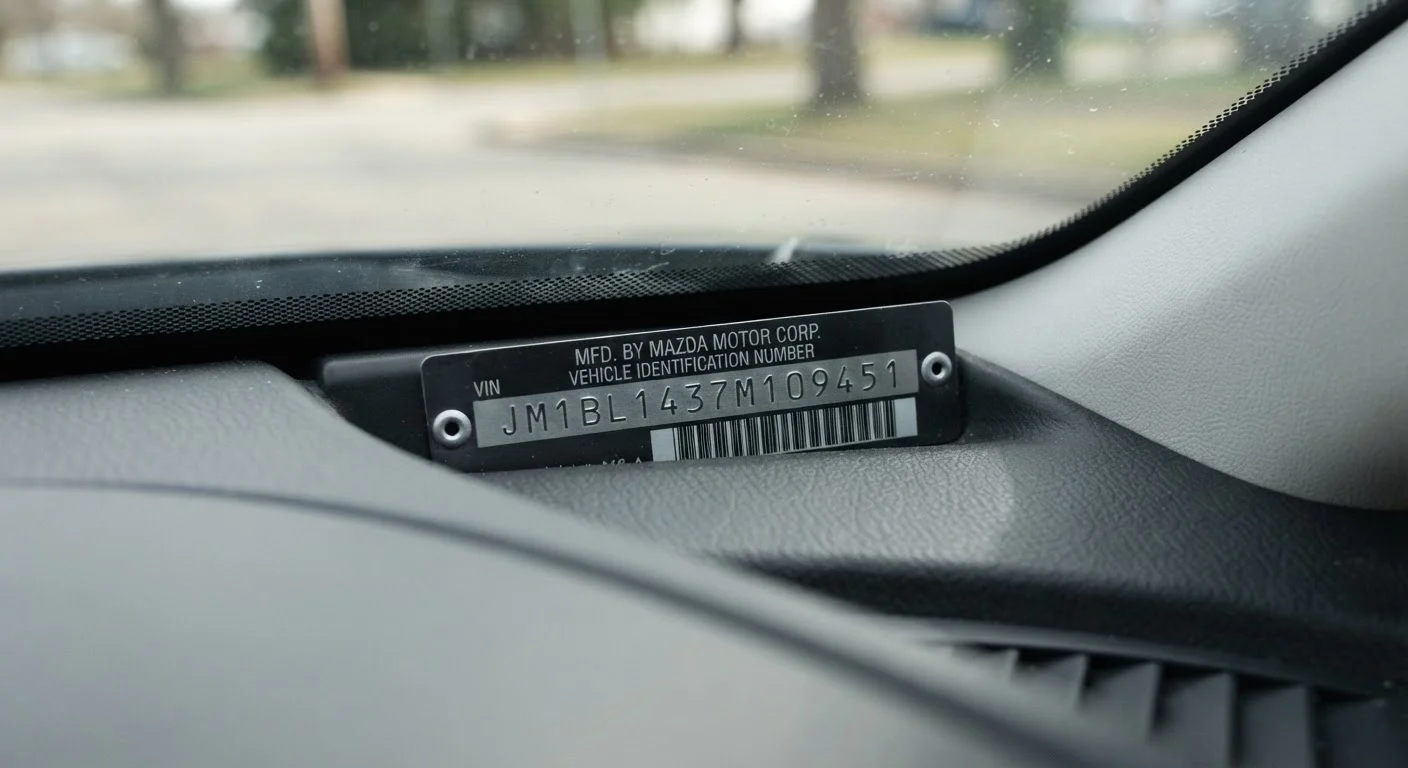
Photo: TheSearchHound.com | One Stop Answer To All Your Questions editorial
Key Takeaways
- A VIN is a 17-character code that uniquely identifies every vehicle manufactured after 1981.
- Each section of the VIN encodes specific data: country of origin, manufacturer, vehicle type, and more.
- You can find your VIN on the dashboard, door jamb, title, or insurance documents.
- Decoding your VIN helps you verify a vehicle's history, recall status, and factory specifications.
- Free government and manufacturer tools let you look up VIN details without any cost.
What a VIN Is and Why It Matters
A Vehicle Identification Number (VIN) is a standardized 17-character string assigned to every motor vehicle manufactured for sale in the United States since 1981. Think of it as your car's fingerprint - no two vehicles share the same VIN. Automakers, regulators, insurers, and mechanics all use this number to confirm a vehicle's identity and retrieve its complete factory record.
Understanding your VIN puts you in a stronger position whether you're verifying a used-car purchase, checking an open recall, or ordering replacement parts. Much like the sidewall markings on your tires - covered in our guide to tire sidewall numbers decoded - a VIN carries more useful data than most drivers realize.
Your Vehicle's Owner's Manual
Confirms where the VIN is located on your specific make and model.
NHTSA VIN Lookup Tool (nhtsa.gov)
Free government tool to check open recalls tied to your VIN.
Vehicle History Report Service
Provides accident, title, and odometer history linked to your VIN.
Where to Find Your VIN
Before you can decode your VIN, you need to locate it. Here are the most common places:
- Dashboard plate: Visible through the lower-left corner of the windshield on the driver's side - the most commonly referenced location.
- Driver's door jamb: A sticker on the edge of the door or the door frame often displays the VIN alongside tire pressure and weight ratings.
- Vehicle title and registration: Your state-issued title and registration documents list the VIN for legal identification.
- Insurance card: Most U.S. insurers print the VIN directly on your proof-of-insurance card.
- Engine block: Stamped on the engine itself, though this location varies by manufacturer.
If the VIN differs between any of these locations, that inconsistency warrants further investigation before you proceed with any transaction.
VIN Tampering Is a Serious Red Flag
Decoding Each Section of the VIN
The 17 characters are divided into three logical groups, each encoding different information.
Positions 1-3: World Manufacturer Identifier (WMI)
The first character identifies the country where the vehicle was assembled (for example, 1, 4, or 5 indicates the United States; J indicates Japan). The second character identifies the manufacturer, and the third narrows down the vehicle type or manufacturing division.
Positions 4-8: Vehicle Descriptor Section (VDS)
These five characters describe the vehicle's platform attributes - including body style, engine type, restraint systems, and series or trim level. The exact meaning of each character varies by manufacturer, but a VIN decoder tool will translate them into plain language for your specific vehicle.
Position 9: Check Digit
This single character is calculated mathematically from the other 16 characters using a formula defined by the U.S. Department of Transportation. Its purpose is to validate that the VIN is legitimate and hasn't been altered.
Positions 10-17: Vehicle Identifier Section (VIS)
Position 10 encodes the model year using a letter or number (for example, K = 2019, L = 2020). Position 11 identifies the assembly plant. Positions 12-17 form the vehicle's unique sequential production number - the serial number that distinguishes your specific unit from every other vehicle of the same model and trim.
Knowing the engine code embedded in the VDS can also help when researching transmission types and drivetrain configurations your vehicle may have been built with.
Keep Your VIN With Your Service Records
How to Run an Official VIN Lookup
Once you have your 17-character VIN in hand, the steps below walk you through using it effectively.
Locate and Write Down Your Full VIN
Find your VIN using one of the locations described above - the dashboard plate or driver's door jamb are the most accessible. Write down all 17 characters carefully, noting that the VIN uses only capital letters and numbers. The letters I, O, and Q are never used in a VIN to avoid confusion with the numbers 1 and 0.
Use the NHTSA Recall Lookup First
Navigate to nhtsa.gov and enter your VIN into the recall lookup tool. This is a free, authoritative source operated by the National Highway Traffic Safety Administration. The tool will display any open safety recalls associated with your vehicle and indicate whether each recall remedy has been completed.
Run a Full VIN Decode
Use a VIN decoder - either through NHTSA's database or your vehicle manufacturer's official website - to translate each position into plain language. The output will typically confirm your model year, engine size, country of assembly, trim level, and restraint system configuration. Cross-reference this data against what the seller or your title states to confirm consistency.
Request a Vehicle History Report if Buying Used
If you're evaluating a pre-owned vehicle, use the VIN to obtain a history report from a recognized provider. These reports draw on insurance, DMV, and salvage records to surface past accidents, flood damage, odometer discrepancies, and title brands. Review the report carefully before negotiating or signing any purchase agreement.
Store Your VIN With Your Vehicle Documents
Once you've decoded and verified your VIN, keep a note of it alongside your title, registration, and insurance documents. Recording it in a maintenance log creates a single reference point that simplifies future recall checks, parts orders, and insurance queries without requiring you to return to the vehicle each time.
Common Reasons to Use Your VIN
Beyond basic curiosity, there are several practical moments when knowing how to use your VIN pays off:
- Recall checks: Manufacturers issue safety recalls tied to specific VINs. The NHTSA lookup tool at nhtsa.gov shows any open recalls in seconds.
- Used-car purchases: A vehicle history report linked to the VIN reveals past accidents, title issues, and reported mileage - critical information before you buy.
- Parts ordering: Giving a parts supplier your VIN ensures they pull the exact specifications for your engine, transmission, and trim, reducing the risk of an incompatible part.
- Insurance and financing: Lenders and insurers use the VIN to confirm the vehicle's value, features, and history when issuing a policy or loan.
- Diagnostic codes: When a warning light appears, your VIN helps a technician pull the correct diagnostic data for your vehicle. Our article on what your check engine light is actually telling you explains how that process works.
Third-Party VIN Sites Vary in Quality
The content on this site is provided for informational purposes only and should not be considered a substitute for professional advice. While we strive to provide accurate and up-to-date information, we make no guarantees regarding its completeness or accuracy. Always consult a qualified professional for advice specific to your circumstances before making any decisions.