
Tire Pressure, Load Rating, and Sidewall Numbers Decoded

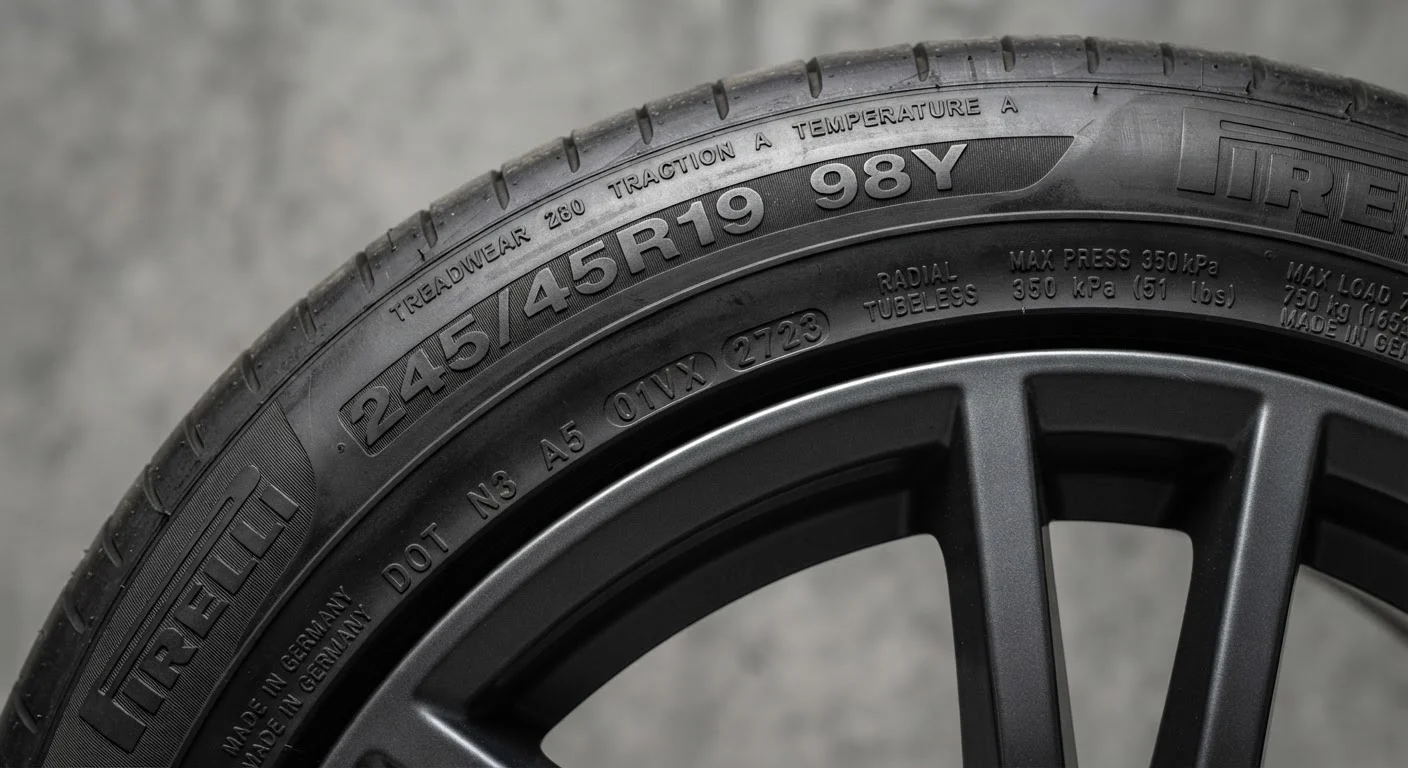
Photo: TheSearchHound.com | One Stop Answer To All Your Questions editorial
The Sidewall Is a Data Label
That long string of letters and numbers stamped into the side of your tire isn't random - it's a standardized code that tells you exactly what the tire is designed to do. Understanding it helps you verify you have the right tires on your vehicle, catch potential safety issues, and have more informed conversations with a tire technician.
A typical passenger tire marking looks something like this: P215/65R16 98H. Each segment communicates something specific about the tire's construction and performance envelope.
| Section width unit | Millimeters |
| Aspect ratio definition | Sidewall height as % of section width |
| Rim diameter unit | Inches |
| Correct inflation source | Door jamb sticker or owner's manual - not the sidewall maximum |
| Tire age inspection threshold | 6 years from manufacture date (General industry guidance from tire manufacturers) |
| DOT date code location | Last 4 digits of the DOT serial (WWYY format) |
Breaking Down the Size Code
Starting from the left of a standard size designation:
- Type prefix (P, LT, ST): "P" stands for passenger vehicle. "LT" means light truck, which carries higher load capacity. "ST" denotes special trailer service. Some tires omit this letter entirely - those are metric tires built to European standards.
- Section width (e.g., 215): This three-digit number is the tire's width in millimeters, measured from sidewall to sidewall at its widest point.
- Aspect ratio (e.g., 65): The number after the slash is the sidewall height expressed as a percentage of the section width. A 65 aspect ratio means the sidewall height is 65% of 215 mm - roughly 140 mm tall. Lower aspect ratios mean shorter, stiffer sidewalls, common on performance vehicles.
- Construction type (R): "R" indicates radial construction, which is standard on virtually all modern passenger and light truck tires. Radial tires have cord plies that run perpendicular to the direction of travel.
- Rim diameter (e.g., 16): The final number before the service description is the wheel diameter in inches that the tire is designed to fit.
Getting any of these parameters wrong when replacing tires can affect speedometer accuracy, handling, and load-carrying ability - so always cross-reference with your vehicle's door jamb placard or owner's manual before purchasing.
Service Description: Load Index and Speed Rating
After the size code comes the service description - in our example, 98H. This compact pairing encodes two critical performance limits.
Load index is a numeric code (98 in this case) that corresponds to the maximum weight one tire can safely carry when properly inflated. A load index of 98 translates to 1,653 lbs per tire. A full standardized load index table is published by tire industry bodies; your tire technician can reference it, or you can find it in most tire manufacturer documentation. Never install tires with a load index lower than your vehicle manufacturer specifies - the consequences can include tire failure under normal loading conditions.
Speed rating is the letter that follows the load index. "H" indicates a sustained speed capability of up to 130 mph under controlled test conditions. Common ratings you'll encounter include S (112 mph), T (118 mph), H (130 mph), V (149 mph), and W (168 mph). Speed ratings are engineering limits, not driving recommendations. Replacing tires with a lower speed rating than specified reduces the tire's structural margin.
For a deeper look at what happens when tire pressure falls outside the correct range, see why tire pressure matters more than most drivers realize.
Load index
A numeric code on the tire that corresponds to the maximum weight one tire can carry when properly inflated. Each number maps to a specific weight value in a standardized table.
Speed rating
A letter code indicating the maximum sustained speed the tire is engineered to handle under controlled test conditions. It is a structural limit, not a recommended driving speed.
Aspect ratio
The ratio of a tire's sidewall height to its section width, expressed as a percentage. A lower number means a shorter, stiffer sidewall.
Cold inflation pressure
Tire pressure measured when the vehicle has been stationary for at least three hours or driven less than a mile. Heat from driving increases pressure, so measurements taken hot will read higher than the true baseline.
DOT code
A serial number stamped on the tire sidewall certifying compliance with U.S. Department of Transportation standards. The final four digits encode the week and year the tire was manufactured.
Radial construction
A tire design where the internal cord plies run perpendicular to the direction of travel. Denoted by the letter R in the size code, radial construction is standard on modern passenger and light truck tires.
Maximum Pressure vs. Recommended Pressure
Somewhere on the sidewall you'll find a line that reads something like MAX. PRESS. 51 PSI. This is the maximum cold inflation pressure the tire structure can safely contain - it is not the pressure you should run day-to-day. Inflating to the sidewall maximum typically results in a harsh ride, reduced contact patch, and uneven wear down the center of the tread.
Your correct operating pressure is found on the vehicle's door jamb sticker (usually on the driver's side B-pillar) or in the owner's manual. This figure - often 30-36 PSI for passenger cars - is what the vehicle manufacturer determined delivers the intended ride quality, handling, fuel economy, and load capacity for that specific vehicle. Always inflate to that number, measured cold (before the car has been driven more than a mile or two).
If your dashboard tire pressure warning light illuminates, consult what your dashboard warning lights are actually telling you to understand how urgently to respond.
Also look for the DOT code stamped nearby - it includes a four-digit week-and-year code at the end (e.g., 2319 means the 23rd week of 2019). Tires older than six years generally warrant inspection by a professional regardless of tread depth, as rubber compounds degrade over time. For complementary tire service knowledge, tire rotation, balancing, and alignment covers the routine jobs that extend the life of the tires you've chosen.
Always Match Manufacturer Specifications
The content on this site is provided for informational purposes only and should not be considered a substitute for professional advice. While we strive to provide accurate and up-to-date information, we make no guarantees regarding its completeness or accuracy. Always consult a qualified professional for advice specific to your circumstances before making any decisions.