
What a Personal Budget Actually Is (and Why Most People Misunderstand It)

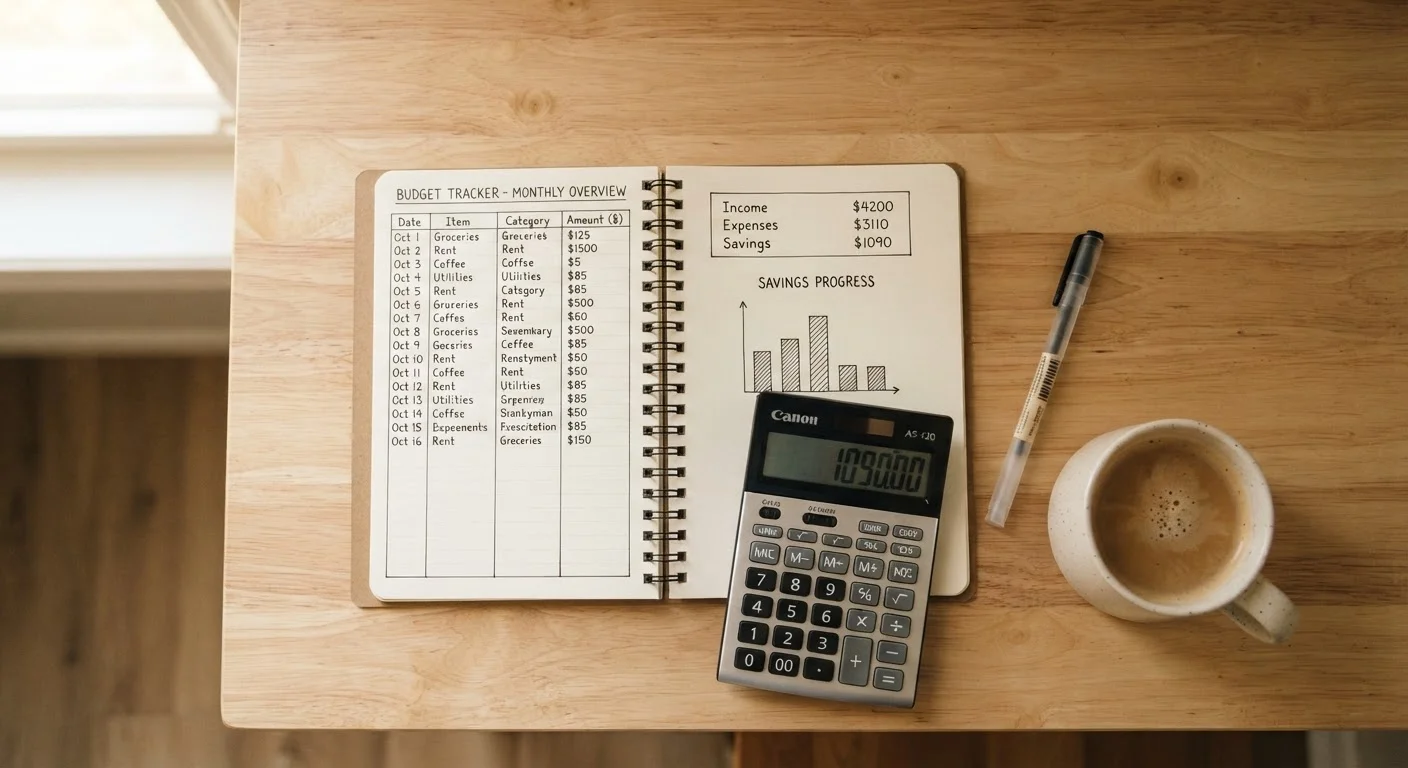
Photo: TheSearchHound.com | One Stop Answer To All Your Questions editorial
Key Takeaways
- A budget is a spending plan, not a spending ban-it gives every dollar a purpose.
- Most people misunderstand budgeting as deprivation rather than direction.
- A budget requires knowing your income, fixed costs, variable expenses, and savings goals.
- Budgets are living documents meant to be adjusted as circumstances change.
- Even a simple budget can reveal spending patterns that would otherwise stay invisible.
The Most Common Misunderstanding About Budgeting
Ask most Americans what a budget means and a familiar word surfaces almost immediately: restriction. The popular mental image is a joyless spreadsheet that bans takeout, cancels subscriptions, and turns weekends into exercises in deprivation. That image is not just inaccurate-it actively prevents people from starting.
A personal budget is not a ceiling that cuts your spending down. It is a plan that tells your money where to go. The distinction matters enormously. A ceiling is imposed from outside. A plan is something you author. One feels punishing; the other is empowering.
This confusion is one reason so many people avoid budgeting entirely-and then feel guilty about it. If you've ever thought "budgeting isn't for me" or "I'm not a numbers person," it's worth asking whether you were reacting to budgeting itself or to a distorted version of it. Common budgeting myths perpetuate exactly this kind of avoidance.
“A budget is telling your money where to go instead of wondering where it went.”
— John C. Maxwell, Author and leadership speaker, widely cited in personal finance literature
What a Budget Actually Contains
Stripped to its foundation, a personal budget has three components:
- Income: All money reliably coming in during the period-wages, freelance pay, government benefits, side income. Use take-home (after-tax) figures, not gross pay.
- Expenses: Every dollar going out, split into fixed costs (rent, loan payments, insurance premiums-amounts that don't change month to month) and variable costs (groceries, gas, utilities, entertainment-amounts that fluctuate).
- The gap: The difference between income and expenses. A positive gap means money available for saving or investing. A negative gap signals that adjustments are necessary.
That's the whole structure. The sophistication of your categories, the tool you use (app, spreadsheet, notebook), and how often you check in are implementation choices-not requirements. A budget that lives on a single piece of paper is still a budget.
For a practical vocabulary reference as you build yours, key budgeting terms every American should know is a useful companion resource.
~33%
Americans with a detailed household budget
Gallup polling has consistently found that roughly one in three American adults maintains a detailed monthly household budget.
78%
Workers living paycheck to paycheck at some income level
Surveys by multiple financial research organizations have found that a significant majority of U.S. workers report difficulty covering expenses between pay periods, regardless of income bracket.
$1,000
Emergency savings threshold most Americans fall short of
Bankrate surveys have repeatedly found that a substantial share of Americans could not cover a $1,000 unexpected expense from savings alone-a gap a basic budget can directly address.
Why Budgeting Without Goals Falls Flat
A budget is a map. But a map is only useful if you know where you're going. Many people build a technically correct budget-income listed, expenses categorized-and still find it hard to stick to because the numbers aren't connected to anything meaningful.
Goals are what give a budget motivational weight. When the category labeled "savings" represents a specific thing-an emergency fund, a down payment, a semester of tuition-it becomes much harder to quietly raid it for impulse purchases. The abstraction of "saving more" becomes a concrete destination.
Before refining your budget mechanics, it's worth spending time on writing down your financial goals. Goals clarify what trade-offs are actually worth making and which spending categories deserve priority.
Write the Goal Next to the Category
How to Think About Your First Budget
If you've never made a formal budget before, the goal isn't perfection-it's visibility. Your first budget will likely be wrong in places. You'll underestimate groceries, forget a subscription, miss an annual expense. That's normal and expected. The value isn't in producing a flawless document; it's in the process of looking honestly at your finances.
Start with one month. Gather your most recent bank and credit card statements. List every source of income. Categorize every expense you can identify. Then compare the totals. That comparison-however imperfect-is your starting point.
From there, each month's budget gets more accurate as you learn your own patterns. Budgeting is a skill that improves with practice, not a test you pass or fail on the first attempt. When you're ready to move from concept to action, your first budget guide walks through every foundational step in plain language. You can also use the monthly budget setup checklist to make sure nothing gets missed before you finalize your numbers.
This article is for general informational and educational purposes only and does not constitute personalized financial advice. Consult a qualified financial professional for guidance specific to your situation.
Frequently Asked Questions
The content on this site is provided for informational purposes only and should not be considered a substitute for professional advice. While we strive to provide accurate and up-to-date information, we make no guarantees regarding its completeness or accuracy. Always consult a qualified professional for advice specific to your circumstances before making any decisions.