
Compound Interest: The Quiet Force Behind Long-Term Wealth Building

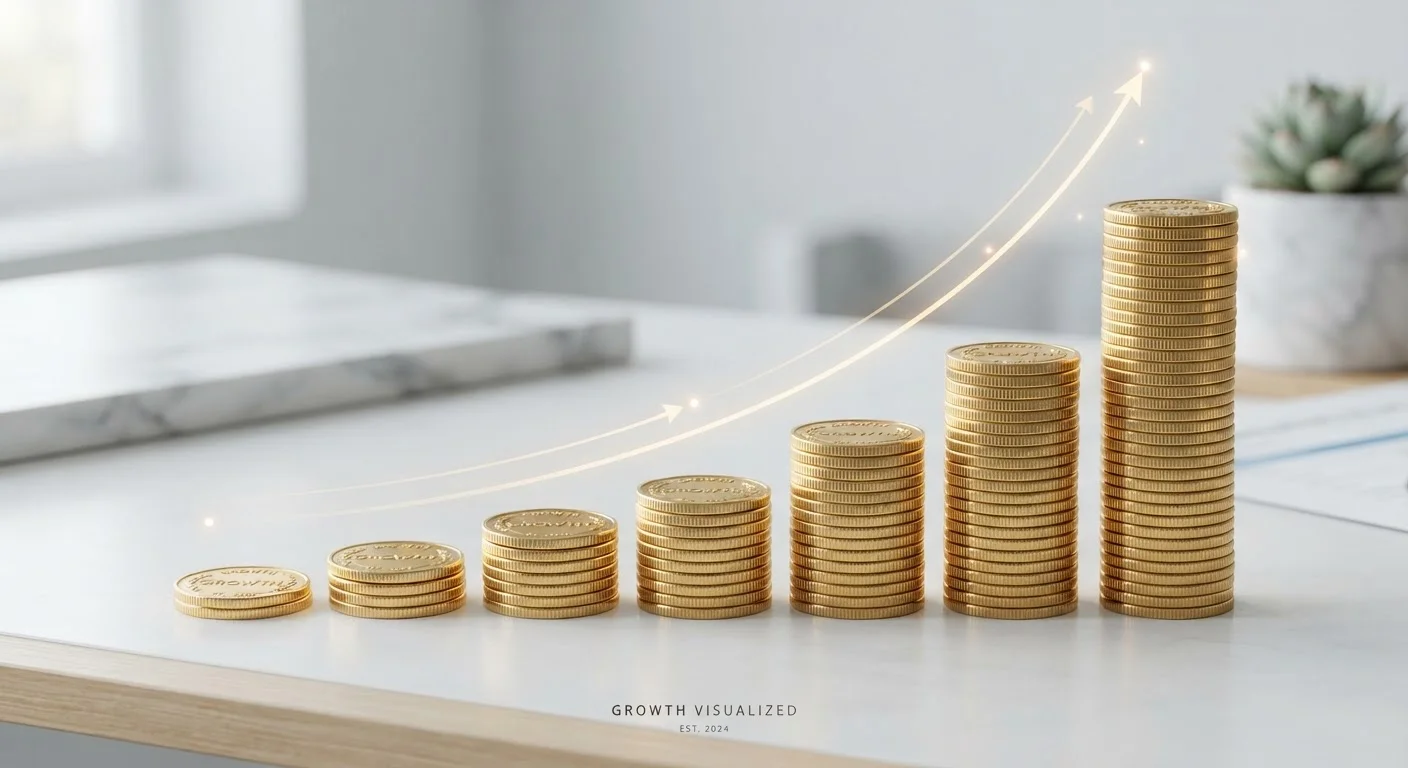
Photo: TheSearchHound.com | One Stop Answer To All Your Questions editorial
Key Takeaways
- Compound interest means your earnings generate their own earnings, creating an accelerating growth cycle.
- Time is the most powerful variable - starting earlier matters more than starting with a larger amount.
- Compounding frequency (daily, monthly, annually) affects how quickly your balance grows.
- Compound interest works against you on debt just as powerfully as it works for you on savings.
- Consistent contributions amplify the compounding effect significantly over the long run.
How Compounding Actually Works
The mechanics of compound interest are straightforward once you see them in motion. Suppose you deposit $1,000 into a savings account earning 5% annual interest, compounded yearly. After the first year, you earn $50 in interest, bringing your balance to $1,050. In year two, the 5% is applied to $1,050 - not just the original $1,000 - so you earn $52.50. By year three, you're earning interest on $1,102.50.
That difference of a few dollars per year sounds trivial. But stretch the timeline to 30 years and that original $1,000 grows to roughly $4,322 without a single additional deposit. Over the same period, simple interest on the same principal would produce only $2,500. The gap between those two outcomes is entirely explained by compounding.
The critical insight is that the growth curve is not a straight line - it bends upward over time. The longer the horizon, the steeper the slope becomes. This is why financial educators consistently emphasize that starting early is the single most impactful decision a new saver or investor can make. To understand more about the investing fundamentals that make compounding so valuable, see what it actually means to invest your money.
~$4,322
Value of $1,000 after 30 years at 5% compounded annually
Compared to $2,500 with simple interest over the same period - a gap created entirely by the compounding mechanism.
72 ÷ rate
Rule of 72: years to double your money
A widely cited approximation used in personal finance education; at 6% annual growth, money doubles roughly every 12 years.
10+ years
Advantage of starting investment contributions a decade earlier
Financial planners consistently find that starting earlier - even with smaller amounts - outperforms larger contributions started later, due to additional compounding cycles.
Why Time Is the Most Powerful Variable
Two investors contribute the same total amount of money over their lifetimes, but one starts at 25 and the other at 35. Assuming identical average annual returns, the earlier starter will accumulate meaningfully more wealth at retirement - not because of skill, but because of time. Those extra years don't just add more growth; they allow earlier gains to compound on themselves through more cycles.
This is often illustrated by the concept of the "compounding snowball": a small snowball rolling down a long hill accumulates far more mass than the same snowball pushed halfway down. The slope (return rate) matters, but the length of the hill (time) is what determines the final size.
“Compound interest is the eighth wonder of the world. He who understands it, earns it; he who doesn't, pays it.”
— Attributed to Albert Einstein, Widely cited in personal finance literature - origin is debated, but the principle is universally recognized by financial educators
It's also worth understanding the flip side: compound interest works against borrowers just as reliably as it works for savers. High-interest debt - particularly revolving credit card balances - compounds on unpaid balances and can balloon a manageable obligation into a serious financial burden. Our explainer on how compound interest works for and against you covers both sides in detail.
Putting Compounding to Practical Use
Understanding the concept is only useful if it changes behavior. Here are the principles that allow everyday savers and investors to harness compounding effectively:
- Start as early as possible. Even small initial contributions benefit from long compounding timelines. Waiting for the "right amount" to begin often costs more in lost compounding time than it saves.
- Reinvest your earnings. In investment accounts, dividends and gains that are reinvested rather than withdrawn stay in the compounding cycle. Withdrawing returns early interrupts the process.
- Make consistent contributions. Regular additions - even modest ones - stack on top of compounding growth. Strategies like dollar-cost averaging are designed to support this habit systematically.
- Minimize high-interest debt. Paying down expensive debt first eliminates a compounding headwind that can neutralize investment gains. The balance between debt repayment and saving is explored in our guide on paying off debt while building savings.
Compounding does not require sophisticated strategies or large sums. It requires time, consistency, and a clear understanding of risk and return trade-offs when choosing where to put money to work. The math will do the rest.
This article is for general informational and educational purposes only and does not constitute personalized financial, investment, or tax advice. Consult a qualified financial professional before making decisions about your own financial situation.
Frequently Asked Questions
The content on this site is provided for informational purposes only and should not be considered a substitute for professional advice. While we strive to provide accurate and up-to-date information, we make no guarantees regarding its completeness or accuracy. Always consult a qualified professional for advice specific to your circumstances before making any decisions.