
Nutrition & Diet

Building a Balanced Plate: Principles That Hold Up Across Dietary Patterns

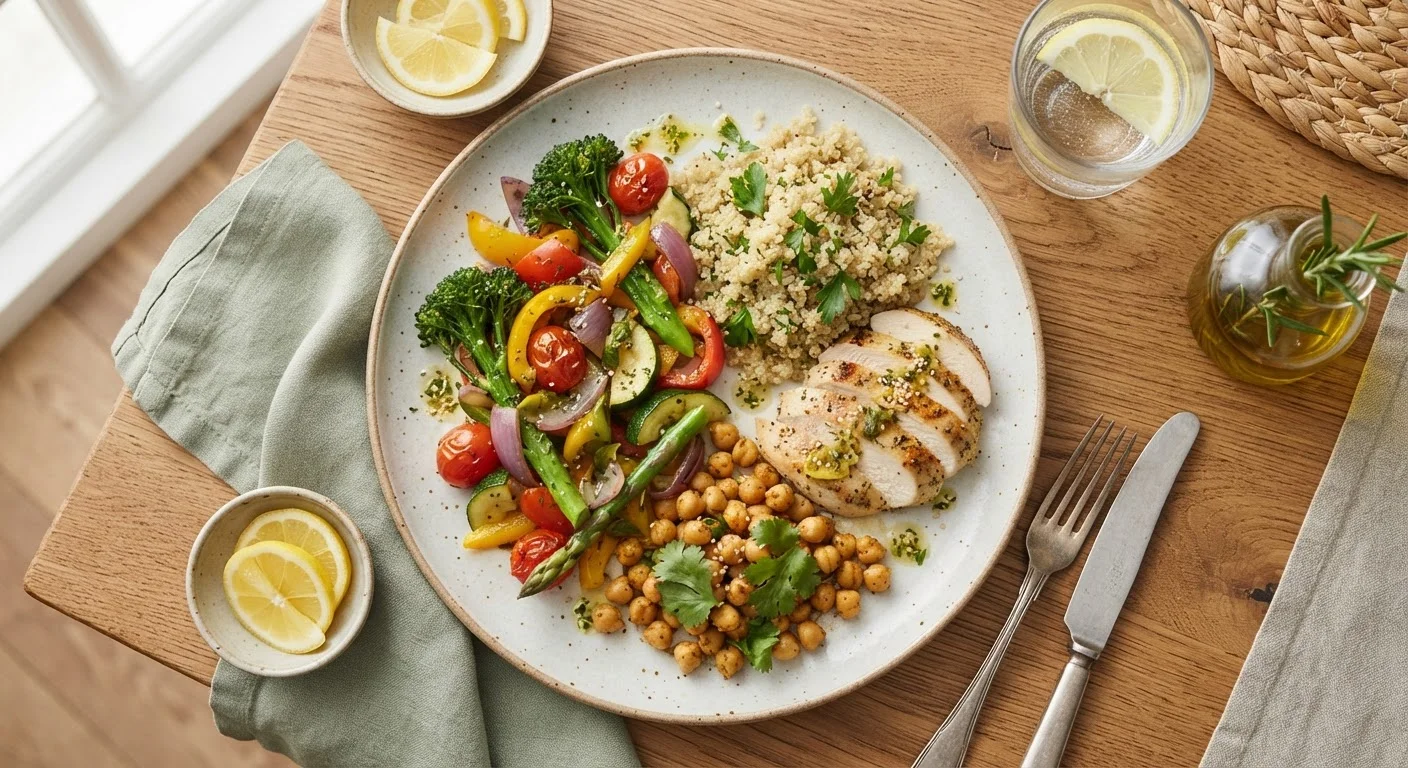
Building a Balanced Plate: Principles That Hold Up Across Dietary Patterns

Photo: TheSearchHound.com | One Stop Answer To All Your Questions editorial

No single diet works for everyone, but certain plate-building principles are consistent across well-studied, health-supporting eating patterns.

Key Takeaways

  • Vegetables and fruits should fill roughly half your plate at most meals, regardless of overall dietary pattern.
  • Whole, minimally processed foods consistently outperform their ultra-processed counterparts in nutrition research.
  • Adequate protein and healthy fats are important at every meal — the source can vary widely by preference and culture.
  • No single diet is universally optimal; durable principles matter more than strict label-following.
  • Small, consistent shifts in plate composition tend to be more sustainable than complete dietary overhauls.

Why Principles Beat Diet Labels

Walk into any bookstore or scroll any health feed and you'll find dozens of competing dietary philosophies — each claiming to be the definitive answer. Yet researchers who study long-lived, low-disease populations consistently find that no single named diet dominates. What those populations share are underlying structural principles: specific types of foods in consistent proportions, prepared in relatively simple ways.

Understanding those principles — rather than memorizing rules attached to a brand name — gives you flexibility. It lets you adapt to cultural food traditions, budget constraints, and personal taste while still eating in a way that broad nutrition science supports. If you're curious about how persistent myths cloud this picture, our article on nutrition myths science has moved past is a useful companion read.

Individual Needs Vary Significantly

These principles reflect broad patterns from population-level nutrition research and are not intended as personal medical guidance. People with specific health conditions — including diabetes, kidney disease, cardiovascular conditions, or food allergies — may have different nutritional requirements. Pregnant or nursing individuals, children, and older adults also have distinct needs. A registered dietitian can help you apply general principles to your specific situation.

Core Plate-Building Practices

The following practices reflect consistent themes across well-studied dietary patterns — including Mediterranean, DASH, and traditional plant-forward diets. They are not prescriptions; always consult a qualified healthcare professional or registered dietitian for guidance tailored to your individual health needs.

1

Fill at least half your plate with vegetables and fruit at most meals

Vegetables and fruits provide fiber, vitamins, minerals, and phytonutrients that are consistently associated with reduced risk of chronic disease in large observational studies. Most Americans fall well short of general intake recommendations. Prioritizing volume here crowds out lower-nutrient options without requiring strict calorie counting.
Example: At dinner, serve a large portion of roasted or raw vegetables first, then add your protein and grain — reversing the typical proportion most people default to.
2

Choose whole or minimally processed grains over refined versions

Whole grains retain bran and germ, preserving fiber and a broader nutrient profile. Swapping refined grains for whole alternatives is one of the most consistently supported dietary shifts in nutrition research, linked to better blood sugar regulation and cardiovascular markers.
Example: Replace white rice with brown rice, farro, or quinoa a few nights per week — or choose bread and pasta made with whole grain as the first listed ingredient.
3

Include a quality protein source at every meal

Protein supports muscle maintenance, satiety, and numerous metabolic functions. Research doesn't point to one protein source as universally superior — what matters is adequacy and variety. Plant and animal sources each have distinct nutrient profiles worth considering.
Example: A lunch of lentil soup with a small portion of plain Greek yogurt covers both plant and animal protein, providing complementary amino acids and useful gut-supporting cultures.
4

Use healthy fats as a flavor and nutrient vehicle, not something to minimize

Decades of low-fat dietary guidance have largely been revised. Unsaturated fats — found in olive oil, nuts, seeds, and fatty fish — support cardiovascular health and help absorb fat-soluble vitamins. Eliminating dietary fat often leads to replacing it with refined carbohydrates, which can have a less favorable nutritional effect.
Example: Dress a salad with extra-virgin olive oil and lemon instead of fat-free bottled dressing, which frequently contains added sugars and sodium to compensate for removed fat.
5

Limit ultra-processed foods rather than obsessing over single nutrients

Ultra-processed foods — industrially formulated products with many additives and little whole-food content — are strongly associated with poorer health outcomes across multiple large studies, independent of individual nutrient profiles. Focusing on food quality and processing level simplifies decision-making more effectively than nutrient-by-nutrient analysis.
Example: When grocery shopping, choose plain oats over heavily sweetened instant oat packets, or plain nuts over highly flavored, additive-heavy snack mixes.
6

Drink water as your primary beverage

Sugary beverages — sodas, energy drinks, sweetened coffees — are one of the most significant sources of added sugar in the American diet, adding substantial calories with essentially no nutritional benefit. Swapping these for water, unsweetened tea, or plain sparkling water is one of the highest-impact, lowest-effort dietary changes available.
Example: Keep a filled water bottle visible on your desk or kitchen counter — environmental cues strongly influence consumption habits without requiring willpower.

Getting Started Without Overhauling Everything

Research on behavior change consistently shows that dramatic, all-or-nothing dietary shifts are hard to maintain. The physiology of extreme restriction can actually work against the goals people set out to achieve — a dynamic explored in detail in our piece on why crash diets undermine lasting results.

Incremental plate adjustments, by contrast, tend to compound over time. If you're plant-curious, a practical plant-based starting point can help you explore without commitment to a rigid label. For protein sourcing questions, see our evidence-based comparison of animal versus plant protein sources.

high Add one additional vegetable serving to your next meal — toss a handful of spinach into a soup, scramble, or grain bowl.
high Swap your usual refined grain for a whole grain alternative at your next grocery run — start with one item, such as bread or rice.
medium Replace one sugary beverage today with water or unsweetened sparkling water.
medium Check the ingredient list on one packaged food you regularly buy and note where added sugars or refined oils appear.

This article is for general informational and educational purposes only and does not constitute medical or nutritional advice. Please consult a qualified healthcare professional or registered dietitian before making significant changes to your diet, especially if you have an existing health condition.

Health & Wellness Editorial Team

TheSearchHound.com | One Stop Answer To All Your Questions

Health & Wellness Editorial Team is the collective byline for our editorial team and contributor network. Articles published under this byline or an editorial pen name are researched, written, and reviewed according to our editorial standards for clarity, consistency, and independence before publication.

Nutrition & DietFitness & MovementMental Wellness
View author profile

The content on this site is provided for informational purposes only and should not be considered a substitute for professional advice. While we strive to provide accurate and up-to-date information, we make no guarantees regarding its completeness or accuracy. Always consult a qualified professional for advice specific to your circumstances before making any decisions.