
Nutrition Through the Life Stages: How Needs Shift from Young Adulthood to Later Life

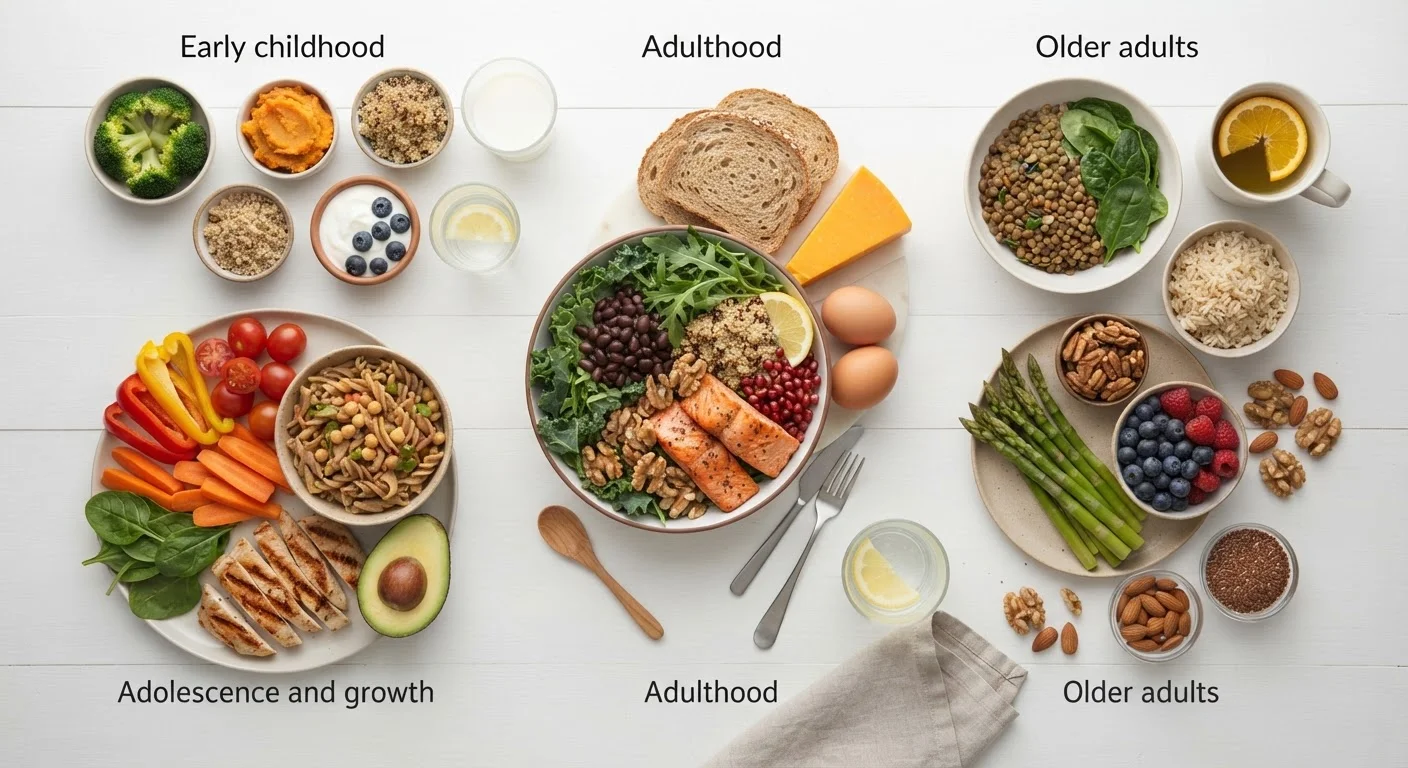
Photo: TheSearchHound.com | One Stop Answer To All Your Questions editorial
Key Takeaways
- Caloric needs generally decline with age, but requirements for several key nutrients increase.
- Protein becomes especially important in midlife and later years to preserve muscle mass.
- Calcium, vitamin D, and B12 absorption often decreases as the body ages, requiring dietary attention.
- Young adults benefit from building strong nutritional habits that support long-term health.
- No single diet fits all life stages - needs vary by age, activity level, and individual health status.
- Consulting a registered dietitian can help tailor nutrition strategies to your specific life stage.
Why Nutritional Needs Change Over Time
The human body is not a fixed system. Hormones shift, metabolism slows, organ function evolves, and the processes by which we absorb and use nutrients change meaningfully across decades. What supports health at 25 may not be sufficient - or appropriate - at 55 or 75.
These changes are not cause for alarm. They are a normal feature of human biology, and understanding them empowers better decision-making. Caloric requirements, for instance, tend to decrease as lean muscle mass declines with age. Yet paradoxically, the need for certain vitamins and minerals often goes up - particularly when absorption efficiency drops.
It is also worth noting that life-stage nutrition is not solely about age. Factors like activity level, reproductive status, chronic health conditions, and medications all shape individual needs. This article provides a general framework grounded in established nutrition science. For personalized guidance, a registered dietitian or physician remains the appropriate resource.
For a useful complement to this guide, see how exercise needs shift across the decades, since physical activity and nutrition are deeply intertwined throughout life.
Young Adulthood (Ages 20-35): Building a Foundation
The early adult years are often characterized by high energy demands, peak bone density accumulation, and - for many - reproductive considerations. Caloric needs are generally at their highest during this period, particularly for physically active individuals.
Bone health is a priority that is easy to overlook at this stage. Approximately 90% of peak bone mass is established by early adulthood, according to research cited by the National Institutes of Health. Adequate calcium (from dairy, fortified plant milks, leafy greens, or legumes) and vitamin D remain essential during this window.
Iron is another nutrient that warrants attention, particularly for people who menstruate, as monthly losses increase demand. Plant-based eaters should be mindful that non-heme iron from plant sources is less readily absorbed than heme iron from animal products - pairing iron-rich foods with vitamin C can meaningfully improve uptake.
In your 20s and early 30s, focus on building dietary habits rather than chasing optimal macros. Consistent patterns - regular vegetable intake, adequate protein, limited ultra-processed foods - tend to have the greatest long-term return.
For adults over 60, try distributing protein more evenly across all meals - including breakfast - rather than concentrating it at dinner. Muscle protein synthesis responds better to distributed intake in older adults.
Young adults also tend to underestimate the value of dietary fiber. A high-fiber diet built around vegetables, whole grains, legumes, and fruit supports digestive health, helps manage blood sugar, and contributes to long-term cardiovascular health - habits that compound in value over time. See principles for building a balanced plate for practical guidance on structuring meals effectively.
Midlife (Ages 35-55): Metabolism, Muscle, and Prevention
Midlife brings a gradual but measurable decline in resting metabolic rate - partly driven by the loss of lean muscle tissue (a process called sarcopenia that begins as early as the mid-30s). This means that eating the same amount as in one's 20s may lead to gradual weight gain, not because of personal failure, but because energy expenditure has decreased.
Protein takes on heightened importance during this period. Adequate dietary protein - distributed across meals rather than concentrated in one sitting - supports the maintenance of muscle mass. Research in nutrition science generally supports a higher protein intake per pound of body weight in midlife and beyond compared to earlier decades, though individual needs vary.
Avoid Drastic Calorie Restriction in Midlife
Midlife is also when many chronic disease risk factors become more apparent. Dietary patterns that emphasize vegetables, legumes, whole grains, healthy fats, and lean proteins are consistently associated with lower risk of cardiovascular disease, type 2 diabetes, and certain cancers in large-scale epidemiological studies.
For people navigating this stage, it is also helpful to revisit common misconceptions about nutrition. Our article on nutrition myths that science has moved past can help cut through conflicting dietary advice.
Later Life (Ages 55 and Beyond): Protecting What You Have
After age 55, the nutritional landscape shifts in several important ways. Overall caloric needs continue to decline, yet the requirement for key micronutrients often increases - creating what nutrition researchers sometimes describe as a "nutrient density imperative." Every meal carries more weight when total food volume decreases.
Three nutrients deserve particular attention in this life stage:
- Calcium and Vitamin D: Bone loss accelerates after menopause and with advancing age in all adults. Adequate intake of both nutrients - along with weight-bearing physical activity - helps slow this process, though it cannot fully reverse established bone loss.
- Vitamin B12: The stomach produces less acid with age, which impairs the absorption of naturally occurring B12 from food. Fortified foods or supplements in crystalline form may be better absorbed than food-bound B12, according to guidance from the NIH Office of Dietary Supplements.
- Protein: Muscle preservation remains critical for maintaining mobility, balance, and independence. Older adults generally benefit from higher protein intake relative to their caloric needs.
Appetite often decreases in later life due to changes in taste, smell, medications, social factors, and digestive function. This makes food quality - choosing nutrient-dense options consistently - more important than ever. A practical approach to grocery shopping that reinforces these priorities is outlined in our grocery trip nutrition checklist.
Nutrients That Deserve Attention at Every Stage
While specific needs shift by life stage, several nutrients warrant consistent attention across adulthood:
- Fiber
- Most Americans consume well below the recommended intake. Fiber supports gut health, blood sugar regulation, and cardiovascular function at every age.
- Omega-3 Fatty Acids
- Found in fatty fish, walnuts, and flaxseed, omega-3s are associated with cardiovascular and cognitive health benefits across multiple well-studied populations.
- Potassium and Magnesium
- These minerals play roles in blood pressure regulation and muscle function. They are widely underconsumed in typical American diets and are found abundantly in vegetables, legumes, nuts, and whole grains.
- Water
- Hydration needs do not decline with age, but the sensation of thirst becomes less reliable over time - making intentional fluid intake increasingly important in later life.
< 10%
Americans meeting daily fiber recommendations
According to data from the Dietary Guidelines for Americans advisory committee, dietary fiber is consistently identified as a nutrient of public health concern due to widespread underconsumption.
~1-2% per year
Rate of muscle mass loss after age 30
Research published in nutrition and gerontology literature estimates that adults begin losing lean muscle mass at roughly this rate without deliberate resistance training and adequate protein intake.
~40%
Older adults with low vitamin B12 status
Studies cited by the NIH Office of Dietary Supplements suggest that a substantial proportion of adults over 50 have suboptimal B12 levels, often due to declining gastric acid production.
Putting It Into Practice
Understanding how nutritional needs shift is useful only when it translates into action. A few principles apply broadly across life stages:
- Prioritize whole, minimally processed foods as the base of your diet. These provide the broadest nutrient coverage and the highest fiber content.
- Adjust portions thoughtfully as caloric needs decrease - rather than cutting food groups, focus on maintaining nutrient density by eating a variety of vegetables, proteins, and whole grains.
- Revisit your diet periodically rather than treating it as fixed. What worked nutritionally in your 30s may benefit from recalibration in your 50s.
- Work with professionals. A registered dietitian can provide individualized guidance that accounts for health conditions, medications, and personal goals - something no general resource can replicate.
“Nutrition is not a one-size-fits-all prescription. The best diet for any individual depends on their age, health status, activity level, and personal circumstances - and that picture changes over time.”
— Academy of Nutrition and Dietetics, Professional organization representing registered dietitians and nutrition professionals in the United States
This article is for general informational and educational purposes only and does not constitute medical or dietary advice. Nutritional needs vary by individual. Please consult a qualified healthcare provider or registered dietitian for guidance specific to your health situation.
The content on this site is provided for informational purposes only and should not be considered a substitute for professional advice. While we strive to provide accurate and up-to-date information, we make no guarantees regarding its completeness or accuracy. Always consult a qualified professional for advice specific to your circumstances before making any decisions.