
A Season-by-Season Lawn Care Calendar for American Homeowners

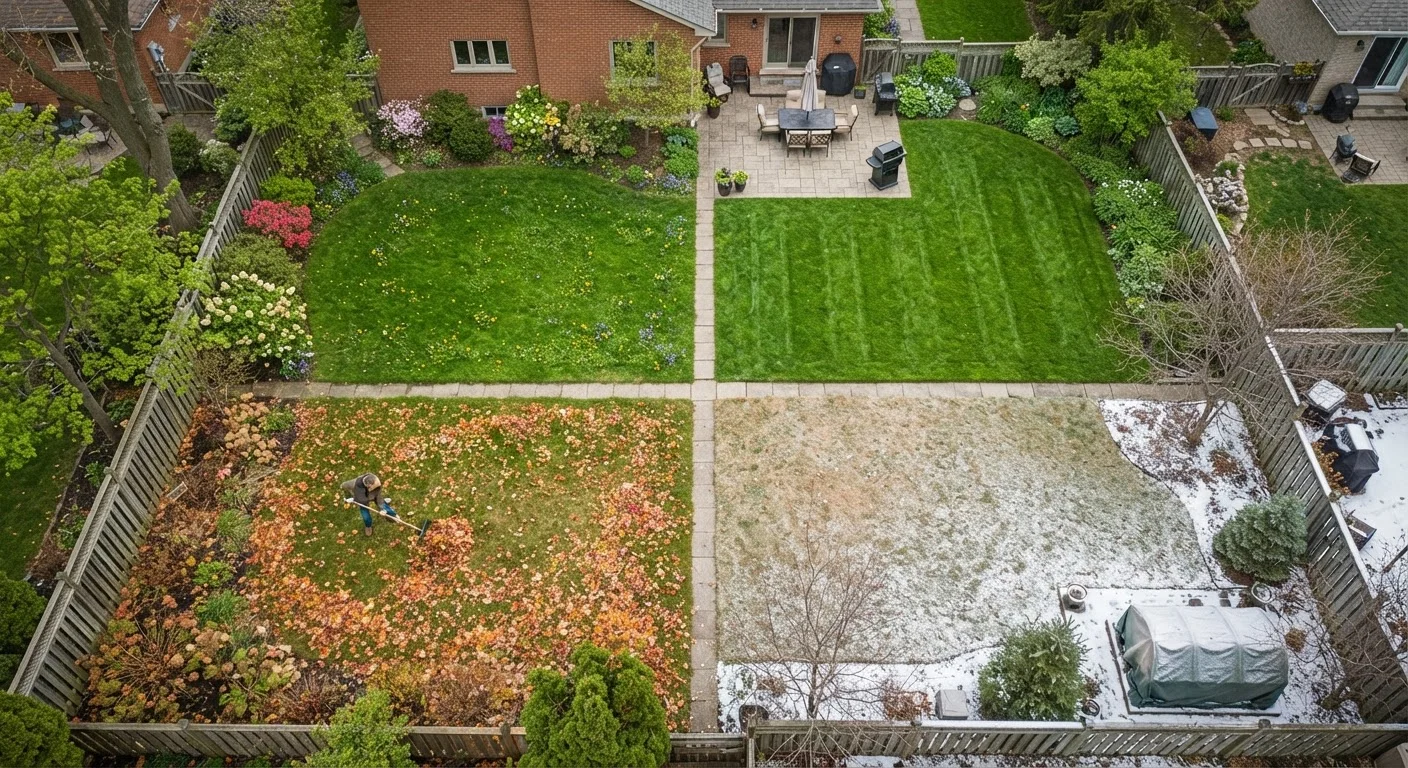
Photo: TheSearchHound.com | One Stop Answer To All Your Questions editorial
Spring: Wake Up and Prepare
Spring lawn care sets the tone for the entire year. As soil temperatures climb above 50°F, grass breaks dormancy and begins actively growing - this is your window to act before weeds gain a foothold.
- Rake and dethatch: Remove matted debris and loosen the thatch layer (dead grass and roots). Thatch thicker than half an inch blocks water, air, and nutrients from reaching roots.
- Soil test: Test your soil's pH and nutrient levels before adding any amendments. Most lawn grasses prefer a pH of 6.0-7.0. County extension offices often offer low-cost testing kits.
- Overseed thin areas: For cool-season grasses (fescue, bluegrass, ryegrass), early spring is a secondary seeding window - though fall is preferred.
- Pre-emergent herbicide: Apply before soil temperatures consistently hit 55°F to block crabgrass germination. Timing varies by region: late February in the South, late March to April in the North.
- First fertilizer application: Use a moderate, balanced fertilizer only after grass is actively growing. Avoid heavy nitrogen in early spring, which forces leafy growth at the expense of root development. See our guide on fertilizer timing and rates for specifics.
| Cool-season grass types | Kentucky bluegrass, tall fescue, perennial ryegrass (Common across northern and transitional U.S. zones) |
| Warm-season grass types | Bermuda, zoysia, St. Augustine, centipede (Predominant in southern and Gulf Coast regions) |
| Ideal mowing height (summer) | 3-4 inches for most grasses (General turfgrass management guidance) |
| Weekly water target | Approximately 1 inch (rain + irrigation combined) (U.S. cooperative extension recommendations) |
| Optimal soil pH for lawn grass | 6.0-7.0 (Standard turfgrass agronomic guidance) |
| Best seeding season (cool-season grasses) | Late summer to early fall (Aligns with natural grass growth cycle) |
Summer: Protect and Maintain
Summer stress is the leading cause of lawn damage in most U.S. regions. High heat, drought, and heavy foot traffic tax grass significantly. The goal is protection, not aggressive growth.
- Mow high: Raise mowing height to 3-4 inches. Taller blades shade the soil, reduce moisture loss, and crowd out weeds. Never remove more than one-third of the blade in a single mow.
- Water deeply and infrequently: Aim for roughly 1 inch of water per week (including rainfall), applied in one or two sessions rather than daily light watering. Morning watering reduces disease risk.
- Watch for pests: Grubs, chinch bugs, and sod webworms peak in midsummer. Knowing how to identify pest damage early can save large sections of turf. Look for irregular brown patches that don't respond to irrigation.
- Allow dormancy if needed: In drought conditions, cool-season grasses may naturally go dormant and turn tan. This is a survival mechanism - avoid heavy fertilizing or aggressive intervention during this period.
Thatch
A layer of dead grass stems, roots, and debris that accumulates between the soil surface and living grass blades. A thin layer is normal, but thatch thicker than half an inch can block water and nutrients.
Core aeration
A mechanical process that removes small cylindrical plugs of soil from the lawn to relieve compaction, improve water infiltration, and encourage deeper root growth.
Pre-emergent herbicide
A type of weed control applied to soil before weed seeds germinate. It forms a chemical barrier in the soil and is most commonly used to prevent crabgrass in spring.
Dormancy
A natural survival state in which grass slows or stops growth in response to heat, drought, or cold. Dormant grass often turns tan or brown but can recover when favorable conditions return.
Winterizer fertilizer
A fall fertilizer application formulated to support root development without triggering excessive shoot growth before winter. Typically lower in nitrogen and higher in potassium than summer formulas.
Fall: The Most Important Season
Lawn care professionals widely consider fall the most critical season for cool-season lawns, and an important recovery window for warm-season varieties. Cooler temperatures and adequate moisture create ideal conditions for root growth.
- Aerate the soil: Core aeration - pulling small plugs of soil from the lawn - relieves compaction and improves drainage. Fall is the ideal time for cool-season grasses. Warm-season grasses should be aerated in late spring or early summer.
- Overseed: Spread seed over thin or bare spots immediately after aeration so seed makes good soil contact. Fescue and ryegrass establish well in fall across much of the country.
- Fertilize for root development: A late-fall fertilizer application - sometimes called a "winterizer" - feeds roots without forcing excessive top growth. Look for formulas lower in nitrogen and higher in potassium.
- Keep mowing: Continue mowing until grass stops growing, gradually lowering the blade by a quarter inch over the final two cuts of the season.
- Leaf management: Don't let thick leaf mats sit on grass - they block light and trap moisture, promoting fungal disease. Mulch leaves with your mower when possible; they decompose and return nutrients to the soil.
For a broader look at home upkeep this season, see the seasonal home maintenance checklist.
Winter: Rest and Plan
Most lawns are dormant in winter, but that doesn't mean nothing needs doing. It's a low-effort season focused on protection and planning.
- Minimize traffic: Dormant grass is brittle. Repeated foot traffic on frozen turf can break grass crowns and create dead patches that won't recover until late spring.
- Avoid de-icing salt near turf: Sodium chloride runoff can damage or kill grass along driveways and walkways. Use sand or calcium-based alternatives near lawn edges where possible.
- Service your equipment: Winter is the right time to sharpen mower blades, change the oil, replace air filters, and have equipment inspected before spring demand picks up.
- Plan ahead: Review your soil test results, sketch out any bare areas that need overseeding, and map garden beds before spring. A little planning now saves guesswork later. Mapping your outdoor space before planting is worth doing while the ground is still bare.
The content on this site is provided for informational purposes only and should not be considered a substitute for professional advice. While we strive to provide accurate and up-to-date information, we make no guarantees regarding its completeness or accuracy. Always consult a qualified professional for advice specific to your circumstances before making any decisions.