
Understanding Unit Pricing: The Grocery Shelf Label That Most Shoppers Ignore

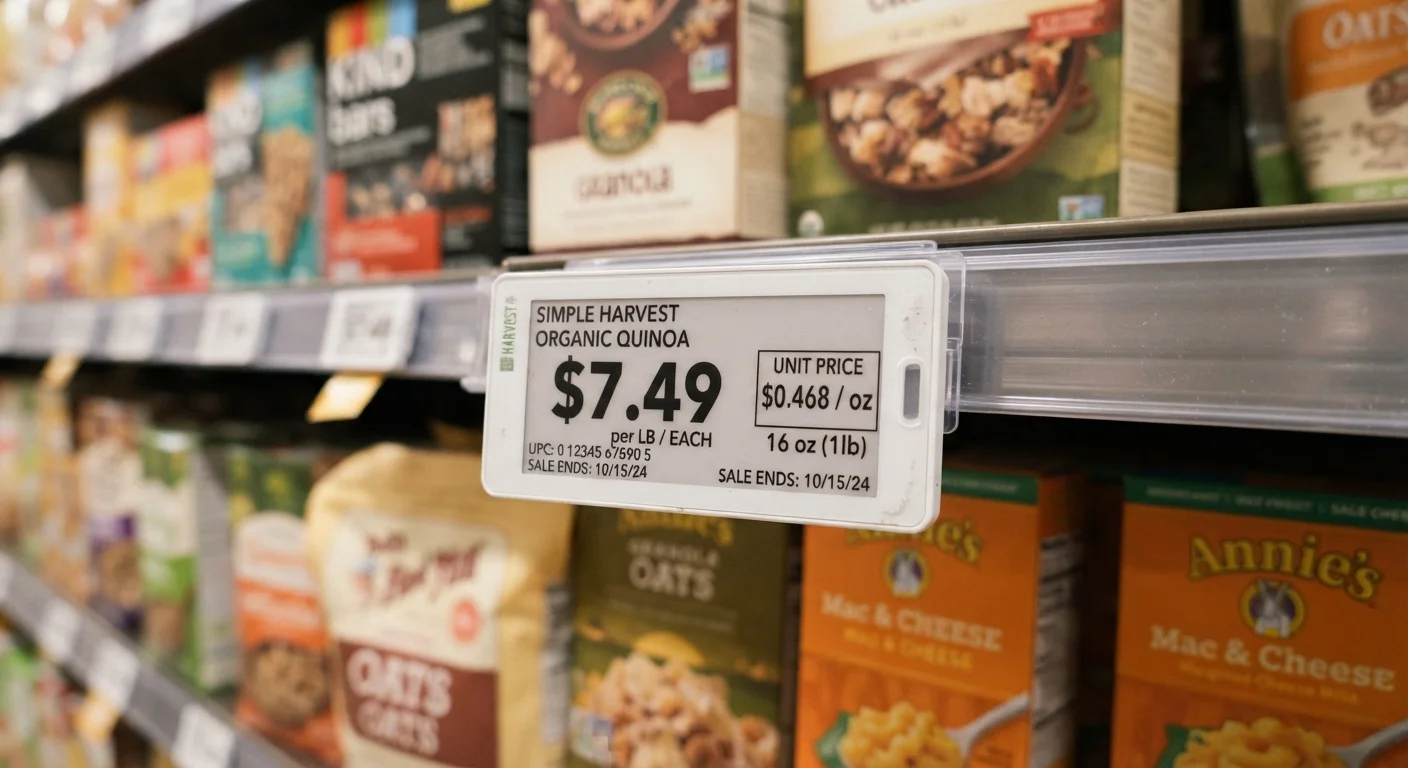
Photo: TheSearchHound.com | One Stop Answer To All Your Questions editorial
Key Takeaways
- Unit price is displayed per standard measurement (ounce, count, etc.) and is usually printed small on the shelf label.
- Bigger packages are not always cheaper per unit - the unit price tells you definitively.
- Sale prices can still be more expensive per unit than a competing product not on sale.
- Different unit measurements across products can make comparison harder - always check the unit used.
- Bulk buying only saves money if you actually use the product before it expires or goes to waste.
What Unit Price Actually Tells You
Every grocery shelf tag typically shows two prices: the retail price you pay at checkout, and a smaller unit price that most shoppers glance past. That smaller number - the cost per ounce, per pound, or per individual item - is arguably the more useful of the two.
The retail price tells you what leaves your wallet today. The unit price tells you what you're actually getting for that money. A 32-oz bottle of dish soap priced at $4.99 and a 20-oz bottle priced at $3.49 look straightforward at first glance, but the unit prices - roughly $0.16/oz versus $0.17/oz - reveal a much smaller difference than the sticker prices suggest. In other cases, the relationship flips entirely.
Unit pricing also strips away packaging psychology. Manufacturers routinely use wide bottles, recessed bases, and generous headspace to make containers look larger than they are. The unit price bypasses all of that and grounds the comparison in actual product quantity. For a deeper look at how retail presentation shapes your perception of value, see how retail pricing psychology works.
~33
U.S. states with unit pricing laws for grocery stores
Consumer advocacy research has documented that roughly a third of U.S. states have enacted some form of mandatory unit pricing regulation for food retailers, though requirements vary considerably.
30%+
Potential unit cost difference within the same product category
Consumer research on grocery pricing has consistently found that unit prices for the same product type can vary by 30% or more across sizes and brands on the same shelf.
How to Read the Shelf Label Correctly
Shelf labels vary by retailer, but unit price is almost always present on the tag for grocery and household consumable products. It typically appears in the upper-left corner, printed smaller than the retail price, and labeled with phrasing like "$0.22/oz" or "$1.14/ct" (ct = count).
Three things to check before comparing:
- The unit of measurement: Make sure you're comparing like-for-like. Price per ounce and price per pound are different scales. If two competing products use different units, you'll need to convert before drawing a conclusion.
- What counts as a "unit": For multi-packs, unit price may reflect per-package cost rather than per-item cost. A box of 12 granola bars priced "per bar" is directly comparable to a box of 6 - but a box priced "per package" is not.
- The product form: Concentrated versions of products (cleaning sprays, juice) have lower unit prices by design - they require dilution. A concentrate priced at $0.40/oz may go further than a ready-to-use product at $0.08/oz once you factor in yield.
Unit pricing works best when the comparison is apples to apples. When it isn't, it's still a useful starting point - just one that may require a quick mental adjustment.
Quick Check: Do the Math Yourself
When Unit Pricing Can Mislead
Unit pricing is a tool, not a guarantee of savings. Several real-world scenarios can make the lowest unit price the wrong choice:
Perishables and waste: A 5-lb bag of potatoes may have a lower unit price than a 2-lb bag, but if half the larger bag goes bad before you use it, the effective cost-per-use rises sharply. The unit price doesn't account for what you actually consume.
Storage constraints: Club-size packages often carry excellent unit prices but require pantry or freezer space that not every household has. Overflow storage has its own costs - in space, in spoilage risk, and sometimes in secondary containers.
Quality differences: Unit price measures quantity, not quality. A store-brand product at $0.10/oz and a name-brand product at $0.14/oz aren't automatically equivalent - ingredient lists, concentration levels, and product performance can vary. Price versus value is a distinction unit pricing alone cannot resolve.
Unit pricing also says nothing about long-run costs. For products that have ongoing expenses - filters, refills, compatible accessories - the shelf price and unit price both tell only part of the story. Total cost of ownership is the broader framework that captures those downstream expenses.
Putting Unit Pricing to Work in the Store
Building a habit around unit pricing doesn't require a spreadsheet or a calculator app. A few reliable practices make it second nature:
- Check before assuming bulk is better. Retailers know shoppers assume larger sizes are cheaper per unit - and they don't always correct that assumption. Let the label confirm what the packaging implies.
- Use it to evaluate "sale" items. A product marked 20% off may still carry a higher unit price than its non-sale competitor sitting two inches away on the same shelf. In-store deals and online prices can diverge in similar ways.
- Compare across brand tiers. Store brands and name brands are rarely labeled in ways that make direct comparison easy - packaging sizes often differ deliberately. Unit pricing cuts through that by providing a common denominator.
- Watch for missing labels. If a unit price is absent, you can calculate it: divide the retail price by the package's net weight or count printed on the label. Most phone calculators handle this in seconds.
The information is already on the shelf. Unit pricing just requires looking at the right number - and knowing what to do with it once you do.
Frequently Asked Questions
The content on this site is provided for informational purposes only and should not be considered a substitute for professional advice. While we strive to provide accurate and up-to-date information, we make no guarantees regarding its completeness or accuracy. Always consult a qualified professional for advice specific to your circumstances before making any decisions.