
In-Store Deals vs. Online Prices: What Shoppers Often Get Wrong

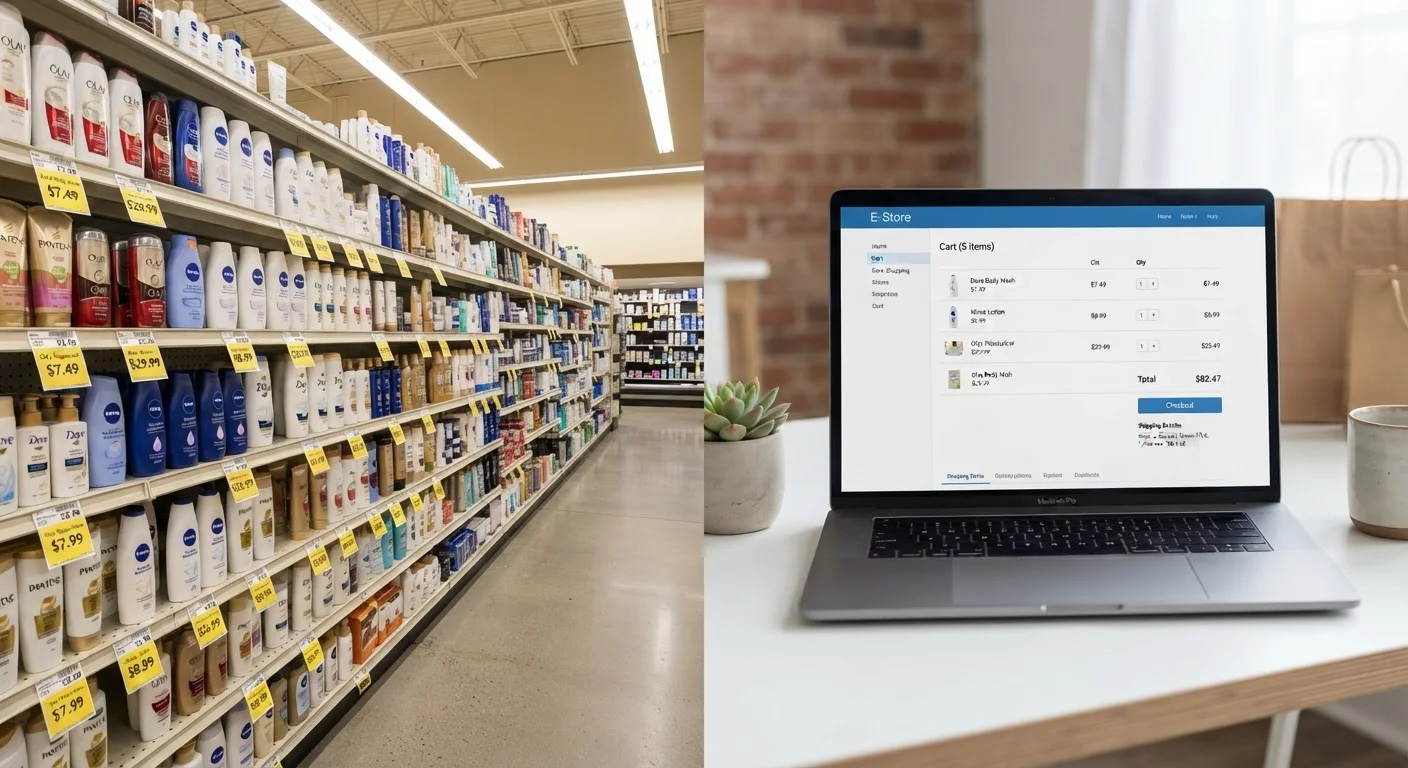
Photo: TheSearchHound.com | One Stop Answer To All Your Questions editorial
Key Takeaways
- In-store and online prices are structured differently - a direct comparison often misses key costs on both sides.
- Online prices can change multiple times per day due to algorithmic pricing, making a single screenshot unreliable.
- In-store 'deals' often rely on anchor pricing that inflates the original price to make the discount look larger.
- Shipping fees, return costs, and membership requirements can erase apparent online savings.
- Price matching policies and in-store exclusives can sometimes make physical retail more competitive than it appears.
- The total cost - including shipping, taxes, return friction, and your time - is what actually matters.
Why the Comparison Is Rarely Apples-to-Apples
Most shoppers assume that comparing an in-store price to an online price is straightforward: whichever number is lower wins. That assumption is where the money gets lost.
Physical retailers and online sellers use fundamentally different pricing architectures. In-store prices are typically set regionally and change infrequently - often tied to printed signage, weekly ad cycles, or promotional calendars. Online prices, by contrast, can be adjusted algorithmically in near real-time based on demand signals, competitor pricing, and even your browsing behavior on some platforms.
This means a product you saw online for $34 yesterday might be $39 today and $31 tomorrow. An in-store "sale" tag, meanwhile, may reflect a markdown from a reference price that was rarely, if ever, charged. Neither channel is automatically more honest - they're just using different systems. Understanding that difference is what makes you a more effective shopper. See our guide to retail pricing psychology for a deeper look at how these tactics work.
The Hidden Costs That Distort the Real Price
The sticker price - online or in-store - is rarely the final number. Both channels layer on additional costs that shoppers frequently undercount.
| Criterion | In-Store Deals | Online Prices |
|---|---|---|
| Price stability | Changes weekly or seasonally | Can change multiple times daily |
| Shipping cost | None (but factor travel) | Varies; may erase savings |
| Return ease | Generally straightforward at counter | Policies vary; fees possible |
| Price comparison ease | Limited to nearby stores | Easy across many sellers |
| Anchor pricing risk | Common with sale signage | Present via 'list price' labels |
| Price matching availability | Many retailers offer it | Less common seller-to-seller |
| Membership fees | Rare | Common for free shipping perks |
Online: Shipping fees are the most obvious variable. A product priced $5 lower online can end up costing more once you add standard shipping. Free shipping thresholds push shoppers to add items to their cart they didn't plan to buy. Membership fees for shipping perks (like annual subscription programs) are a real cost that should be spread across every order you place. And online return policies deserve scrutiny - some require you to pay return postage or face a restocking fee. Our article on what online return policies actually mean explains the fine print worth reading before checkout.
In-store: The costs here are less visible but still real. Your time and transportation count. In-store "exclusive" pricing can occasionally undercut online - but only for specific items retailers use as traffic drivers, not across the board. Watch for anchor pricing, where a prominent "was $X" figure makes a discount look steeper than it is. For genuinely time-limited promotions, our piece on doorbuster deals and limited-time offers separates real urgency from manufactured pressure.
~24%
Online shoppers who abandon carts due to unexpected shipping costs
Baymard Institute research consistently identifies unexpected shipping costs as one of the top reasons for online cart abandonment.
3-5x
Daily price changes on major e-commerce platforms
Industry analyses of large online retail platforms have found that prices on popular product categories can fluctuate multiple times within a single day.
How to Make a Fair Comparison Before You Buy
A fair comparison accounts for the full cost of ownership, not just the listed price. Here's a practical framework:
- Calculate total cost: Add shipping, taxes, and any membership fees to online prices. Factor in your travel cost for in-store trips on non-routine purchases.
- Check price history: Online prices fluctuate, so a listed price today may not reflect a genuine deal. Price tracking tools show historical pricing data, helping you determine whether a current price is actually lower than usual or just presented that way.
- Verify the anchor price: When an in-store item shows a "regular" price crossed out, that original price isn't always reliable. Check whether it reflects what the product actually sold for at that retailer historically.
- Factor in returns: Consider the realistic cost of returning an item if it doesn't work out. In-store returns are often simpler; online returns carry more friction and potential fees.
- Ask about price matching: Many physical retailers will match verified online prices. Price matching policies vary, but they're an underused tool that can close the gap between channels.
Before any purchase - online or off - the pre-purchase savings checklist offers a quick structured review to make sure you haven't missed anything obvious.
When In-Store Exclusives Are Actually Real
The content on this site is provided for informational purposes only and should not be considered a substitute for professional advice. While we strive to provide accurate and up-to-date information, we make no guarantees regarding its completeness or accuracy. Always consult a qualified professional for advice specific to your circumstances before making any decisions.