
Guest Checkout or Account Creation: What Changes for Your Privacy

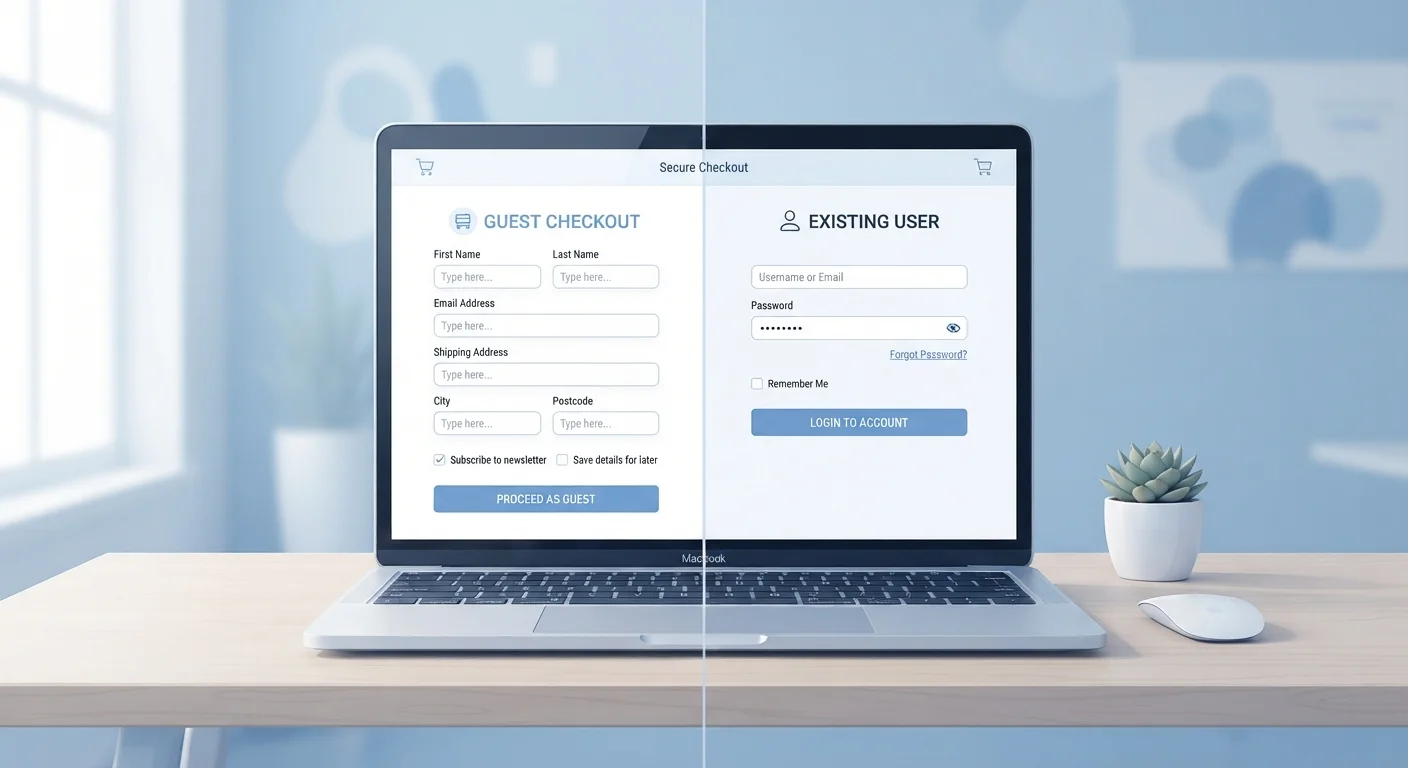
Photo: TheSearchHound.com | One Stop Answer To All Your Questions editorial
Key Takeaways
- Guest checkout limits the data a retailer retains long-term, but doesn't make you anonymous.
- Creating an account gives retailers persistent access to your shopping history and behavior.
- Both options typically collect the same transaction data - name, address, payment info - at the point of sale.
- Registered accounts often enable targeted marketing and data sharing with third parties.
- Privacy policies, not checkout methods, ultimately govern how your data is used and stored.
Limits long-term data retention by the retailer
Without a persistent account, a retailer has fewer grounds to maintain an active marketing profile tied to your identity beyond the immediate transaction.
Reduces exposure to account-based data breaches
Stored accounts with saved payment methods or addresses become targets in data breaches; guest orders don't create standing credentials that can be compromised later.
Avoids ongoing marketing communications
Guest checkout typically results in fewer unsolicited emails and targeted ads, since there's no active profile to feed a retailer's marketing automation system.
Faster checkout without credential management
No password to create, remember, or potentially reuse - which also eliminates a common security vulnerability associated with password reuse across sites.
Persistent profile enables detailed behavioral tracking
Every search, click, and purchase made while logged in adds to a behavioral profile that retailers can use for targeted advertising or share with data partners.
Account data is often shared with third-party marketers
Many retailers' privacy policies permit sharing account-linked data - including purchase history and contact details - with affiliated marketing networks.
Stored payment or address data increases breach risk
Saving payment details for convenience creates a standing target; if the retailer experiences a data breach, stored credentials are among the most sensitive data exposed.
Opt-out controls are often buried or limited
Marketing opt-outs and data-sharing preferences in retail accounts are frequently difficult to locate and may not cover all forms of data use permitted by the privacy policy.
What Both Options Actually Collect
Before weighing guest versus account, it helps to understand what's collected regardless of which path you choose. At the moment of any online purchase, the retailer receives your name, shipping address, billing address, email, and payment details. This data is necessary to fulfill the order and is collected whether you check out as a guest or log in to an account.
What differs is what happens to that data after the transaction closes. Guest checkout data is technically tied to a single order record. Account data is attached to a persistent profile that grows with every subsequent visit, search, and purchase.
Third-Party Tracking Operates Independently
It's also worth noting that third-party tracking - through browser cookies, pixels, and analytics scripts - operates largely independent of which checkout method you use. A retailer's tracking infrastructure often captures browsing behavior before you ever reach the checkout page. For broader context on how connected platforms gather data, see our coverage of always-on data collection.
The Case for Guest Checkout
Guest checkout keeps your relationship with a retailer transactional rather than relational. Once your order ships and is delivered, there's no active profile for the company to continue marketing against or for data brokers to potentially access through third-party sharing agreements.
Limits long-term data retention by the retailer
Without a persistent account, a retailer has fewer grounds to maintain an active marketing profile tied to your identity beyond the immediate transaction.
Reduces exposure to account-based data breaches
Stored accounts with saved payment methods or addresses become targets in data breaches; guest orders don't create standing credentials that can be compromised later.
Avoids ongoing marketing communications
Guest checkout typically results in fewer unsolicited emails and targeted ads, since there's no active profile to feed a retailer's marketing automation system.
Faster checkout without credential management
No password to create, remember, or potentially reuse - which also eliminates a common security vulnerability associated with password reuse across sites.
From a practical standpoint, guest checkout is also faster for one-time purchases. You're not creating credentials you'll need to manage or a password you might reuse elsewhere - a real security concern that goes hand in hand with privacy. For tips on keeping your payment details safe regardless of checkout method, our guide on protecting payment information on e-commerce sites is worth reviewing.
The Case for Creating an Account
Registered accounts do offer genuine utility. Order history, saved addresses, streamlined returns, and loyalty rewards all depend on an account existing. For shoppers who use a retailer regularly, re-entering the same details for every order creates friction without adding much privacy protection - since the retailer already has your information from prior transactions.
Persistent profile enables detailed behavioral tracking
Every search, click, and purchase made while logged in adds to a behavioral profile that retailers can use for targeted advertising or share with data partners.
Account data is often shared with third-party marketers
Many retailers' privacy policies permit sharing account-linked data - including purchase history and contact details - with affiliated marketing networks.
Stored payment or address data increases breach risk
Saving payment details for convenience creates a standing target; if the retailer experiences a data breach, stored credentials are among the most sensitive data exposed.
Opt-out controls are often buried or limited
Marketing opt-outs and data-sharing preferences in retail accounts are frequently difficult to locate and may not cover all forms of data use permitted by the privacy policy.
The privacy trade-off sharpens when retailers use account data to build behavioral profiles used in targeted advertising, or when they share data with marketing partners. Review a retailer's privacy policy - specifically sections on data sharing and marketing preferences - before assuming an account stays private. If you're still evaluating whether to trust a particular store with your information in the first place, vetting a seller before you buy is a useful starting point.
Making an Informed Choice at Checkout
The checkout screen itself rarely discloses how your data will be used - that information lives in the privacy policy, which most shoppers never read. A few practical steps can help you make a more informed decision:
- Search the retailer's privacy policy for terms like "share," "sell," and "third party" to understand data flows.
- Check whether the site offers marketing opt-outs at the point of account creation or in account settings.
- Use a unique email address for retail accounts if you want to track which companies are sharing your contact data.
- Consider whether the retailer is one you'll return to often enough that an account's convenience justifies its data footprint.
If you're newer to shopping online and want a broader walkthrough of how checkout, tracking, and order management work together, shopping online for the first time covers the full process. After checkout, it's also worth understanding return policies and after-sale support, since account holders often have an easier time managing post-purchase issues.
34%
U.S. adults who limit app data to protect privacy
According to Pew Research Center survey data, roughly a third of American adults report choosing not to use apps or services specifically because of concerns about data collection.
~147M
Records exposed in major retail data breaches
High-profile retail data breaches have collectively exposed hundreds of millions of consumer records, underscoring why stored account credentials carry real risk.
The content on this site is provided for informational purposes only and should not be considered a substitute for professional advice. While we strive to provide accurate and up-to-date information, we make no guarantees regarding its completeness or accuracy. Always consult a qualified professional for advice specific to your circumstances before making any decisions.