
The Real Privacy Trade-Offs of Always-On Smart Home Devices

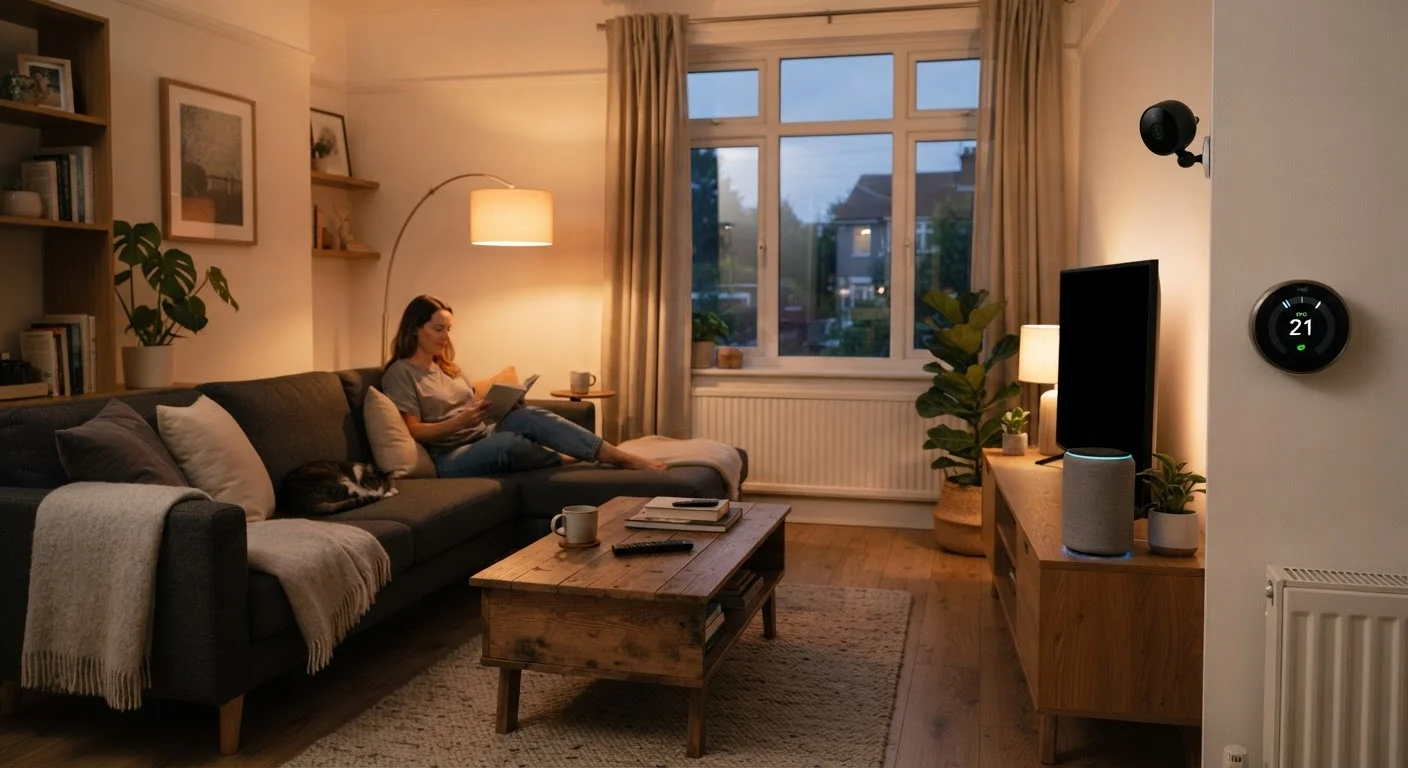
Photo: TheSearchHound.com | One Stop Answer To All Your Questions editorial
Key Takeaways
- Always-on smart home devices continuously collect data ranging from voice snippets to usage patterns.
- Convenience gains are genuine, but so are the privacy trade-offs tied to cloud storage and third-party data sharing.
- Practical steps - like network segmentation and reviewing app permissions - can meaningfully reduce exposure.
- Understanding what each device collects is the first step toward an informed smart home setup.
Hands-free control saves time in daily routines
Voice commands and automated schedules eliminate small but repeated friction points - adjusting lights, setting timers, or checking door locks without moving across a room.
Remote monitoring supports home security
Connected cameras and sensors allow homeowners to check in while away, receive motion alerts, and review footage after an incident - capabilities that weren't broadly accessible before.
Energy management can become more precise
Devices like smart thermostats and plugs track usage patterns and can reduce energy waste by adapting to actual behavior rather than fixed schedules.
Accessibility benefits for mobility-limited users
Voice-activated controls and automated routines can meaningfully improve independence for people with physical limitations, making home control less dependent on manual interaction.
Continuous data collection extends beyond core functions
Always-on devices regularly log usage patterns, ambient audio, and network activity - data that may be stored on manufacturer servers and subject to retention policies beyond a user's direct control.
Third-party data sharing is common and often opaque
Many device manufacturers share aggregated or individual data with partners for analytics or advertising purposes. The scope of this sharing is typically disclosed in privacy policies that most users don't read.
Default settings typically favor data collection
Out-of-the-box configurations often enable voice history storage, usage analytics, and personalization features that involve sending data to the cloud - users must opt out rather than opt in.
Security vulnerabilities can expose home networks
A compromised smart device can serve as an entry point into a home network, potentially exposing other connected devices. Infrequent firmware updates on older devices compound this risk.
Cloud dependency creates long-term uncertainty
Devices that rely on manufacturer cloud services stop functioning fully if a company shuts down, discontinues support, or changes service terms - a real risk documented across several smart home categories.
What 'Always-On' Actually Means
The phrase always-on describes devices that maintain a persistent connection to your home network - and often to remote servers - so they can respond instantly to commands, detect motion, or log environmental data around the clock. Smart speakers, video doorbells, connected thermostats, and indoor cameras all fall into this category.
These devices don't simply sit idle between uses. Many continuously sample their environment: a smart speaker listens for a wake word, a thermostat tracks occupancy patterns, a doorbell camera buffers short video clips. That ongoing activity is what makes them useful - and what makes privacy a legitimate conversation. For a closer look at how these devices communicate behind the scenes, see our explainer on smart home ecosystems.
The Real Advantages
The convenience case for always-on devices is not exaggerated. Instant responsiveness, automated routines, and remote monitoring all have practical value.
Hands-free control saves time in daily routines
Voice commands and automated schedules eliminate small but repeated friction points - adjusting lights, setting timers, or checking door locks without moving across a room.
Remote monitoring supports home security
Connected cameras and sensors allow homeowners to check in while away, receive motion alerts, and review footage after an incident - capabilities that weren't broadly accessible before.
Energy management can become more precise
Devices like smart thermostats and plugs track usage patterns and can reduce energy waste by adapting to actual behavior rather than fixed schedules.
Accessibility benefits for mobility-limited users
Voice-activated controls and automated routines can meaningfully improve independence for people with physical limitations, making home control less dependent on manual interaction.
Automation reduces friction in daily life - lights that adjust based on occupancy, thermostats that learn your schedule, and cameras that send alerts only when something is actually moving are genuinely useful features. For households with elderly residents or young children, remote monitoring can also carry a real safety dimension.
The Privacy Costs Worth Understanding
The same always-on capability that enables convenience also creates a persistent data stream. Knowing what that stream contains helps you make clearer decisions.
Continuous data collection extends beyond core functions
Always-on devices regularly log usage patterns, ambient audio, and network activity - data that may be stored on manufacturer servers and subject to retention policies beyond a user's direct control.
Third-party data sharing is common and often opaque
Many device manufacturers share aggregated or individual data with partners for analytics or advertising purposes. The scope of this sharing is typically disclosed in privacy policies that most users don't read.
Default settings typically favor data collection
Out-of-the-box configurations often enable voice history storage, usage analytics, and personalization features that involve sending data to the cloud - users must opt out rather than opt in.
Security vulnerabilities can expose home networks
A compromised smart device can serve as an entry point into a home network, potentially exposing other connected devices. Infrequent firmware updates on older devices compound this risk.
Cloud dependency creates long-term uncertainty
Devices that rely on manufacturer cloud services stop functioning fully if a company shuts down, discontinues support, or changes service terms - a real risk documented across several smart home categories.
69%
U.S. adults with at least one smart home device
According to Statista consumer survey data, smart home adoption in the United States has grown substantially, with a majority of households owning at least one connected device.
~3%
Voice commands mistakenly triggering wake words
Research published by academic institutions studying smart speaker behavior has found that accidental activations - where ambient speech triggers a wake word - occur regularly in everyday household environments.
One area that often surprises users is third-party data sharing. Most device manufacturers outline data practices in their privacy policies, but those documents are long and the defaults frequently favor data collection. Audio clips flagged for quality review, location data inferred from network activity, and behavioral patterns derived from usage logs are all documented in standard smart home data practices - even if rarely read before setup.
It's also worth distinguishing between on-device processing and cloud processing. Some newer devices handle more functions locally, which limits how much data leaves your home. Others route nearly everything through manufacturer servers, where data retention and sharing practices are governed by policies that can change over time.
On-Device vs. Cloud Processing
Steps That Actually Reduce Your Exposure
Reducing smart home privacy risk doesn't require abandoning connected devices - it requires being deliberate about how they're configured.
- Review app permissions before and after setup. Many companion apps request access to contacts, location, or microphone beyond what the device's core function requires.
- Isolate devices on a separate network. Placing smart home gadgets on a dedicated network segment limits what they can access if one device is compromised. Our guide to setting up a guest network for smart devices explains how this works in practice.
- Audit your setup periodically. Firmware updates, new features, and revised privacy policies mean your settings from a year ago may no longer reflect what a device actually does. The smart home security audit checklist is a useful starting point.
- Disable features you don't use. Voice history storage, continuous recording, and cross-device tracking can often be turned off without losing core functionality.
The goal isn't perfect privacy - that isn't achievable with connected devices. The goal is an honest accounting of what each device collects and whether that trade-off makes sense for your household.
The content on this site is provided for informational purposes only and should not be considered a substitute for professional advice. While we strive to provide accurate and up-to-date information, we make no guarantees regarding its completeness or accuracy. Always consult a qualified professional for advice specific to your circumstances before making any decisions.