
Marketplace Giants vs. Specialty Retailers: Where You Actually Get What You Expect

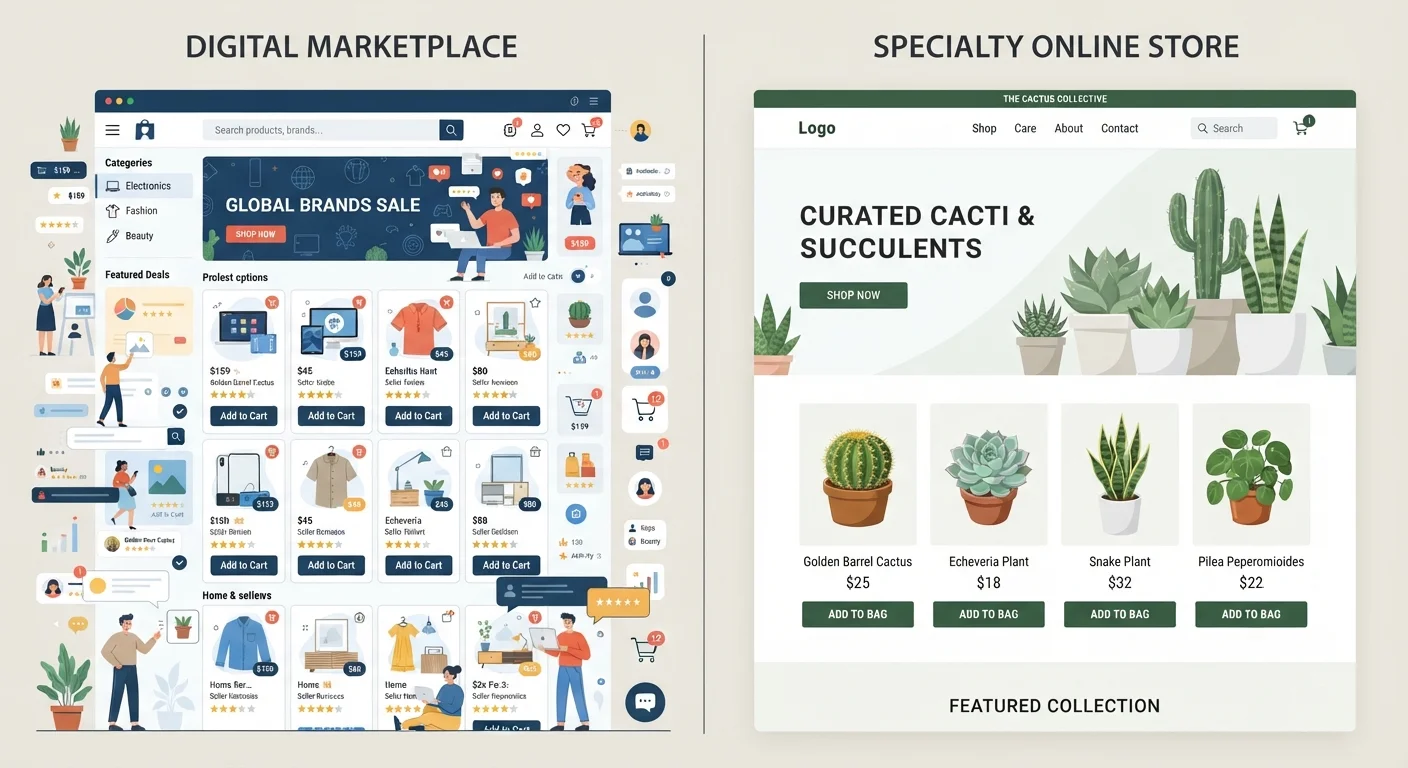
Photo: TheSearchHound.com | One Stop Answer To All Your Questions editorial
Key Takeaways
- Marketplace platforms host third-party sellers whose quality and reliability vary widely.
- Specialty retailers typically offer deeper product knowledge and more consistent quality control.
- Return policies and after-sale support differ significantly between marketplace and specialty formats.
- Pricing on marketplaces can look appealing but may involve hidden risks like counterfeit goods.
- The right choice depends on what you're buying, not just what looks cheapest at checkout.
How These Two Models Actually Work
Large online marketplaces - think multi-seller platforms that host thousands of independent merchants - function more like digital shopping malls than traditional retailers. The platform facilitates the transaction, but the seller ships the product, sets their own return terms, and handles their own customer service. You're often buying from a small or overseas business operating under a platform brand umbrella.
Specialty retailers, by contrast, are stores built around a defined category - whether that's outdoor gear, audio equipment, or skincare. They typically source products directly, control their own inventory, and employ staff with category-specific knowledge. The purchase experience is narrower by design, but the accountability tends to be more direct.
Understanding this structural difference is the foundation for every other comparison that follows. For a broader framework on how to evaluate any online seller before committing, see our guide on sizing up a seller before you buy.
Product Authenticity and Quality Consistency
Counterfeits and misrepresented products are a documented problem on open marketplace platforms. Because third-party sellers can list alongside or even within the same product page as an authorized retailer, shoppers can unknowingly purchase from an unvetted source. Some platforms commingle inventory from multiple sellers, which means even when you select a trusted seller, you may receive a unit from a different source.
Specialty retailers generally carry a more controlled product mix. They're more likely to be authorized dealers for the brands they carry, which matters for warranty validity. A product purchased through an unauthorized channel may have its manufacturer warranty voided - a risk many shoppers don't discover until something goes wrong.
| Marketplace Platforms | Specialty Retailers | |
|---|---|---|
| Product selection | Extremely broad, multi-category | Narrow, category-focused |
| Seller accountability | Varies by third-party seller | Directly accountable retailer |
| Authenticity risk | Higher; counterfeits documented | Lower; typically authorized dealers |
| Pricing | Often lower listed prices | Closer to MSRP; some price-match |
| Return policy clarity | Inconsistent across sellers | Usually uniform store-wide policy |
| Expert product support | Rarely available | Often available from category staff |
| Warranty validity | May be voided if unauthorized | Typically honored as authorized dealer |
This doesn't mean every marketplace purchase is risky - many sellers are legitimate and reliable. But the burden of vetting falls more squarely on the buyer. Research on brand loyalty vs. comparison shopping suggests that familiar, category-specific stores can reduce this verification burden meaningfully.
Pricing: What the Numbers Don't Always Tell You
Marketplace platforms frequently show lower listed prices, and for straightforward commodity products - a phone cable, a storage bin, a basic kitchen tool - that price advantage can be real. Competition among sellers drives prices down, and that benefits shoppers who know exactly what they want.
The calculus changes with higher-value or more technical products. A lower price from an unfamiliar seller may reflect a refurbished unit sold as new, an international version with different specifications, or a product outside the authorized distribution chain. Return costs, restocking fees, and dispute resolution time can also erode initial savings.
Check Seller Authorization Before You Buy
Specialty retailers typically price closer to or at the manufacturer's suggested retail price. Some offer price-match programs, though terms vary. For a fair comparison of how different retail formats price products, see what shoppers often get wrong about in-store vs. online prices.
Returns, Warranties, and What Happens After the Sale
This is where the difference between the two formats becomes most consequential. Marketplace platforms often publish a platform-level return policy, but individual seller policies can override or complicate it. Return windows, who pays return shipping, and how refunds are processed vary seller by seller. Dispute resolution processes exist but can be slow and inconsistent.
Specialty retailers typically maintain a single, clearly stated return policy that applies store-wide. Their customer service staff are usually better equipped to handle category-specific issues - whether that's a firmware problem with electronics or a sizing issue with technical apparel. Warranty claims through authorized dealers are also more straightforward to process.
Before any significant purchase on either platform type, reading the return policy and warranty terms is non-negotiable. Our detailed guide on warranty, return policy, and after-sale support walks through exactly what to look for. These details belong in your decision, not just your post-purchase paperwork.
This article is for general informational purposes only and does not constitute personalized financial or consumer legal advice. Policies and practices vary by retailer and platform; always verify current terms directly with the seller before purchasing.
The content on this site is provided for informational purposes only and should not be considered a substitute for professional advice. While we strive to provide accurate and up-to-date information, we make no guarantees regarding its completeness or accuracy. Always consult a qualified professional for advice specific to your circumstances before making any decisions.