
Shipping vs. In-Store Pickup: Weighing the Trade-Offs

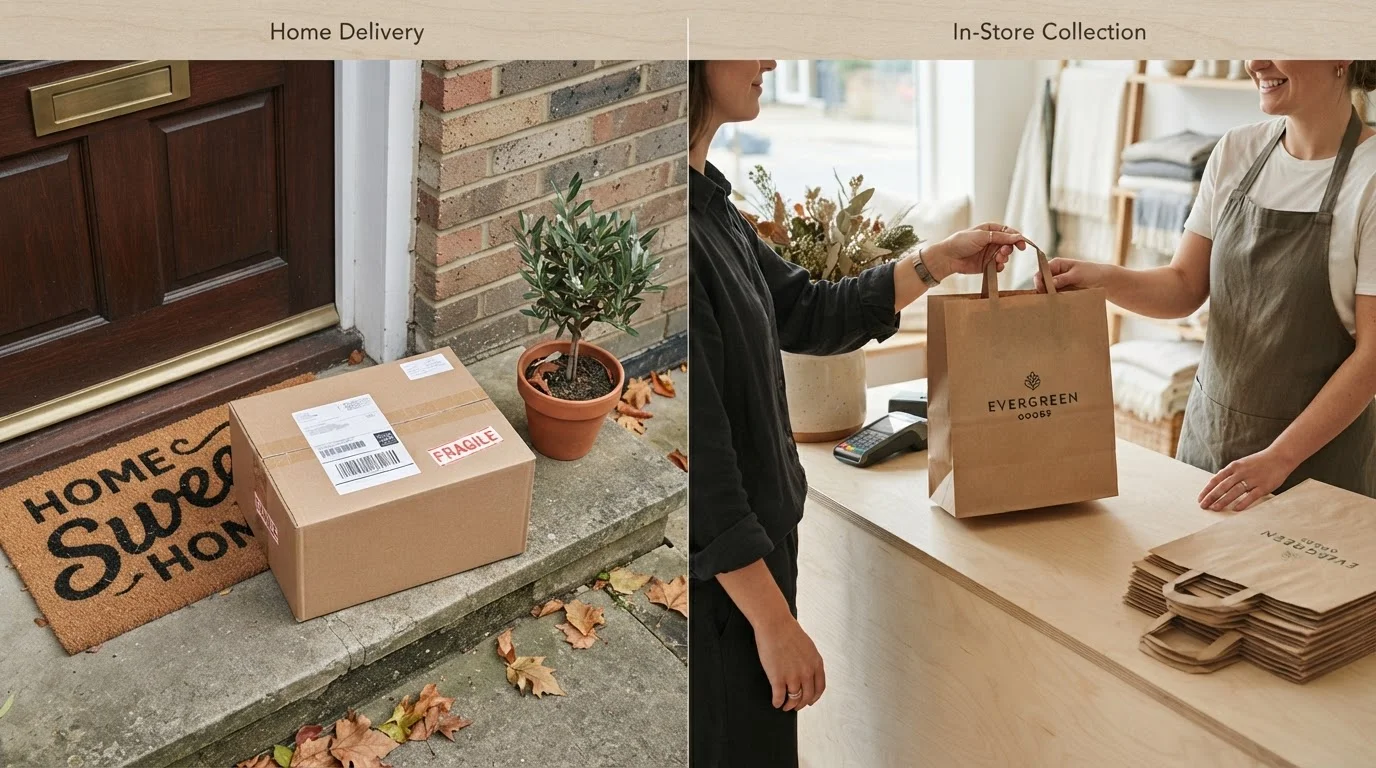
Photo: TheSearchHound.com | One Stop Answer To All Your Questions editorial
Key Takeaways
- Shipping typically adds 1-7 days, while in-store pickup is often ready within hours.
- Home delivery carries risk of porch theft, damage, and missed delivery windows.
- In-store pickup eliminates shipping fees but requires a trip to a physical location.
- Shipping works better for bulky or heavy items that are difficult to transport personally.
- Return logistics differ: in-store returns are usually immediate, while mail returns add time.
- Neither option is universally better - the right choice depends on your timeline and item type.
The Core Difference: Control vs. Convenience
At a basic level, shipping and in-store pickup are two answers to the same question: how do you get something you ordered online into your hands? Shipping prioritizes hands-off convenience - you place the order and wait. In-store pickup shifts more control to you, but adds a step: you have to go get it.
Neither is inherently superior. The better choice depends on factors like your schedule, what you're buying, where you live, and how urgent the need is. Understanding each option's actual mechanics - not just the marketing pitch - helps you make that call without surprises.
| Criterion | Home Shipping | In-Store Pickup |
|---|---|---|
| Typical speed | 1-7 business days | Same day, often within hours |
| Cost | Free or fee depending on order size | Usually no shipping fee |
| Theft/loss risk | Porch theft and misdelivery possible | No delivery risk |
| Item inspection | Only after delivery at home | Possible at point of pickup |
| Returns | Requires repackaging and mail wait | Typically resolved same visit |
| Best for bulky items | Yes - carrier handles transport | No - you transport the item |
| Requires store trip | No | Yes |
Speed and Availability
Shipping timelines vary widely depending on the retailer, the carrier, and your location. Standard shipping typically runs 3-7 business days; expedited options can cut that to 1-2 days, usually at a higher cost. Retailers with distributed warehouse networks can fulfill faster, but rural addresses and peak shopping periods often stretch estimates.
In-store pickup, when available, is generally ready within a few hours of ordering - sometimes less. That makes it the practical choice when you have a time-sensitive need. The catch: the item has to be in stock at your specific store location. Online inventory and in-store inventory don't always align, and some items are only available for shipping.
~20%
U.S. households reporting package theft
According to a 2023 Safewise report, roughly one in five U.S. households reported having a package stolen in the prior year.
67%
Online shoppers who have used BOPIS
A 2022 survey by Digital Commerce 360 found that a majority of online shoppers had used buy-online, pick-up-in-store (BOPIS) at least once.
Cost, Risk, and the Return Factor
Shipping fees range from free (when order minimums are met) to significant for heavy or oversized items. In-store pickup typically carries no additional fee, though it trades that saving for your time and fuel cost. For small, lightweight purchases where free shipping thresholds feel out of reach, pickup can be the more economical path.
Risk profiles also differ. Home delivery exposes your package to theft - a problem in many neighborhoods. Carriers sometimes misdeliver or mark packages as delivered before they've arrived. If any of that happens, your remedies require extra effort. Our guide on what to do when a delivery goes wrong walks through your options in those situations.
In-store pickup eliminates those risks but introduces its own inconvenience: if something is wrong with the item, you find out at the counter rather than at home. On the upside, in-store returns are usually resolved on the spot. Mail returns, by contrast, can take days or weeks, and some retailers charge restocking fees. Before you commit to either option, it's worth reviewing the retailer's return policy carefully - understanding online return policies can prevent unpleasant surprises later.
One often-overlooked factor: in-store pickup may also let you inspect an item before you leave, which is especially useful for fragile goods or products where fit or finish matters. And if you're still assessing whether a retailer is trustworthy enough to order from at all, vetting an unfamiliar seller is a worthwhile step regardless of which fulfillment method you choose.
Making the Right Call for Your Situation
A few practical rules of thumb: ship heavy or bulky items you couldn't reasonably carry yourself. Use pickup when you need something same-day or when your delivery location isn't secure. For anything you're uncertain about keeping, lean toward pickup to simplify a potential return.
It's also worth comparing whether the item is priced differently depending on how you buy it. Pricing strategies between online and physical retail aren't always intuitive - common misconceptions about in-store versus online pricing can help you make a fair comparison before assuming one channel is cheaper. And if you find yourself choosing between a familiar retailer and hunting for a lower price elsewhere, the research on brand loyalty versus comparison shopping offers a grounded perspective on when switching actually pays off.
Neither shipping nor pickup is always the right answer. Treating each order as a separate decision - based on what you're buying, when you need it, and what risks you're comfortable with - is the most reliable approach.
The content on this site is provided for informational purposes only and should not be considered a substitute for professional advice. While we strive to provide accurate and up-to-date information, we make no guarantees regarding its completeness or accuracy. Always consult a qualified professional for advice specific to your circumstances before making any decisions.