
How to Read Customer Reviews Without Being Misled

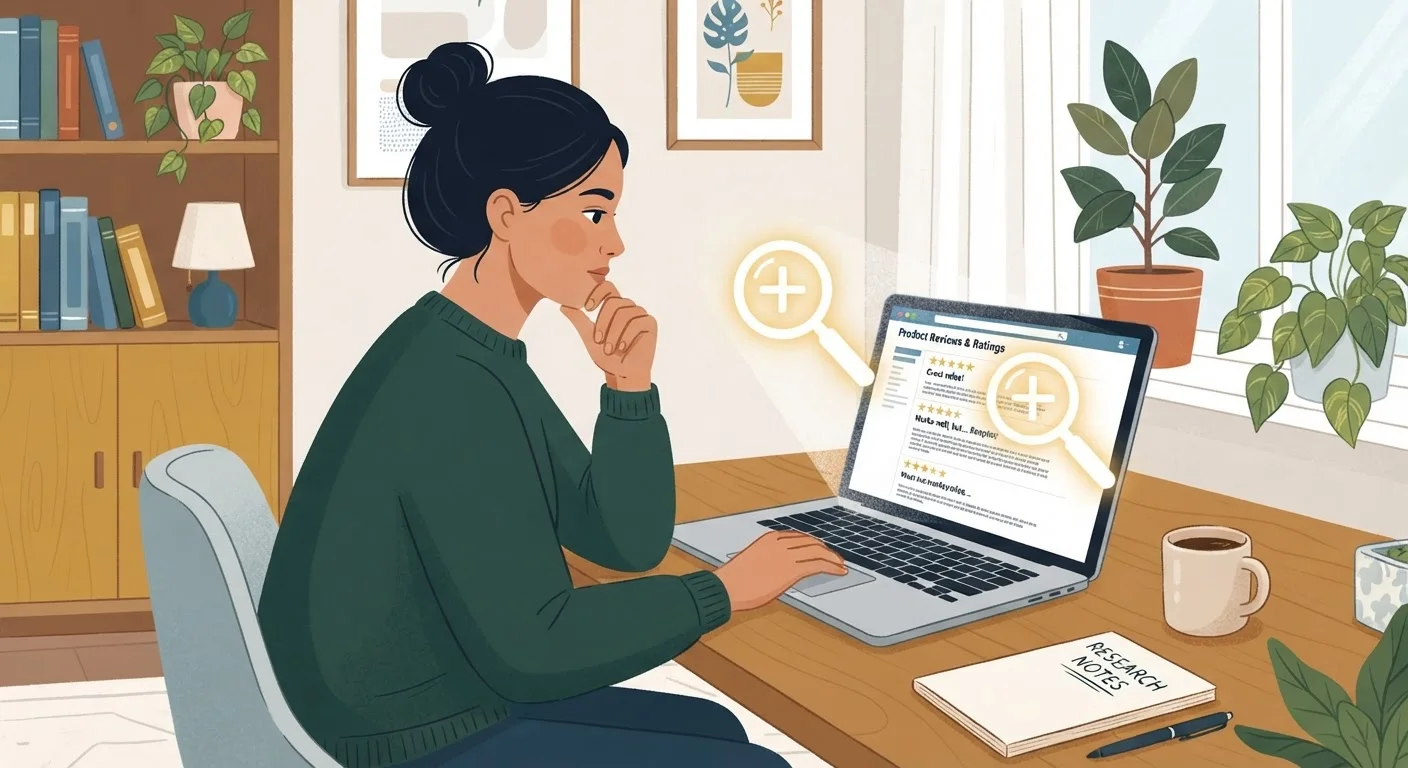
Photo: TheSearchHound.com | One Stop Answer To All Your Questions editorial
Key Takeaways
- Star averages alone are unreliable - always read the written reviews and check distribution.
- Review patterns like generic phrasing, clustered dates, and missing detail are red flags for manipulation.
- Negative reviews are often more informative than positive ones when you know what to look for.
- Verified purchase labels have real limitations and do not guarantee review authenticity.
- Cross-referencing reviews across multiple platforms reduces the risk of being misled.
Why Reviews Are Easy to Manipulate
Customer reviews have become one of the most consulted sources of information before an online purchase - and that influence has made them a target. Sellers, manufacturers, and third-party services have financial incentives to inflate ratings, suppress criticism, and manufacture social proof. Understanding the landscape helps you approach reviews with the right level of skepticism.
Tactics used to skew review systems include paid or incentivized reviews, review gating (only asking satisfied customers to leave feedback), and in some cases fake accounts posting bulk five-star ratings. Platforms invest in detection, but no system catches everything. As a result, the number of stars you see at the top of a product page may reflect marketing effort as much as actual product quality.
This doesn't mean reviews are useless - it means you need a framework for reading them critically. The steps below give you that framework. For additional context on what listing red flags look like beyond reviews, see our guide on spotting counterfeit and scam listings.
Star Ratings Can Be Gamed at Scale
How to Evaluate Reviews Step by Step
Apply the following steps whenever you're researching a purchase. The process takes only a few minutes per product and significantly sharpens what you can learn from a review section.
Check the rating distribution, not just the average
Open the full rating breakdown - most platforms show a bar graph of one- through five-star counts. A product with a 4.2-star average looks the same whether it has mostly fours and fives or a polarized split of fives and ones. That split matters. A bimodal distribution (high fives, high ones, few in between) often suggests a controversial product or a review integrity problem.
Look for specificity in the written reviews
Genuine reviews tend to include specific detail: product dimensions, how it compared to expectations, what broke and when, what the reviewer was using it for. Generic praise like "Great product! Fast shipping!" carries almost no useful information. When a review section is dominated by short, generic, emotionally positive text, that's a signal worth noting - authentic buyers tend to mention at least one concrete observation.
Check the reviewer's profile and history
On platforms that allow it, click through to a reviewer's profile. A reviewer who has left dozens of five-star reviews across unrelated product categories in a short window is a potential red flag. Authentic reviewers typically have a mixed history - some products they liked, some they didn't - and often focus on a consistent area of interest or purchasing behavior.
Note the dates and volume of reviews
A sudden spike in reviews over a short period - particularly all positive - can indicate an incentivized review campaign. Conversely, a product with a steady stream of reviews accumulated over months or years tends to reflect organic buyer experience. Look for whether the review volume makes sense relative to how long the product has been listed and how niche the product category is.
Cross-reference on at least one independent source
A product sold on multiple retail platforms will often have separate review pools. If reviews on one site are overwhelmingly positive but reviews on another for the same item are mixed, that inconsistency is informative. Independent forums, hobbyist communities, and editorial publications sometimes offer candid assessments not subject to the same manipulation pressures as on-platform reviews.
Once you've applied these steps on-platform, consider searching for reviews on independent forums, Q&A communities, or editorial sources. Cross-referencing even one additional source reduces your exposure to platform-specific manipulation. You can also go deeper on seller credibility with our guide to sizing up a seller before you buy.
What Negative Reviews Actually Tell You
Most readers instinctively skim for five-star reviews and treat one-star reviews as outliers from difficult customers. That habit tends to work against you. Critical reviews, when genuine, typically contain the most specific and actionable information available - exact failure modes, shipping problems, misleading product descriptions, and durability issues that only emerge after weeks of use.
Look for negative reviews that describe a consistent, specific problem mentioned by multiple unrelated reviewers. A single scathing review about a niche use case may not apply to you. Fifteen reviews citing the same flaw - poor stitching, inaccurate sizing, short battery life - usually signal a real pattern worth weighing.
Also consider the nature of the complaints. A product with mostly five-star reviews and a cluster of one-star reviews citing the same defect may have been improved in a later production run - or may still have that problem. Check whether those critical reviews are recent or old. Date context matters. For more on what verification labels actually confirm about reviews, see why verified purchase reviews aren't always what they seem.
Middling Reviews Are Often the Most Honest
The content on this site is provided for informational purposes only and should not be considered a substitute for professional advice. While we strive to provide accurate and up-to-date information, we make no guarantees regarding its completeness or accuracy. Always consult a qualified professional for advice specific to your circumstances before making any decisions.