
eSIM vs. Physical SIM Card: What Changes and What Stays the Same

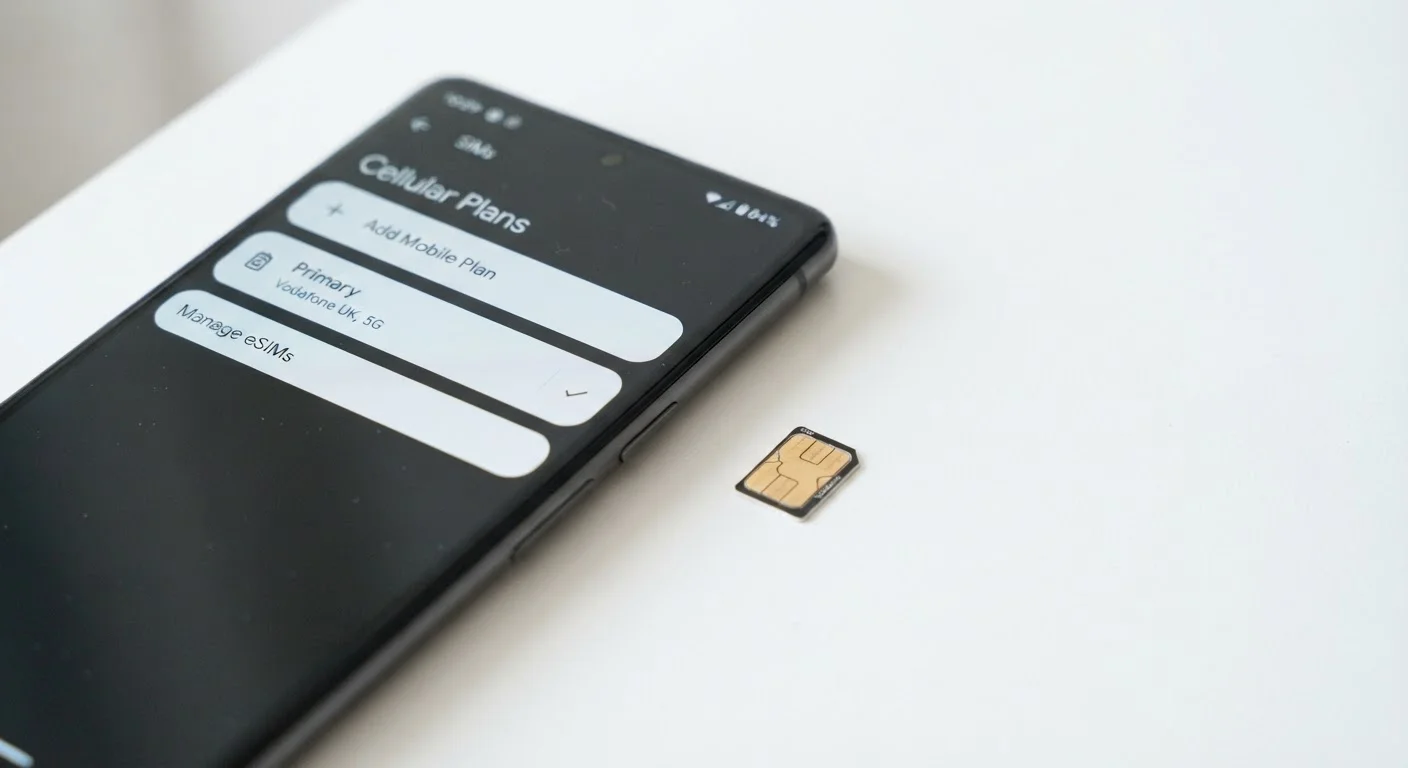
Photo: TheSearchHound.com | One Stop Answer To All Your Questions editorial
Key Takeaways
- eSIMs are embedded chips programmed digitally; physical SIMs are removable cards inserted into a tray.
- Both formats authenticate your device to a carrier network the same way - your number, plan, and coverage area don't change based on SIM type.
- eSIMs allow multiple carrier profiles to coexist on one device, making it easier to switch or add a second line.
- Physical SIMs remain widely supported globally, especially in regions where eSIM infrastructure is still developing.
- Losing an eSIM-only phone doesn't mean losing a card - your profile can be transferred digitally, but requires carrier assistance.
What Each Format Actually Is
A physical SIM card (Subscriber Identity Module) is a small removable chip - typically in nano-SIM size today - that stores your carrier credentials. You insert it into a tray on your phone, and your device uses it to authenticate with your carrier's network. If you switch carriers or phones, you physically swap the card.
An eSIM (embedded SIM) is a chip soldered directly into the device at the factory. Instead of inserting a card, you activate a carrier profile digitally - usually by scanning a QR code from your carrier or downloading a profile through an app. The chip itself never moves; only the software profile loaded onto it changes.
Importantly, both types perform the same core function: they tell the cellular network who you are, what plan you're on, and what number to route calls to. The difference is purely in how that information is stored and updated, not in what your phone can do once it's connected. For a broader look at how network generations affect your actual connection speeds and coverage, see our plain-English guide to 5G, LTE, and 4G.
Side-by-Side: Key Differences
The table below compares the two formats across the dimensions that matter most to everyday users.
| Criterion | eSIM | Physical SIM Card |
|---|---|---|
| Form factor | Embedded chip, no removable part | Removable nano-SIM card |
| Activation method | QR code or carrier app | Insert card, follow prompts |
| Carrier switching speed | Minutes (digital transfer) | Hours to days (card delivery) |
| Multiple lines on one device | Yes - multiple profiles supported | Only with dual-SIM hardware |
| Global carrier compatibility | Growing, but varies by region | Near-universal |
| Device transfer ease | Requires carrier assistance | Swap card manually |
| Risk of physical damage | None - no moving parts | Tray wear possible over time |
One nuance worth noting: coverage and call quality are determined by your carrier and their network infrastructure - not by whether you use an eSIM or a physical card. Switching formats won't improve or degrade your signal.
Where eSIMs Have a Clear Advantage
The most practical benefit of eSIM is multi-profile support. Many dual-SIM phones pair a physical SIM slot with an eSIM, allowing two active lines simultaneously - useful for separating personal and work numbers or adding a local data plan while traveling abroad without removing your home SIM.
eSIMs also simplify carrier switching. Rather than waiting for a physical card to arrive by mail, you can often activate a new carrier plan within minutes. This speed becomes especially valuable when switching carriers without losing your number or facing unexpected fees.
eSIM Profiles and Account Security
There's also a durability argument: removing a physical SIM repeatedly can wear out the tray mechanism over time, while an embedded chip has no moving parts to degrade.
Where Physical SIMs Still Hold Up
Despite the momentum behind eSIM, physical SIM cards aren't obsolete. Global compatibility remains a genuine advantage - virtually every carrier worldwide supports physical SIMs, while eSIM support varies significantly by country and provider.
For consumers who regularly transfer a phone between users - such as parents passing a device to a child - a physical SIM makes the handoff straightforward without requiring account credentials or carrier involvement. Similarly, if a device is lost or damaged, recovering your number onto a new phone via physical SIM is a process most carrier stores can handle in minutes, with no app or QR code required.
300+
Carriers globally offering eSIM support
According to the GSMA, eSIM-capable carrier support has expanded significantly, though adoption is uneven across regions as of recent industry reports.
Dual SIM
Standard configuration on many flagship phones
Most flagship smartphones now ship with at least one eSIM slot, often paired with a physical SIM tray for maximum flexibility.
It's also worth considering that some budget and prepaid phones still ship without eSIM capability, making physical SIM the only available option at certain price points.
The content on this site is provided for informational purposes only and should not be considered a substitute for professional advice. While we strive to provide accurate and up-to-date information, we make no guarantees regarding its completeness or accuracy. Always consult a qualified professional for advice specific to your circumstances before making any decisions.