
Smart Home Ecosystems Explained: How Devices Talk to Each Other

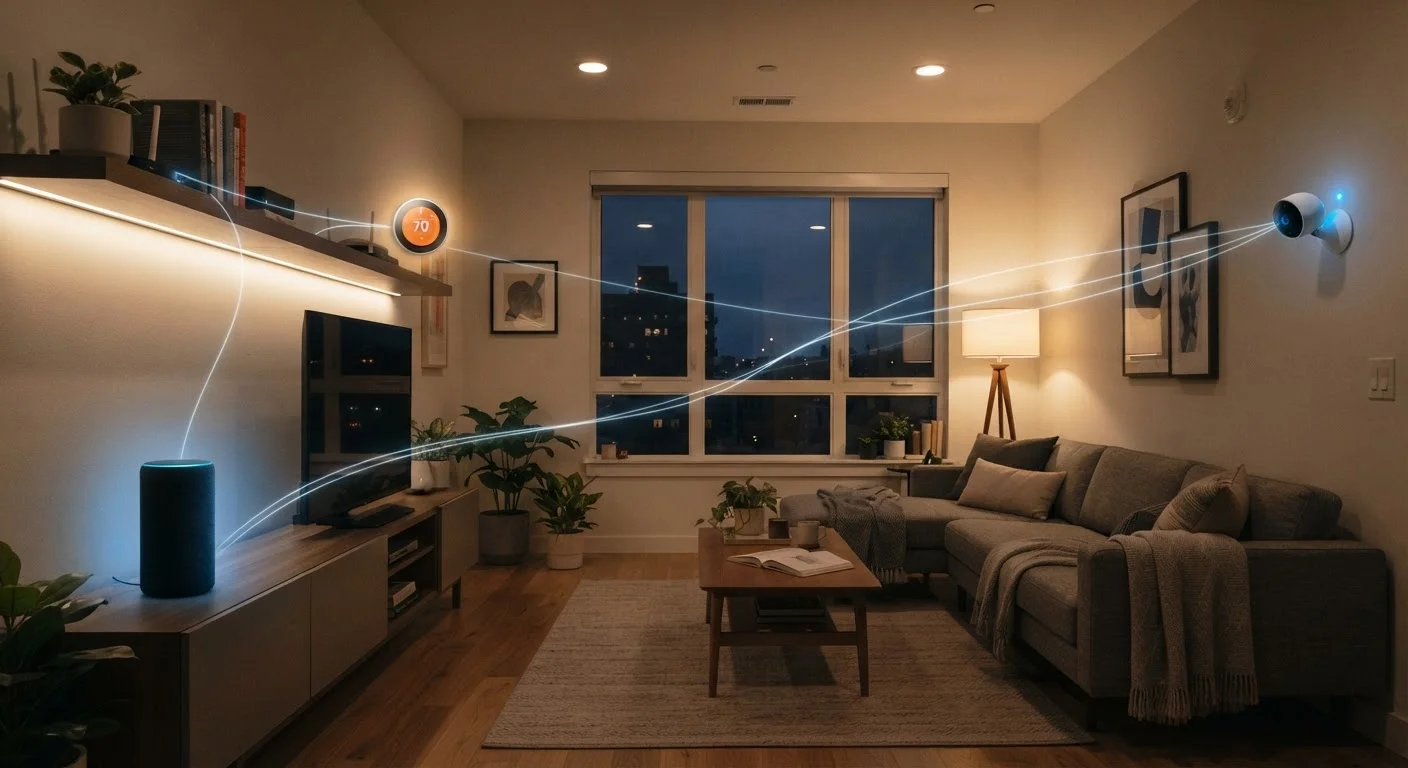
Photo: TheSearchHound.com | One Stop Answer To All Your Questions editorial
Key Takeaways
- Smart home ecosystems use shared protocols so devices from different categories can work together.
- Wi-Fi, Zigbee, Z-Wave, and Matter are the most common communication standards used today.
- Choosing a compatible ecosystem before buying devices saves significant time and frustration.
- A hub or smart speaker often acts as the central coordinator in a home network.
- The Matter standard aims to make cross-brand device compatibility far more reliable.
What Makes a Smart Home Ecosystem
A smart home ecosystem is more than a collection of gadgets - it's an interconnected system where devices share information and trigger actions together. When you dim your lights as the TV turns on, or your thermostat adjusts when you unlock the front door, that coordination happens because the devices speak the same language through a shared protocol or platform.
Most ecosystems consist of three layers: the devices themselves (bulbs, sensors, locks), a communication protocol (the wireless standard they use to send data), and a platform or hub (the software or hardware that ties everything together). Understanding all three helps you make smarter purchasing decisions before you're locked into one approach. For a full breakdown of terms like hub, mesh, and routine, see our plain-language smart home glossary.
How Devices Actually Communicate
Four main wireless protocols power most consumer smart home devices today, each with distinct trade-offs:
- Wi-Fi - The most familiar option. Devices connect directly to your home router, requiring no hub. Trade-off: Wi-Fi devices consume more power and can crowd a busy network.
- Zigbee - A low-power mesh protocol where each device can relay signals to extend the network's reach. Requires a compatible hub or bridge to connect to your router. Widely used in lighting and sensors.
- Z-Wave - Similar mesh approach to Zigbee but operates on a less congested frequency, reducing interference from Wi-Fi and Bluetooth. Also hub-dependent.
- Thread / Matter - Thread is a newer mesh protocol designed for reliability and low power use. Matter is the application-layer standard built on top of Thread (and Wi-Fi) that lets devices from competing brands interact. It's the most significant push toward universal compatibility the industry has seen.
For a deeper look at what Matter actually delivers, our companion article explains the Matter standard in practical terms.
Matter 1.0
Cross-brand smart home standard launched
The Connectivity Standards Alliance (CSA) released Matter 1.0 in October 2022, backed by major platform holders including Apple, Google, Amazon, and Samsung.
29%
U.S. households with at least one smart home device
According to Statista estimates, roughly 29% of American households owned at least one smart home device as of the early 2020s, a figure that continues to grow.
~2,400
Matter-certified devices available
The CSA reported more than 2,400 Matter-certified products available in the market as of mid-2024, spanning lighting, locks, thermostats, and more.
The Role of Hubs, Bridges, and Voice Assistants
A hub sits at the center of many smart home setups, translating signals between protocols and connecting devices to your smartphone or voice assistant. Without a hub, Zigbee and Z-Wave devices have no path to your app or the internet.
Voice assistants - smart speakers or displays - often double as hubs for Wi-Fi devices. They can also act as bridges for some protocols, but they have limits. A voice assistant may control a Zigbee bulb if it has a built-in Zigbee radio, but it won't necessarily support every device or automation you'd get with a dedicated hub.
Multi-protocol hubs are gaining ground as a practical middle ground, supporting Zigbee, Z-Wave, Thread, and Wi-Fi from a single device. This flexibility is particularly useful if you own devices from several manufacturers.
Why Compatibility Matters Before You Buy
Incompatibility is the most common frustration new smart home owners encounter. A device that works beautifully within one platform may be completely invisible to another. Before purchasing, check three things: which protocol the device uses, which hub or platform it requires, and whether it supports Matter - a strong signal of forward compatibility.
If you're building from scratch, our beginner's guide to setting up a smart home walks through a sensible starting order that avoids common pitfalls. If budget is a priority, it's also possible to build a flexible setup without committing to one brand - see our guide on building a smart home without ecosystem lock-in for practical strategies.
One final consideration: understand how much your devices depend on cloud services. Locally controlled devices tend to be more reliable and aren't vulnerable to a manufacturer shutting down a server. For a grounded look at what smart home devices can and can't do, our smart home myth-busting article separates marketing claims from reality.
Frequently Asked Questions
The content on this site is provided for informational purposes only and should not be considered a substitute for professional advice. While we strive to provide accurate and up-to-date information, we make no guarantees regarding its completeness or accuracy. Always consult a qualified professional for advice specific to your circumstances before making any decisions.