
Driving With Passengers: How Social Dynamics Affect Your Focus

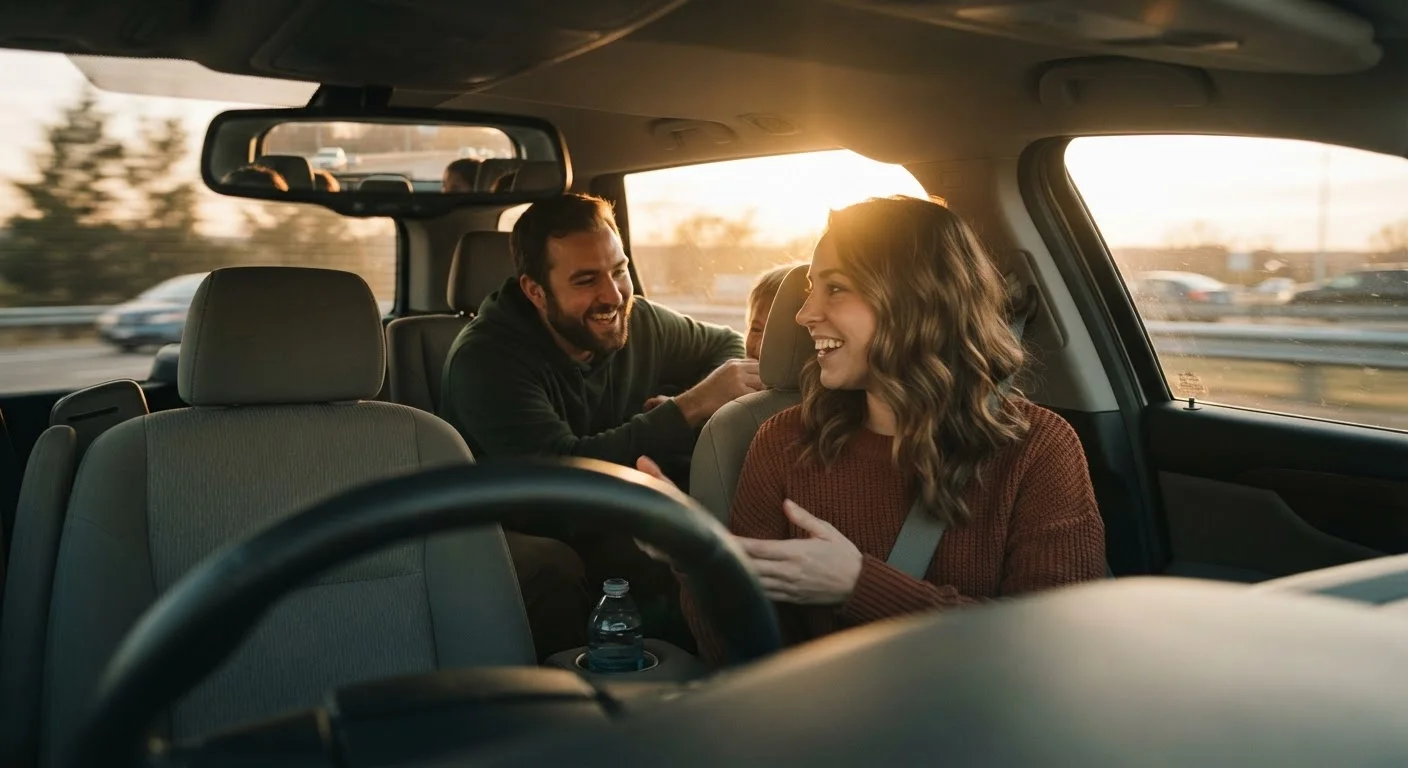
Photo: TheSearchHound.com | One Stop Answer To All Your Questions editorial
Key Takeaways
- Passengers can increase crash risk, particularly for teen and young adult drivers.
- Conversation type matters - emotionally charged or complex discussions demand more cognitive load.
- Calm, attentive passengers can serve as a genuine safety asset in some situations.
- Peer pressure from passengers is a documented factor in risky driving behavior.
- Drivers can set clear expectations with passengers to reduce in-car distractions.
Experienced passengers can assist with navigation
A calm co-pilot who handles directions or monitors mirrors actively reduces the driver's cognitive load, particularly in unfamiliar areas or heavy traffic.
Adult presence can moderate risky driver behavior
Research suggests drivers are less likely to speed or take aggressive risks when an older or authority-figure passenger is present, compared to driving alone or with peers.
Companionship reduces fatigue on long drives
Conversation during long-haul trips can help maintain alertness and combat the monotony that contributes to highway hypnosis, as long as the interaction stays low-intensity.
Passengers can spot hazards the driver may miss
An attentive passenger scanning the road environment can call out merging vehicles, pedestrians, or road debris - functioning as a second set of eyes in complex traffic.
Conversation competes directly with driving attention
Face-to-face dialogue pulls both cognitive and visual attention simultaneously, unlike many other distractions. Drivers naturally glance toward the person they're speaking with, even briefly.
Peer passengers increase risk-taking in younger drivers
Multiple studies have found that teen crash risk rises with each additional peer passenger in the vehicle. The mechanism includes both social pressure and the natural impulse to perform confidence.
Emotionally charged conversations impair judgment
Arguments, deeply personal topics, or high-stakes discussions demand significant mental processing that leaves fewer cognitive resources for hazard detection and braking response.
Backseat noise and movement create visual distractions
Children, pets, or passengers moving around in the rear of the vehicle generate peripheral visual events that repeatedly redirect the driver's attention away from the road ahead.
Passengers can exert unintentional pressure on route or speed choices
Even without explicit demands, a passenger's commentary - sighing at traffic, suggesting shortcuts, or expressing impatience - can nudge drivers toward less cautious decisions.
Why Passengers Are More Than Just Extra Weight
Most drivers think of distraction as something that comes from a phone or a dashboard screen. But one of the most consistent sources of cognitive distraction sits right in the seat next to you. Passengers change the social environment inside the vehicle, and that environment has a measurable effect on how much mental bandwidth a driver has available for the road.
Research consistently shows that the presence of passengers - especially peers - alters driving behavior in ways that aren't always visible or intentional. The conversation, the emotional tone, even the perceived expectations of who's watching can all influence speed, following distance, and response time. Understanding this isn't about blaming passengers; it's about recognizing a real factor that shapes every shared trip.
For a deeper look at how cognitive load affects attention behind the wheel, see The Real Cost of Distracted Driving Beyond the Headlines.
The Case For: When Passengers Actually Help
It's not all risk. In certain conditions, a passenger can genuinely improve safety outcomes.
Experienced passengers can assist with navigation
A calm co-pilot who handles directions or monitors mirrors actively reduces the driver's cognitive load, particularly in unfamiliar areas or heavy traffic.
Adult presence can moderate risky driver behavior
Research suggests drivers are less likely to speed or take aggressive risks when an older or authority-figure passenger is present, compared to driving alone or with peers.
Companionship reduces fatigue on long drives
Conversation during long-haul trips can help maintain alertness and combat the monotony that contributes to highway hypnosis, as long as the interaction stays low-intensity.
Passengers can spot hazards the driver may miss
An attentive passenger scanning the road environment can call out merging vehicles, pedestrians, or road debris - functioning as a second set of eyes in complex traffic.
Experienced adult passengers - particularly co-pilots familiar with navigation - can reduce a driver's workload by handling directions, managing the climate controls, or monitoring blind spots during lane changes. Some studies suggest that adult passengers can moderate risky behavior in drivers, particularly when the passenger is older or perceived as an authority figure. This dynamic is almost the opposite of what happens with same-age peer groups.
The Case Against: When Passengers Become a Hazard
The disadvantages are well-documented and substantial, particularly for drivers with less experience behind the wheel.
Conversation competes directly with driving attention
Face-to-face dialogue pulls both cognitive and visual attention simultaneously, unlike many other distractions. Drivers naturally glance toward the person they're speaking with, even briefly.
Peer passengers increase risk-taking in younger drivers
Multiple studies have found that teen crash risk rises with each additional peer passenger in the vehicle. The mechanism includes both social pressure and the natural impulse to perform confidence.
Emotionally charged conversations impair judgment
Arguments, deeply personal topics, or high-stakes discussions demand significant mental processing that leaves fewer cognitive resources for hazard detection and braking response.
Backseat noise and movement create visual distractions
Children, pets, or passengers moving around in the rear of the vehicle generate peripheral visual events that repeatedly redirect the driver's attention away from the road ahead.
Passengers can exert unintentional pressure on route or speed choices
Even without explicit demands, a passenger's commentary - sighing at traffic, suggesting shortcuts, or expressing impatience - can nudge drivers toward less cautious decisions.
The most significant concern is cognitive distraction. Unlike a hands-free phone call, face-to-face conversation pulls visual attention as well - drivers instinctively glance at the person they're speaking with. Add emotional content to that conversation, and the attentional drain deepens further.
Graduated Licensing Restrictions Exist for a Reason
Peer pressure is another documented mechanism. Younger drivers, in particular, are more likely to speed, run yellow lights, or accept unsafe gaps in traffic when passengers are present and engaged. This isn't purely about conscious influence - social monitoring happens automatically, and the desire to appear confident or competent can override cautious instincts.
For a full breakdown of how situational awareness erodes under these conditions, explore Situational Awareness on the Road.
Setting the Tone Before You Pull Out
The most effective strategy isn't avoidance - it's proactive management. Drivers who communicate clear expectations before departure consistently report fewer in-vehicle conflicts and distractions during the trip.
Simple framing - "I need to focus through this next stretch, let's pick this up when we're parked" - signals that the driver is in control of the environment. Passengers generally respond well to direct, calm communication about attention needs, especially when it's framed as a habit rather than a criticism.
3x
Teen crash risk with multiple peer passengers
According to the AAA Foundation for Traffic Safety, teen drivers carrying two or more peer passengers face roughly triple the fatal crash rate compared to driving alone.
4 sec
Average cognitive distraction duration after conversation
Research published by the AAA Foundation found that cognitive distraction from in-car conversation can persist for up to four seconds after the conversation itself ends.
This connects directly to the habits that separate lower-risk drivers from the broader population. Safe drivers treat the vehicle as a space with its own rules, regardless of social pressure. Explore those habits in detail to understand how consistent, deliberate behavior builds long-term safety.
The risk profile also shifts with life stage. Teen drivers face the highest passenger-related risk, but older adults navigating changing reaction times also benefit from managing in-car social demands differently. Safe Driving Across Every Stage of Life covers how these dynamics evolve.
The content on this site is provided for informational purposes only and should not be considered a substitute for professional advice. While we strive to provide accurate and up-to-date information, we make no guarantees regarding its completeness or accuracy. Always consult a qualified professional for advice specific to your circumstances before making any decisions.