
Situational Awareness on the Road: What It Means and Why It Matters

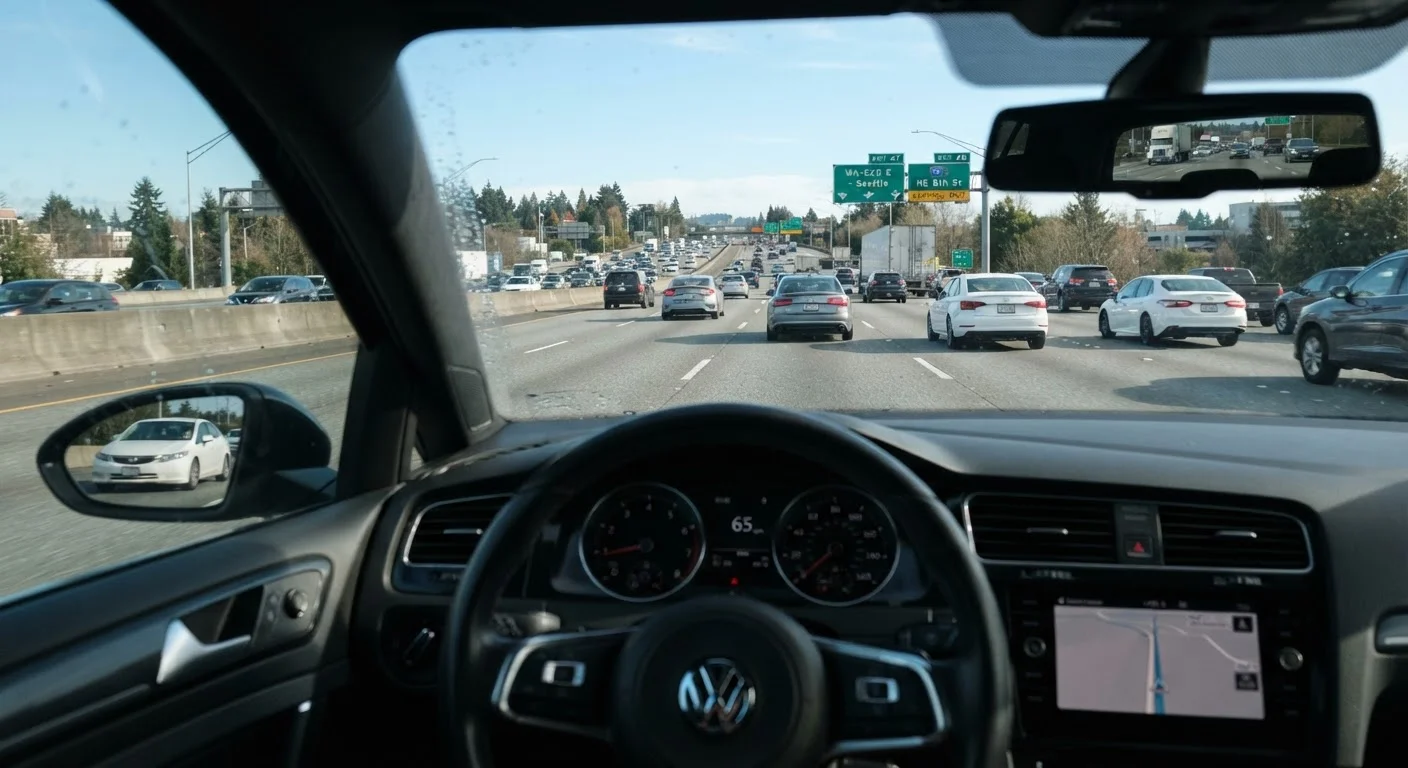
Photo: TheSearchHound.com | One Stop Answer To All Your Questions editorial
Key Takeaways
- Situational awareness involves perceiving, understanding, and predicting what happens around your vehicle.
- Most crashes involve a lapse in awareness, not just a lapse in vehicle control.
- Scanning far ahead - not just bumper-to-bumper - is one of the core habits of aware drivers.
- Distractions, fatigue, and overconfidence are the biggest threats to situational awareness.
- Practicing awareness can be learned and improved at any experience level.
More Than Just Paying Attention
Most drivers think situational awareness simply means "not being distracted." That's part of it - but the concept runs deeper. True situational awareness involves three distinct mental layers: perceiving what's around you, understanding what it means for your immediate safety, and projecting what is likely to happen in the next few seconds.
A driver who notices a delivery truck slowing ahead (perception), recognizes that it's likely to stop and block a lane (understanding), and moves into the adjacent lane early (projection) is operating with full situational awareness. A driver who only reacts once the truck stops is working from a deficit - and that gap is where collisions happen.
This three-layer model, developed through decades of research in aviation and applied to driving safety, helps explain why awareness is a skill, not just a personality trait. It can be trained, practiced, and deliberately improved.
Awareness isn't the same as defensive driving
What Breaks Down Situational Awareness
Even experienced, careful drivers lose situational awareness regularly - often without realizing it. The most common causes are well-documented:
- Distraction: Visual distractions (looking at a phone), cognitive distractions (a stressful conversation), and manual distractions (eating, adjusting controls) all pull mental resources away from the driving task.
- Fatigue: Tired drivers have slower perception and reduced ability to project what will happen next. Drowsiness impairs awareness in ways that closely mirror alcohol intoxication.
- Overconfidence on familiar routes: Routine trips are where awareness lapses most often. When a route feels automatic, the brain reduces active scanning - but the road itself doesn't become safer.
- Tunnel vision in high-stress situations: In emergencies, attention can narrow to a single threat, causing drivers to miss other hazards entering the picture simultaneously.
Understanding these failure modes is the first step toward guarding against them. For a closer look at how one common habit undermines awareness and reaction time, see why tailgating is more dangerous than most drivers realize.
Practical Habits That Build Awareness
Situational awareness isn't developed by trying harder in a vague sense - it's built through specific, repeatable habits.
Scan Far Ahead
Experienced drivers look 12 to 15 seconds ahead of their vehicle, not just at the bumper in front of them. This forward scanning gives early warning of slowdowns, merging traffic, and hazards - and allows time to respond rather than react.
Use Your Mirrors Systematically
Mirrors should be checked every 5 to 8 seconds as a general habit, and always before braking, changing lanes, or turning. Mirrors give you the rear and side picture that fills out your full awareness.
Identify Escape Routes
Alert drivers habitually note where they could steer if the vehicle ahead stops suddenly. Identifying open space in adjacent lanes or a shoulder is a proactive awareness habit, not a pessimistic one.
Reduce In-Cabin Noise
Sound is a critical input. A ringing phone, a loud stereo, or a heated argument in the car all pull cognitive resources and reduce your ability to process what's happening outside the vehicle.
Practice the commentary driving technique
These habits apply differently depending on environment. City and highway driving each demand different awareness strategies - urban roads require constant pedestrian and intersection scanning, while highways demand attention to speed differentials and merge zones.
Awareness Across Experience Levels
New drivers often over-focus on vehicle control - steering, braking, lane position - which leaves limited mental bandwidth for broader awareness. As basic control becomes automatic, awareness capacity expands. This is one reason new drivers are encouraged to build habits gradually. Building a foundation for safe driving covers how to develop these skills progressively from the very start.
Seasoned drivers face the opposite challenge: overconfidence and automation. Research consistently shows that driving familiarity doesn't protect against awareness failures - it can actually create them. Drivers at every stage of life benefit from periodic re-engagement with active scanning habits, as risk profiles and physical attention capacity both shift over time. Safe driving across every stage of life explores how awareness strategies should adapt as drivers age.
94%
Of crashes linked to human error
According to the National Highway Traffic Safety Administration (NHTSA), approximately 94% of serious crashes involve human choice or error as a contributing factor - with recognition failures (not seeing a hazard in time) among the most cited.
~5 sec
Eyes-off-road time when glancing at a phone
The NHTSA notes that at highway speeds, a 5-second phone glance covers the length of a football field - illustrating how briefly losing awareness creates significant blind-spot windows.
3x
Increased crash risk when cognitively distracted
Research published in driving safety literature has found that cognitive distraction - not just visual distraction - can significantly elevate crash risk, even when a driver's eyes remain on the road.
The environment also plays a role beyond what most drivers consider. Road design - including lane width, sight-line restrictions, and signage placement - actively shapes how easy or hard awareness is to maintain. How road design influences driver behavior and safety explains these environmental factors in depth.
Frequently Asked Questions
The content on this site is provided for informational purposes only and should not be considered a substitute for professional advice. While we strive to provide accurate and up-to-date information, we make no guarantees regarding its completeness or accuracy. Always consult a qualified professional for advice specific to your circumstances before making any decisions.