
Soil pH and Why It Controls Everything in Your Garden

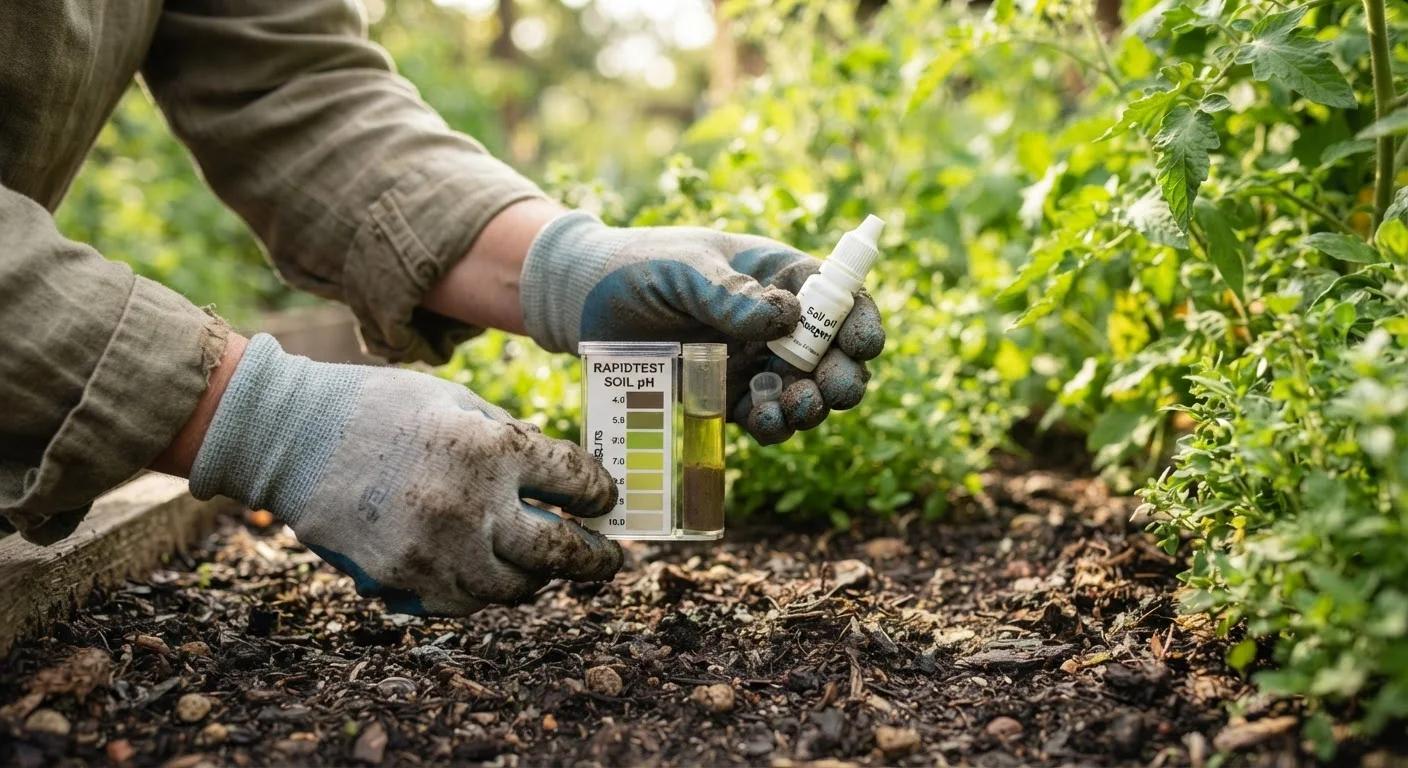
Photo: TheSearchHound.com | One Stop Answer To All Your Questions editorial
Key Takeaways
- Soil pH controls whether plants can absorb the nutrients already present in your soil.
- Most vegetables and lawn grasses perform best in a slightly acidic range of 6.0-7.0.
- A simple soil test - available at local extension offices or garden centers - reveals your pH before you plant.
- You can raise pH with ground limestone and lower it with elemental sulfur, but changes take time.
- Skipping a soil test is one of the most common reasons home gardens underperform despite good care.
The Hidden Lever Behind Plant Health
You can water faithfully, add compost every season, and choose healthy transplants - and still end up with yellowing leaves, stunted growth, or plants that simply won't thrive. More often than gardeners expect, the culprit isn't a pest or a disease. It's soil pH.
pH determines the chemical environment your plant roots live in. When it's in the right range, nutrients dissolve readily and roots take them up efficiently. When it's off - even by a point or two - nutrients that are physically present in the soil become chemically locked up and unavailable to plants. You could be fertilizing generously and still starving your garden.
This is why testing your soil pH is the logical first step before planting anything new. It's also why the garden planning checklist should always include a soil check alongside sunlight and drainage assessments.
6.0-7.0
Optimal pH range for most vegetables
University extension programs across the U.S. consistently identify this range as the target for the broadest range of edible crops.
0-14
Full soil pH scale
The pH scale is logarithmic - each full point represents a tenfold difference in acidity or alkalinity, meaning small shifts have significant chemical effects.
~50%
Estimated home gardens with suboptimal pH
Soil science educators commonly note that a large proportion of home garden beds have never been tested or amended for pH, contributing to chronic underperformance.
How pH Affects Nutrient Availability
The relationship between pH and nutrients is specific and well-documented. Nitrogen, phosphorus, and potassium - the three primary plant nutrients - are most available between pH 6.0 and 7.5. Secondary nutrients like calcium and magnesium become less available as soil acidifies. Micronutrients such as iron, manganese, and zinc, on the other hand, are more soluble at lower pH values but can reach toxic concentrations in highly acidic soils.
This is why a soil that tests low in iron might not need an iron amendment at all - it may simply need pH adjustment to unlock the iron that's already there. Applying more fertilizer without addressing pH is like turning up the faucet while the drain is still open.
pH Is Logarithmic - Small Numbers, Big Differences
Understanding this chemistry also matters for lawns. If your grass looks pale and patchy even after fertilizing, soil pH may be the underlying issue - a topic explored in depth when keeping a lawn healthy without over-fertilizing.
What Different pH Ranges Mean for Your Plants
Most garden vegetables, herbs, and lawn grasses prefer a slightly acidic to neutral range - roughly 6.0 to 7.0. This sweet spot keeps the widest range of nutrients accessible and supports healthy microbial activity in the soil.
Some plants are notable exceptions. Blueberries, azaleas, and rhododendrons are acid-lovers that prefer pH values between 4.5 and 5.5. Growing them in neutral or alkaline soil leads to a condition called iron chlorosis - leaves turn yellow between the veins because the plant can't absorb iron. Conversely, plants like asparagus and beets tolerate slightly alkaline conditions better than most.
Knowing your target plant's preferences lets you decide whether to amend broadly or create a localized growing environment - such as a raised bed with customized soil - for more demanding species. If you're building out a full vegetable garden, understanding these preferences early is covered well in our guide to starting a vegetable garden from the ground up.
Testing, Amending, and Maintaining Your Soil pH
Testing is straightforward. Basic kits use a chemical indicator that changes color when mixed with a soil sample; digital pH meters give a numerical reading directly. For the most reliable results and specific amendment recommendations, send a sample to your state's cooperative extension service - many offer this at low cost.
To raise pH (reduce acidity), ground limestone is the standard amendment. To lower pH (increase acidity), elemental sulfur is the most practical option, though it works slowly over several months. The quantity needed depends on your current pH, your target, and your soil type - sandy soils require less amendment than clay-heavy ones to achieve the same shift.
An important reality check: pH changes don't happen overnight. Plan to test and amend in fall for spring planting, and retest before making additional adjustments. Over-correcting is a real risk, and swinging pH too far in either direction creates a new set of problems. Organic matter - compost, aged bark, or leaf mold - supports stable pH over time and improves overall soil structure. Some mulch types can influence soil chemistry as they break down, which is worth considering when selecting materials for your beds. See how different mulch types affect your soil for a closer look at those tradeoffs.
Frequently Asked Questions
The content on this site is provided for informational purposes only and should not be considered a substitute for professional advice. While we strive to provide accurate and up-to-date information, we make no guarantees regarding its completeness or accuracy. Always consult a qualified professional for advice specific to your circumstances before making any decisions.