
Cashback Programs vs. Discount Coupons: Which Actually Saves You More?

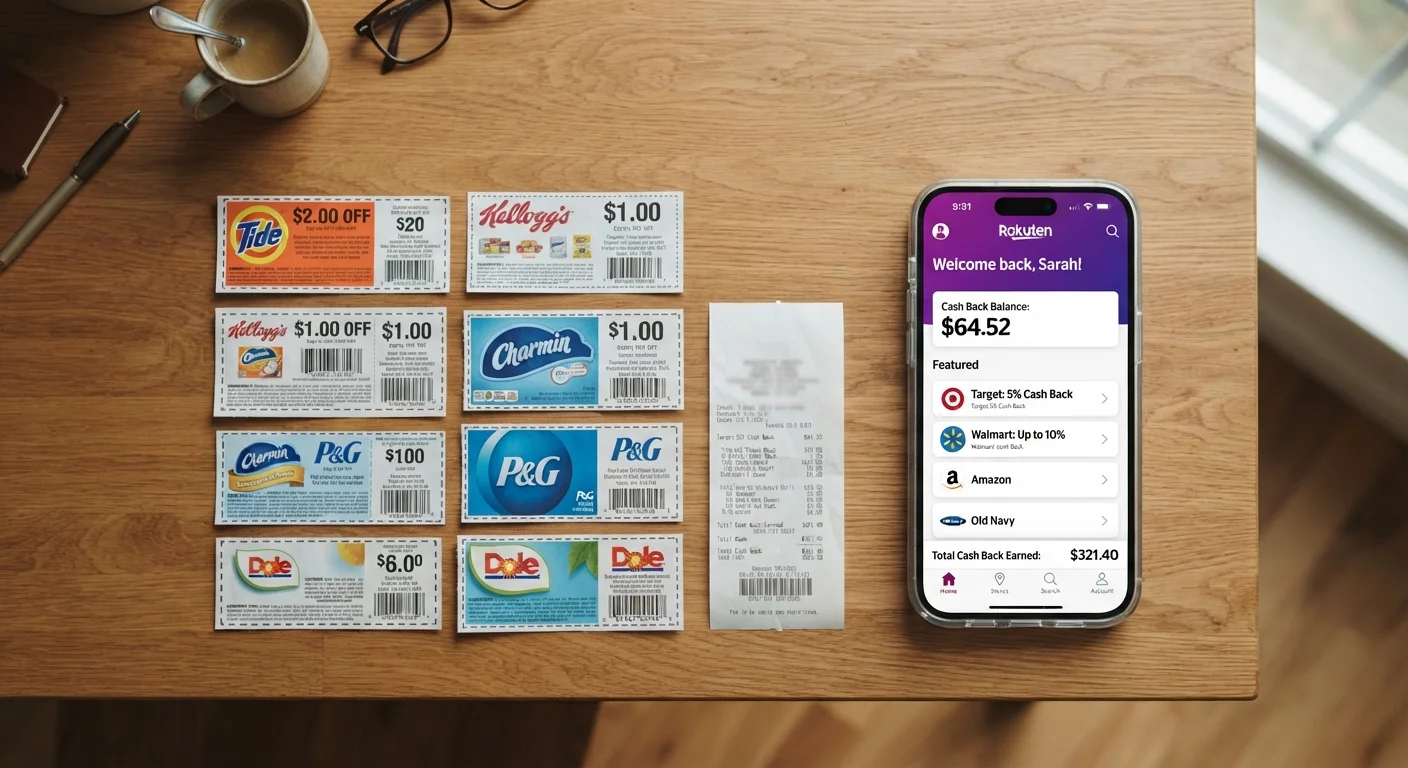
Photo: TheSearchHound.com | One Stop Answer To All Your Questions editorial
Key Takeaways
- Cashback programs return money after a purchase, while coupons reduce the price you pay upfront.
- Cashback rewards often require meeting thresholds before payout, meaning savings can sit inaccessible for weeks or months.
- Coupons can be fabricated or exaggerated - verifying the baseline price before clipping is essential.
- Combining both tools on the same purchase can maximize savings, but restrictions often apply.
- Neither tool is universally superior; the better choice depends on your shopping habits and the specific purchase.
How Each Savings Mechanism Actually Works
Cashback programs and discount coupons are both marketed as ways to save money, but their mechanics are fundamentally different - and that difference matters when you're evaluating real-world value.
Cashback programs return a percentage of your purchase price after the transaction. This can happen through credit cards, retailer loyalty accounts, or dedicated cashback platforms. The return is typically deposited into an account - sometimes as cash, sometimes as store credit - and is only accessible once a minimum threshold is reached. That deferral is a key structural feature, not a minor detail.
Discount coupons reduce the stated price at the point of sale. Whether digital or paper, a coupon either subtracts a fixed dollar amount or applies a percentage off, and you see the result immediately on your receipt. The savings are concrete and visible, though they're tied to specific products, quantities, or expiration windows.
Understanding this structural difference is the first step toward using either tool effectively - or knowing when to use both. See our guide to layering savings tools for a deeper look at combining these approaches.
| Criterion | Cashback Programs | Discount Coupons |
|---|---|---|
| When savings are received | After purchase, often delayed | Immediately at checkout |
| Ease of use | Largely automatic once enrolled | Requires sourcing and applying codes |
| Savings visibility | Opaque until reward posts | Visible on receipt |
| Common restrictions | Payout thresholds, expiration, partner limits | Expiration dates, product-specific limits |
| Verification difficulty | Harder to verify actual value | Easier to check against price history |
| Risk of overspending | Moderate - rewards can incentivize spending | Moderate - coupons can drive unplanned purchases |
Where Marketing Obscures Genuine Value
Both cashback offers and coupons are used as marketing instruments, and retailers design them with behavioral goals in mind - not purely to benefit the shopper.
With cashback programs, the deferred-reward structure is the primary concern. If your accumulated cashback sits below a payout threshold, that value is effectively held by the platform. Some programs expire unused balances. Others are structured around partner retailers, which can nudge spending toward stores you wouldn't otherwise choose - a cost that offsets the reward.
With coupons, the most common issue is the inflated baseline price. A "40% off" coupon only represents genuine savings if the pre-coupon price is the normal retail price. Research into retailer pricing practices has documented that promotional reference prices are sometimes set higher than the item's typical selling price - making the discount look more impressive than it is. Before applying any coupon, it's worth checking the item's price history. Our deal verification guide outlines practical ways to do this using publicly available tools.
~91%
U.S. adults who used a coupon or promo code
According to RetailMeNot consumer research, a large majority of American shoppers report using coupons or promo codes during online shopping.
30-40%
Cashback balances that go unredeemed
Industry estimates suggest a significant share of earned cashback rewards are never redeemed, often due to payout thresholds or program inactivity requirements.
Coupons can also drive category switching - pushing you toward a brand you wouldn't normally buy simply because the coupon exists. That's a savings illusion worth watching for.
Comparing Real-World Savings Potential
In practice, neither tool delivers a fixed advantage across all purchases. The comparison depends heavily on purchase type, frequency, and how each tool is applied.
For routine, repeat purchases - groceries, household staples, subscriptions - cashback programs can accumulate meaningful value over time with minimal effort. A 2-5% cashback rate on consistent monthly spending adds up in a way that scattered coupon use often doesn't.
For infrequent or large purchases - appliances, electronics, seasonal items - a verified coupon offering a substantial upfront discount may represent more immediately accessible savings than waiting for cashback to post and reach a payout threshold.
It's also worth noting that cashback rates are variable. Credit card cashback tiers often pay higher rates in select categories (dining, travel, groceries) and lower rates on general spending. Retailer cashback portals frequently change their percentage offerings. Neither rate is guaranteed to remain constant.
For shoppers interested in how loyalty mechanics factor into this equation, our loyalty programs explainer covers how points systems and tiers affect the actual value of rewards. And if you're weighing whether to stick with familiar brands or shop around for deals, the research-grounded perspective in brand loyalty vs. comparison shopping offers useful context.
The content on this site is provided for informational purposes only and should not be considered a substitute for professional advice. While we strive to provide accurate and up-to-date information, we make no guarantees regarding its completeness or accuracy. Always consult a qualified professional for advice specific to your circumstances before making any decisions.