
Prepaid vs. Postpaid Wireless: The Real Trade-Offs Most Carriers Won't Spell Out

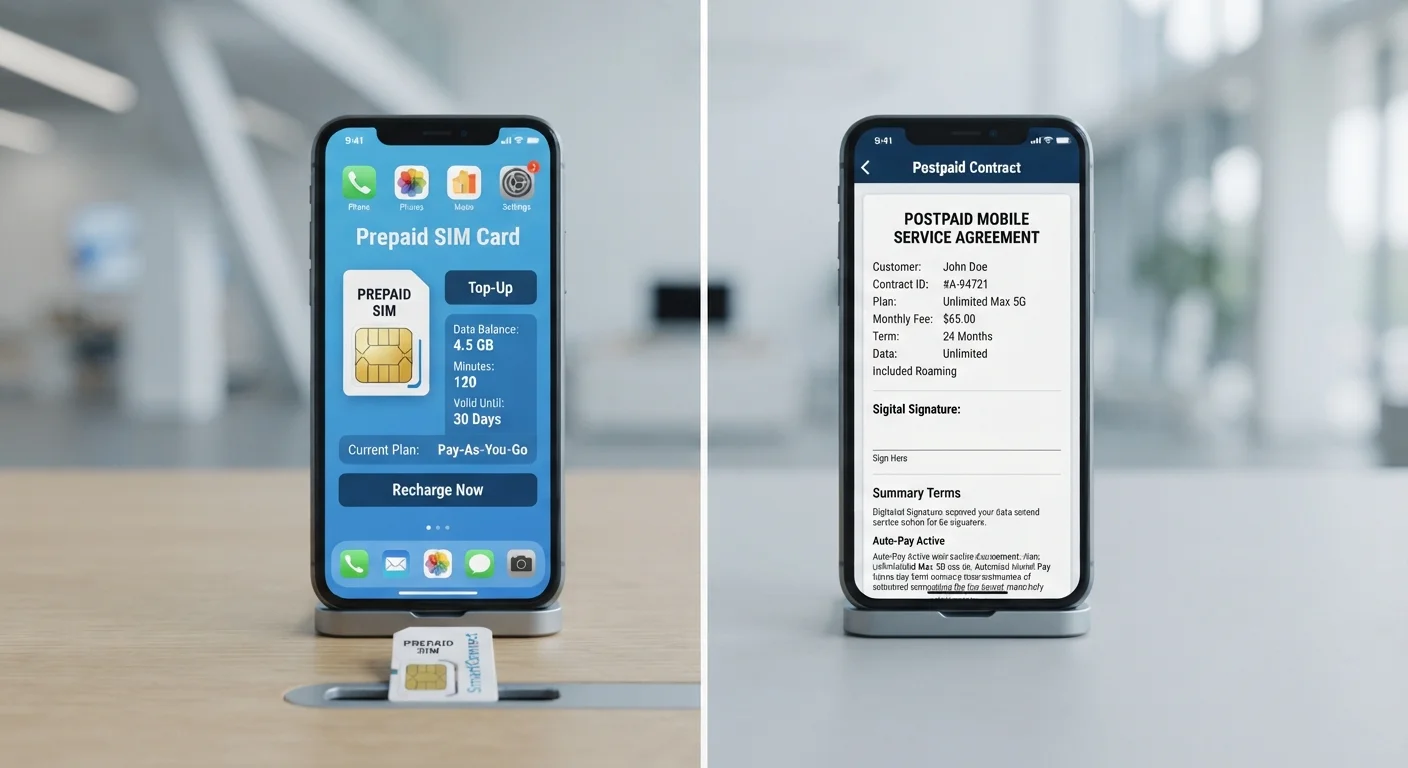
Photo: TheSearchHound.com | One Stop Answer To All Your Questions editorial
Key Takeaways
- Prepaid plans require upfront payment and carry no long-term contract obligations.
- Postpaid plans typically offer higher network priority and easier device financing options.
- Prepaid customers often face data deprioritization before postpaid customers on the same network.
- Postpaid plans may include fees, taxes, and charges that inflate the advertised monthly rate.
- Switching between plan types is possible but may involve device compatibility or carrier lock issues.
- Neither plan type is universally better - the right choice depends on usage habits and financial priorities.
What Actually Separates These Two Plan Types
The most fundamental difference between prepaid and postpaid wireless is timing of payment. With prepaid, you pay for service before you use it - your plan activates when funds are loaded, and service stops if you don't renew. With postpaid, a carrier extends you credit for a billing cycle and charges you after usage, typically on a monthly invoice.
That billing structure difference cascades into almost every other aspect of how these plans work - from who can get them, to what features are included, to how your data is treated when a tower gets congested. Understanding these downstream effects is what most carrier marketing glosses over.
For a closer look at how all those monthly charges actually break down, see what every line item on your wireless bill means.
| Criterion | Prepaid Wireless | Postpaid Wireless |
|---|---|---|
| Payment timing | Pay before use | Pay after billing cycle |
| Contract required | No | Often yes (device financing) |
| Credit check | Generally not required | Typically required |
| Network priority | Lower (deprioritized first) | Higher during congestion |
| Device financing | Generally not available | Available through carrier |
| Advertised price vs. actual cost | Often all-inclusive | Taxes/fees added on top |
| Flexibility to switch | High - no penalties | Lower - device payoff may apply |
| Multi-line discounts | Limited | Common on family plans |
The Hidden Hierarchy: Network Priority and Deprioritization
One of the least-advertised trade-offs involves how carriers treat different customers during network congestion. Most major carriers use a traffic management practice called data deprioritization - when a cell tower is heavily loaded, some users' data speeds are temporarily throttled to manage capacity.
In nearly every carrier's terms of service, prepaid customers are deprioritized before postpaid customers. This means that during peak hours in busy areas - stadiums, airports, downtown cores - a prepaid subscriber on the same physical network as a postpaid subscriber may experience noticeably slower speeds, even on an "unlimited" plan.
~60%
U.S. wireless subscribers on postpaid plans
According to industry research, postpaid plans have historically held the majority share of U.S. wireless subscribers, though prepaid has been growing steadily.
$10-$25+
Typical monthly taxes and fees added to postpaid bills
The exact amount varies by state and carrier, but regulatory fees and surcharges routinely add a significant sum above the advertised plan rate.
24-36 months
Typical device financing term on postpaid plans
Most major carriers structure phone installment agreements over two or three years, often tied to remaining on the carrier's service.
This doesn't make prepaid plans a poor choice in most everyday scenarios, particularly in lower-congestion areas. But it's a structural disadvantage worth knowing about, especially if reliable data performance is important to you during travel or in densely populated locations.
Many prepaid plans are actually offered by MVNOs - Mobile Virtual Network Operators - that lease capacity from major carriers rather than owning their own infrastructure. How MVNOs work and who benefits most is worth understanding if you're exploring the prepaid market broadly.
Device Financing, Trade-Ins, and the Postpaid Lock-In
Postpaid plans are tightly integrated with device financing in a way prepaid plans are not. When you finance a phone through a postpaid carrier, you're typically entering a 24- or 36-month installment agreement tied to your account - which creates a meaningful exit cost if you want to leave early. The phone may also be carrier-locked until it's paid off.
Prepaid plans generally require you to bring your own unlocked device or purchase one outright. That removes the installment financing option, but also means you're not financially tethered to any carrier. You can switch at any time without worrying about device payoff balances.
Running the numbers on carrier financing versus buying outright can reveal that the total cost of a financed device sometimes exceeds what you'd pay purchasing unlocked - particularly when promotional trade-in credits come with service-length requirements attached.
If you're evaluating a postpaid contract, every clause worth reading before you sign offers a useful primer on what the fine print typically contains.
True Cost Comparison: What the Advertised Price Leaves Out
Postpaid plans are frequently advertised at a headline rate that doesn't reflect what you'll actually pay. Taxes, regulatory fees, and carrier-specific surcharges are almost always added on top - and on a postpaid account, these can add $10-$25 or more per line per month depending on your state and the carrier's fee structure.
Prepaid plans, by contrast, are more commonly sold as all-in rates - the price you see is often the price you pay, with taxes included. This makes month-to-month budgeting more predictable.
All-Inclusive Pricing Isn't Universal
For families managing multiple lines, the calculus can shift. Postpaid family plans with per-line discounts may bring the effective per-line cost below what a comparable set of prepaid lines would cost individually. How family plan pricing is structured and what to watch for helps clarify when those multi-line discounts actually hold up under scrutiny.
If at any point you decide to change plan types or carriers, knowing your rights around number porting and early termination is essential. How to switch carriers without losing your number or incurring fees covers the practical steps involved.
The content on this site is provided for informational purposes only and should not be considered a substitute for professional advice. While we strive to provide accurate and up-to-date information, we make no guarantees regarding its completeness or accuracy. Always consult a qualified professional for advice specific to your circumstances before making any decisions.