
City Driving vs. Highway Driving: A Safety Perspective

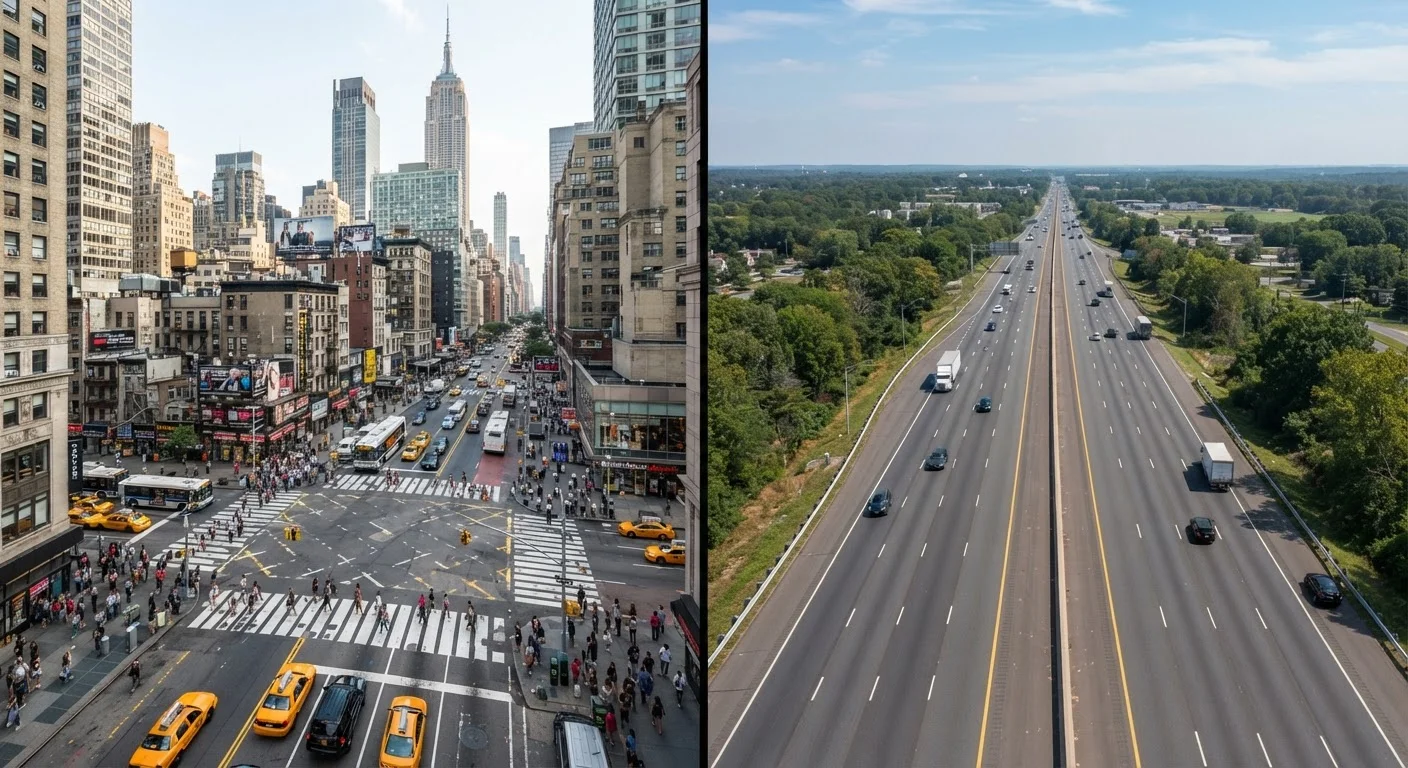
Photo: TheSearchHound.com | One Stop Answer To All Your Questions editorial
Key Takeaways
- City driving involves more frequent decision-making, pedestrian conflicts, and low-speed collisions.
- Highway driving carries higher crash severity due to elevated speeds, even though interactions are less frequent.
- Fatigue and inattention are the dominant highway risks; distraction and unpredictability dominate city driving.
- Adapting your scanning habits, following distance, and mental engagement to each environment reduces risk in both.
- No single environment is universally safer - risk depends on driver behavior as much as road type.
Two Roads, Two Very Different Risk Profiles
At first glance, highway driving might seem more dangerous - the speeds are higher and the stakes of any mistake feel enormous. But crash data tells a more nuanced story. City streets generate a far higher volume of collisions overall, largely because they concentrate pedestrians, cyclists, intersections, and erratic stopping patterns into a compact space. Highways, by contrast, produce fewer crashes per mile but those that do occur tend to be far more severe.
Understanding why each environment carries its own risk profile is the first step toward adapting your behavior accordingly. As explored in our article on how road design influences driver behavior, the physical structure of a road shapes how drivers naturally respond - sometimes in ways that increase risk without the driver realizing it.
| City Driving | Highway Driving | |
|---|---|---|
| Typical speed range | 15-45 mph | 55-80 mph |
| Primary hazard type | Pedestrians, cyclists, intersections | Speed, fatigue, merging traffic |
| Crash frequency | Higher volume of incidents | Lower volume, higher severity |
| Cognitive demand | Constant active decision-making | Sustained vigilance against monotony |
| Key driver skill needed | Wide-angle scanning, anticipation | Following distance, fatigue awareness |
| Distraction risk | High - frequent stops invite phone use | High - monotony reduces alertness |
The City Driving Challenge: Complexity at Low Speed
Urban driving is cognitively demanding. At any given moment, a city driver may be monitoring traffic signals, parked car doors, cyclists merging into the lane, pedestrians stepping off curbs, double-parked delivery vehicles, and navigation cues - all simultaneously. The lower speeds involved can create a false sense of safety, but the density of potential conflict points is high.
Intersection crashes are one of the leading collision types in urban areas. Many involve drivers failing to yield properly, misjudging gap acceptance when turning, or reacting to unexpected pedestrian movements. Maintaining a deliberate scanning routine - checking mirrors, side streets, and crosswalks well before reaching an intersection - is one of the most effective habits city drivers can build. Consistently safe drivers are rarely surprised at intersections because they've already identified potential hazards seconds before arriving.
Scan Ahead, Not Just Ahead of You
The Highway Challenge: Speed, Fatigue, and Reduced Stimulation
Highway driving removes much of the complexity that defines city roads - but replaces it with a different set of demands. At 65-75 mph, a driver covers roughly 100 feet per second. That compresses reaction time dramatically. A lapse in attention that would result in a minor fender-bender at 25 mph can become a high-severity crash at highway speeds.
Monotony is an underappreciated hazard on the highway. Long, uniform stretches of road reduce the sensory stimulation that keeps drivers alert, increasing the risk of highway hypnosis - a state of reduced awareness where a driver's eyes are open but their cognitive engagement has dropped significantly. Fatigue compounds this effect. Research consistently links drowsy driving to highway departures and rear-end crashes at speed. For more on conditions that amplify highway risk, see our guide to night driving and how to compensate.
Maintaining a following distance of at least three to four seconds on the highway - more in poor conditions - gives you the reaction buffer that high-speed travel demands. Merging discipline and consistent lane positioning also matter; abrupt lane changes are a common factor in highway sideswiping and rear-end events.
~40%
Of fatal crashes occurring on rural roads
According to NHTSA data, rural roads - which include many highway-type roads - account for a disproportionate share of fatal crash outcomes relative to traffic volume.
3-4 sec
Recommended minimum following distance at highway speed
Traffic safety organizations generally recommend a minimum three-second following gap, increasing to four or more seconds in adverse conditions or at higher speeds.
Adapting Your Habits for Both Environments
The core principle is the same in both settings: match your level of mental engagement to the demands of the road. In the city, that means staying actively alert, resisting the urge to check your phone at red lights, and anticipating rather than reacting. In the longer, more uniform environment of the highway, it means proactively managing fatigue - taking breaks on long trips, avoiding driving during your body's natural low-alertness windows (early afternoon and late night), and resisting the monotony-induced drift toward passive driving.
Drivers who are new to the road often find city driving more stressful initially, but that environment can actually build situational awareness skills faster because it demands constant active processing. Highway driving, while seemingly simpler, requires a disciplined self-monitoring approach that takes time to develop. Knowing which environment you find more challenging - and why - helps you address the specific habits that need work. Our broader overview of safe driving across every stage of life explores how these demands shift as experience and age interact.
This article is intended for general educational purposes. Always follow your local traffic laws and consult qualified driving instruction resources for personalized guidance.
The content on this site is provided for informational purposes only and should not be considered a substitute for professional advice. While we strive to provide accurate and up-to-date information, we make no guarantees regarding its completeness or accuracy. Always consult a qualified professional for advice specific to your circumstances before making any decisions.